Packaging Cost Guide: What Affects the Cost of Custom Packaging?
Wondering how much custom packaging costs? Learn the key factors that affect packaging prices, including box style, materials, printing, finishes, quantity, and shipping.
One of the first questions customers ask when planning custom packaging is:
“How much will my packaging cost?”
The answer depends on much more than the size of the box. Every custom packaging project is unique, and pricing is influenced by a combination of materials, printing methods, production processes, order quantity, and shipping requirements.
Understanding these cost factors will help you make informed decisions, optimize your packaging budget, and avoid unexpected expenses.
In this guide, we’ll explain the most important factors that determine the cost of custom packaging.
Why Packaging Costs Vary
Unlike standard stock boxes, custom packaging is manufactured specifically for your product.
Every project may require:
- A unique box structure
- Custom printing plates
- A dedicated die-cut mold
- Specific paper materials
- Special finishing techniques
- Individual packing requirements
Because every project is different, there is no fixed price for custom packaging.
Factor 1: Box Style
The type of box you choose has the biggest impact on cost.
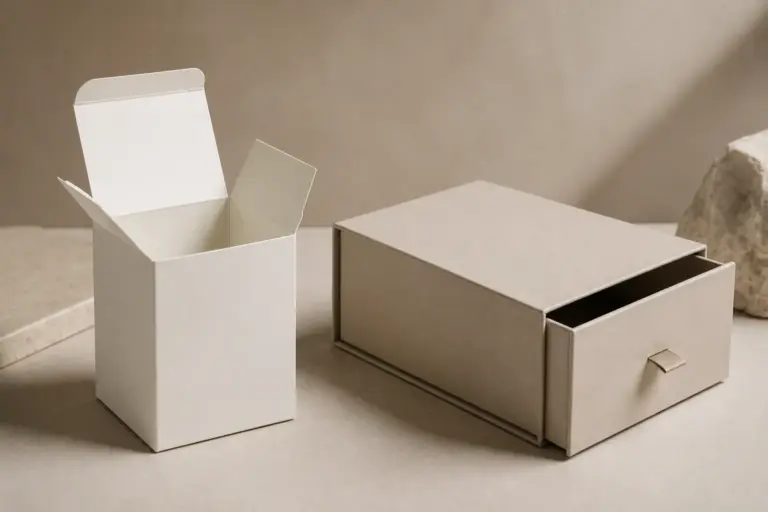
Folding Cartons
Best for:
- Cosmetics
- Food
- Retail Products
Advantages:
- Lowest production cost
- Ships flat
- Easy to store
- Excellent print quality
Cost Level:
⭐⭐☆☆☆
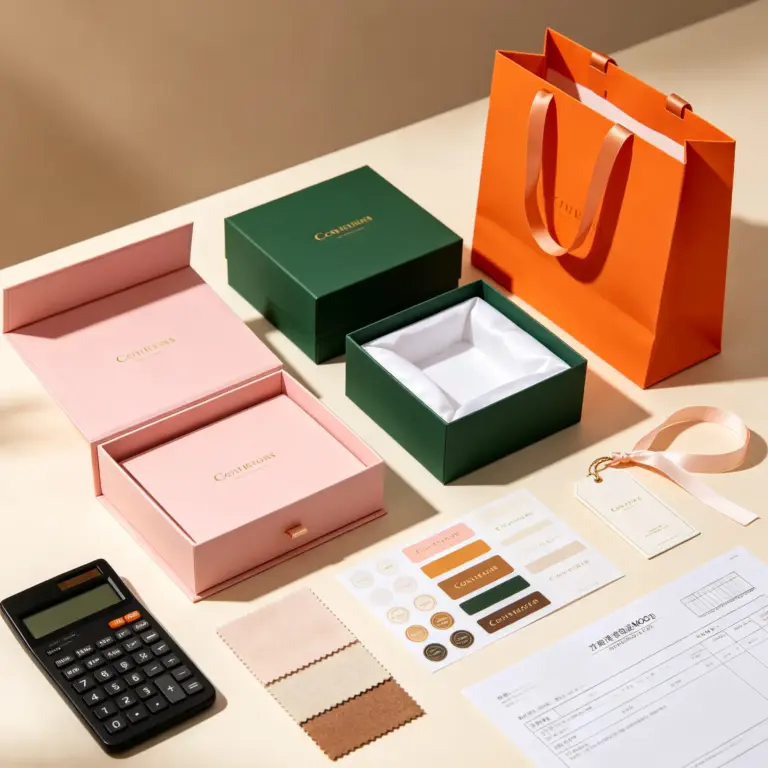
Rigid Boxes
Best for:
- Luxury Products
- Jewelry
- Gift Sets
Advantages:
- Premium appearance
- Strong construction
- Luxury unboxing experience
Cost Level:
⭐⭐⭐⭐⭐
Mailer Boxes
Best for:
- E-commerce
- Subscription Boxes
Cost Level:
⭐⭐⭐☆☆
Paper Bags
Cost depends on:
- Paper thickness
- Handle type
- Printing
- Lamination
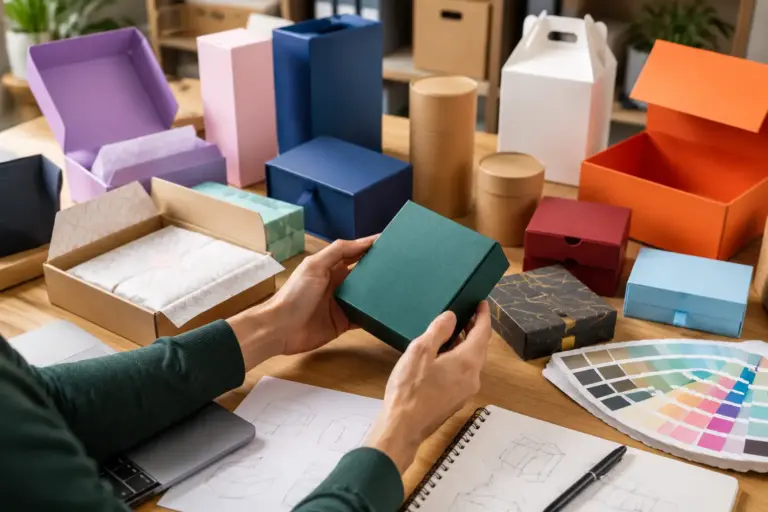
Factor 2: Paper Material
Different materials have different prices.
Common materials include:
| Material | Cost | Typical Applications |
|---|---|---|
| SBS Paperboard | Medium | Cosmetic Boxes |
| CCNB | Low | Retail Packaging |
| Kraft Paper | Medium | Eco-Friendly Packaging |
| Greyboard | High | Rigid Boxes |
| Corrugated Board | Medium | Shipping Boxes |
Higher-quality materials generally provide better durability and a more premium appearance.
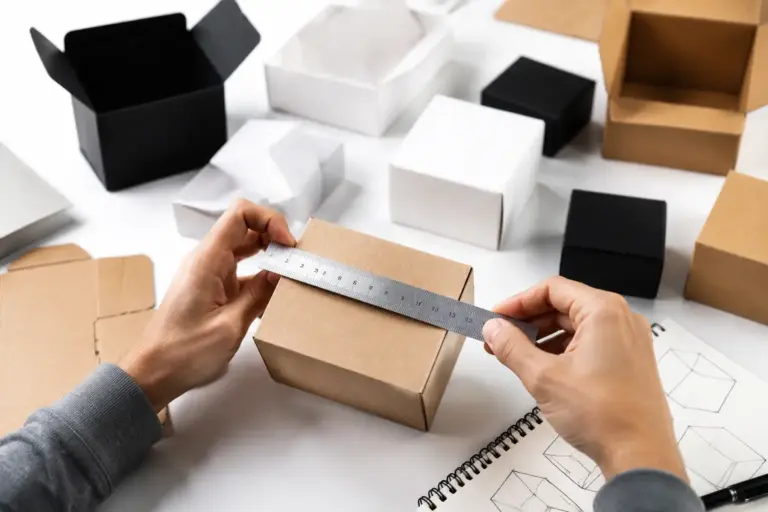
Factor 3: Box Size
Larger boxes require:
- More paper
- Larger printing sheets
- Bigger die-cut molds
- More warehouse space
- Higher shipping costs
Even a small increase in box dimensions can significantly affect the total project cost.
Choosing the correct size helps reduce unnecessary material usage.
Factor 4: Printing Method
Most packaging uses one of two printing methods.
Offset Printing
Ideal for:
- Medium to large quantities
- High-quality graphics
- Lower unit cost for bulk production
Digital Printing
Ideal for:
- Small quantities
- Short lead times
- Variable designs
Digital printing eliminates printing plate costs but usually has a higher unit price for large orders.
Factor 5: Number of Printing Colors
Printing costs also depend on the number of colors.
Common options include:
- One Color
- Two Colors
- CMYK Full Color
- Pantone (PMS)
Complex artwork generally increases printing costs.
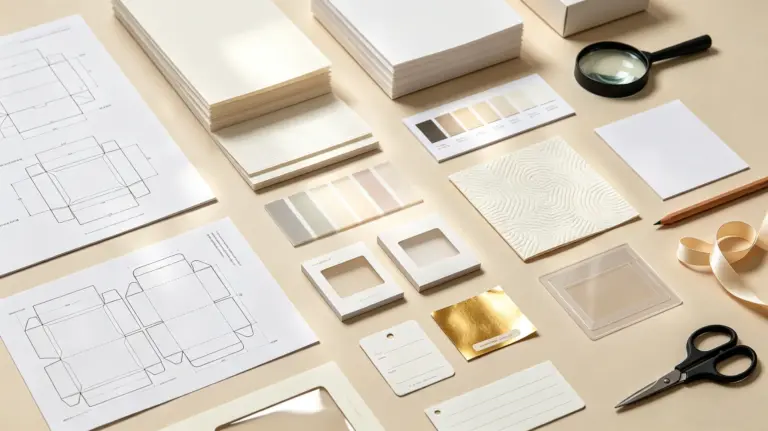
Factor 6: Surface Finishes
Premium finishes improve appearance but also increase production costs.
Popular finishing options include:
- Matte Lamination
- Gloss Lamination
- Soft Touch Lamination
- Spot UV
- Gold Foil Stamping
- Silver Foil Stamping
- Embossing
- Debossing
Each additional finishing process requires extra production time and equipment.
Factor 7: Order Quantity
Order quantity has a significant impact on unit pricing.
For example:
| Quantity | Average Unit Cost |
|---|---|
| 500 pcs | Highest |
| 1,000 pcs | Lower |
| 3,000 pcs | Even Lower |
| 5,000 pcs | Lowest |
This happens because setup costs—including printing plates, die-cut molds, and machine calibration—are spread across more units.
For this reason, many manufacturers recommend a minimum order quantity of 500 pieces.
Factor 8: Inserts and Accessories
Additional components increase packaging costs.
Examples include:
- EVA Foam Inserts
- Paper Inserts
- Sponge Inserts
- Plastic Trays
- Magnetic Closures
- Ribbon Pulls
- PVC Windows
Luxury packaging often includes one or more of these features.
Factor 9: Shipping Costs
Packaging cost doesn’t end when production is complete.
Shipping expenses depend on:
- Carton size
- Weight
- Destination
- Air or sea freight
- Packaging volume
Flat-packed folding cartons typically reduce transportation costs compared with fully assembled rigid boxes.
How to Reduce Packaging Costs
You don’t always need to sacrifice quality to lower costs.
Here are several practical strategies:
- Choose the correct box size.
- Avoid unnecessary finishing processes.
- Increase order quantity when possible.
- Use standard paper materials.
- Plan production early to avoid expensive air freight.
- Consolidate shipments.
Small adjustments can significantly reduce your overall packaging budget.
Information Needed for an Accurate Quote
To receive a fast and accurate quotation, prepare the following information:
- Box Style
- Dimensions (L × W × H)
- Quantity
- Paper Material
- Printing Colors
- Surface Finishes
- Accessories or Inserts
- Shipping Destination
The more complete your information, the more accurate the quotation will be.
Frequently Asked Questions
Why are custom boxes more expensive than stock boxes?
Custom packaging requires unique tooling, printing setup, and production processes designed specifically for your product.
Why does ordering more boxes reduce the unit price?
Most setup costs remain the same regardless of quantity. Larger production runs spread these fixed costs over more units, reducing the price per box.
What is the biggest factor affecting packaging cost?
The box style, material, order quantity, and finishing options are usually the four largest cost factors.
Can I reduce costs without lowering quality?
Yes. Optimizing box dimensions, selecting appropriate materials, simplifying finishing options, and increasing order quantities can all reduce costs while maintaining excellent quality.
Final Thoughts
Custom packaging is an investment that influences product protection, customer perception, and brand value. While many factors affect pricing, understanding how box style, materials, printing, finishing, quantity, and shipping work together allows you to make smarter purchasing decisions.
At Shenzhen Ron & An Technology Co., Ltd., we provide transparent quotations and professional packaging recommendations based on your product, budget, and branding goals. Whether you’re creating cost-effective retail boxes or luxury packaging solutions, our team is ready to help you achieve the best balance between quality and cost.