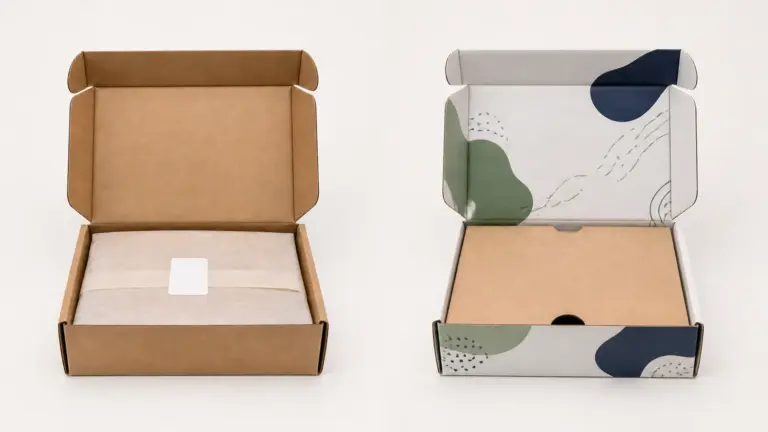

Custom Box Dimensions Guide: How to Measure Packaging
Learn how to measure custom boxes using length × width × height, distinguish inner and outer dimensions, and avoid common packaging size mistakes.
Write box dimensions as length × width × height and state whether they are internal or external. When a product must fit inside, begin with the usable internal space, packed orientation, insert and required clearance—not the outside of an existing box.
Length × width × height
For a conventional rectangular box:
- Length is the longer dimension of the main opening.
- Width is the shorter dimension of that opening.
- Height is the depth from the opening to the opposite panel when assembled.
Naming can vary with structure, so include a sketch or dieline reference. Units must be explicit. Millimeters are common in international packaging production, but the buyer and supplier should confirm the unit rather than assume it.
Internal and external dimensions answer different questions
Internal dimensions describe usable space for the product and insert. They control fit.
External dimensions include board thickness and construction. They matter for master cartons, pallets, shelves, shipping calculations and automated handling.
The difference is not one fixed allowance. Paperboard caliper, corrugated flute, wrapped-board thickness, folds, seams and manufacturing tolerances all affect it.
Measure the product in its packed orientation
Measure the maximum length, width and height of the product as it will be loaded. Include caps, pumps, handles, cables, labels, wrapping and accessories. For irregular objects, record the contact points that control the cavity.
If the product can be packed in more than one orientation, compare:
- box volume and material use;
- opening and removal;
- product stability;
- insert geometry;
- label or presentation direction; and
- packing speed.
Fit allowance is project-specific
Do not apply one universal 2–5 mm rule. Required clearance depends on product and component tolerances, loading method, board caliper, fold geometry, insert compression, surface sensitivity and removal needs.
A tight fit may damage a label or make manual packing slow. Excess clearance may allow movement or produce a poor opening experience. Confirm the selected allowance with a physical structural sample when fit matters.
Include the insert before fixing the outer box
An insert has its own material thickness, folds, compression and cavity tolerances. Design it from the real product where possible, then size the outer box around the approved insert and required wall clearance.
For product sets, record each component, orientation and removal path. A missing cable, leaflet or accessory can invalidate the final cavity layout.
Structure changes how dimensions are interpreted
Folding cartons: define usable internal dimensions, board caliper, closure and glue seam. The flat dieline must account for folds and material behavior.
Rigid boxes: distinguish the internal cavity, wrapped-board walls, lid or sleeve clearance and insert. External size can be materially larger than the cavity.
Corrugated mailers: flute and folded layers affect internal and external dimensions. Confirm whether tabs, rollovers or inserts reduce usable space.
Drawer boxes: specify the tray cavity and the clearance between tray and sleeve. An outside sleeve measurement alone does not define product fit.
Paper bags: a common sequence is width × gusset × height. State whether handle drop and turn-top or reinforcement are included separately.
Connect dimensions to the dieline and artwork
Artwork should be built on the supplier-approved dieline at the correct scale. A dimension change can move panels, creases, glue areas, windows, safe zones, bleed and finish positions. Do not resize finished artwork independently of the dieline.
The folding carton specification guide covers caliper, closure and tolerance fields. When dimensions are ready for commercial review, use the custom folding carton manufacturing page.
Measurement checklist
- product maximum dimensions and weight;
- packed orientation;
- internal or external basis;
- insert and accessory dimensions;
- product and component tolerances;
- loading and removal method;
- board or flute assumption;
- required fit allowance;
- assembled reference or sketch; and
- approved dieline revision.
For the broader selection sequence, see How to Choose Product Packaging. Material terminology belongs in the packaging paper guide, while delivered-volume questions belong in the air versus sea freight guide.
The final production dimension should be the approved value on a controlled specification or dieline. A product measurement is an input; it is not automatically the finished box dimension.