Packaging Glossary: 50 Terms Every Buyer Should Know
Use this plain-English packaging glossary to understand 50 essential terms, including dieline, bleed, GSM, CMYK, rigid box, flute and spot UV.
If you’re ordering custom packaging for the first time, you’ve probably encountered unfamiliar terms like dieline, bleed, GSM, spot UV, or greyboard.
Understanding these terms makes communication with your packaging manufacturer much easier and helps you avoid costly mistakes during design and production.
Whether you’re creating cosmetic boxes, mailer boxes, rigid boxes, or folding cartons, this glossary introduces the most important packaging terminology every brand owner, designer, and buyer should know.
Quick Answer
This glossary explains 50 common packaging terms used during design, quoting and production. Understanding terms such as dieline, bleed, GSM, MOQ, CMYK, flute and spot UV helps buyers prepare clearer specifications and reduce avoidable artwork or manufacturing errors.
A
Artwork
Artwork refers to the final digital design file used for printing your packaging. It includes logos, graphics, colors, text, barcodes, and all visual elements that will appear on the finished box.
Accepted file formats usually include AI, PDF, EPS, and high-resolution PSD files.
B
Bleed
Bleed is the area that extends beyond the final cutting line of your packaging artwork.
Printers typically require a 3 mm bleed to prevent unwanted white edges after trimming.
Always include bleed when preparing packaging artwork.
Box Style
Box style describes the structural design of a package.
Common box styles include:
- Folding Carton
- Rigid Box
- Mailer Box
- Drawer Box
- Magnetic Box
- Tuck End Box
- Sleeve Box
Choosing the correct box style depends on your product, budget, and branding.
C
CMYK
CMYK stands for:
- Cyan
- Magenta
- Yellow
- Black
It is the standard four-color printing process used for most commercial packaging.
CMYK is ideal for:
- Product photos
- Colorful illustrations
- Retail packaging
- High-volume printing
Corrugated Board
Corrugated board is made of three layers:
- Outer liner
- Fluted medium
- Inner liner
Its fluted middle layer provides cushioning and strength, making it ideal for shipping cartons and mailer boxes.
Coating
A coating is a protective layer applied after printing.
Common coatings include:
- Matte Coating
- Gloss Coating
- Aqueous Coating
- UV Coating
Coatings improve durability and enhance appearance.
D
Debossing
Debossing presses artwork into the paper surface, creating an indented design.
Unlike embossing, the image is recessed rather than raised.
Debossing is commonly used for:
- Luxury packaging
- Premium branding
- Business cards
- Gift boxes
Die Cutting
Die cutting is the manufacturing process that cuts paperboard into the required box shape using a custom steel rule die.
Every custom packaging project requires its own die-cutting mold before production begins.
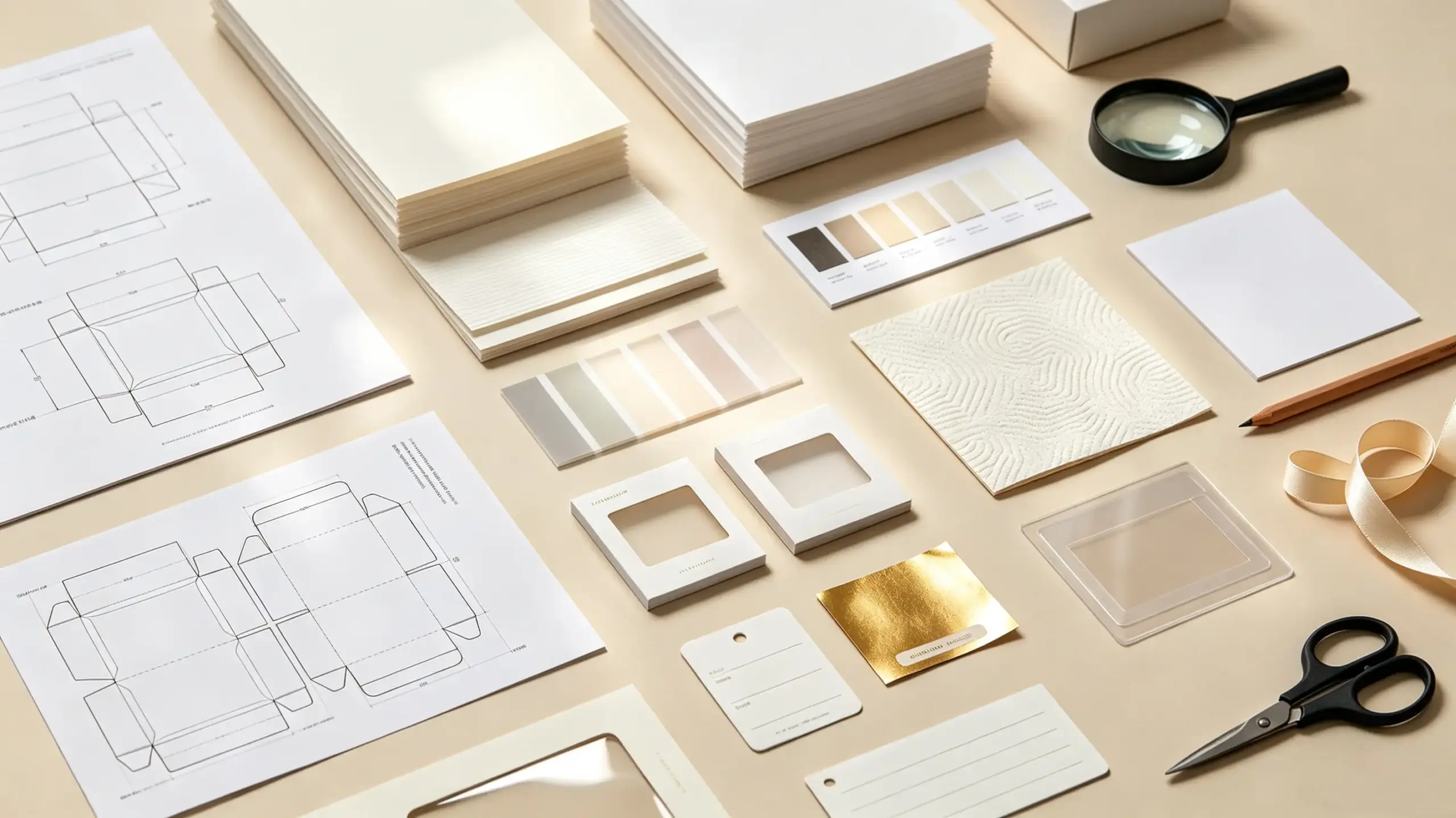
Dieline
A dieline is the template that shows exactly where a package will be cut, folded, glued, and assembled.
Think of it as the blueprint for your packaging.
Designers place all artwork onto the dieline before production.
E
Embossing
Embossing creates a raised three-dimensional effect on paper.
It adds texture and a premium appearance without using additional colors.
Embossing is frequently combined with foil stamping for luxury packaging.
F
Folding Carton
A folding carton is a paperboard box shipped flat and assembled before use.
It is one of the most common packaging styles for:
- Cosmetics
- Food
- Electronics
- Retail products
Foil Stamping
Foil stamping uses heat and pressure to apply metallic foil onto packaging.
Popular foil colors include:
- Gold
- Silver
- Rose Gold
- Copper
- Holographic
Foil stamping creates a premium, luxury appearance.
Flute
Flute refers to the wavy middle layer inside corrugated board.
Common flute types include:
- E Flute
- B Flute
- C Flute
- F Flute
Different flute types offer different levels of strength and print quality.
G
Gloss Lamination
Gloss lamination adds a shiny protective film to printed packaging.
Benefits include:
- Bright colors
- Water resistance
- Scratch resistance
- Premium appearance
GSM (Grams per Square Meter)
GSM measures paper weight.
Higher GSM generally means thicker paper.
Examples:
- 250gsm
- 300gsm
- 350gsm
- 400gsm
GSM helps determine the strength and stiffness of folding cartons.
H
Hot Foil Stamping
Hot foil stamping is a premium printing technique that uses heat and pressure to transfer metallic foil onto the surface of packaging. Unlike traditional printing, foil stamping does not use ink, creating a reflective metallic finish that instantly enhances the perceived value of a product.
Common foil colors include:
- Gold
- Silver
- Rose Gold
- Copper
- Holographic
Hot foil stamping is widely used for luxury cosmetic boxes, jewelry packaging, perfume boxes, and premium gift boxes.
Hang Tag
A hang tag is a printed label attached to a product with string, ribbon, or plastic fasteners.
Hang tags are commonly used for:
- Clothing
- Jewelry
- Gifts
- Accessories
Besides displaying prices, hang tags often communicate brand stories, product information, and care instructions.
I
Insert
An insert is an internal component placed inside a package to securely hold products in position during transportation.
Common insert materials include:
- Paperboard
- EVA Foam
- Sponge
- Molded Pulp
- Plastic
Inserts improve protection while creating a more premium unboxing experience.
K
Kraft Paper
Kraft paper is a strong paper material made from virgin wood pulp.
Its natural brown appearance has become popular among brands promoting sustainability and environmentally friendly packaging.
Common applications include:
- Mailer Boxes
- Soap Packaging
- Organic Food Boxes
- Coffee Packaging
- Shopping Bags
L
Lamination
Lamination is a thin protective plastic film applied to printed paper.
Its primary purposes are:
- Protect printed graphics
- Improve durability
- Increase moisture resistance
- Enhance appearance
Common lamination options include:
- Matte Lamination
- Gloss Lamination
- Soft Touch Lamination
M
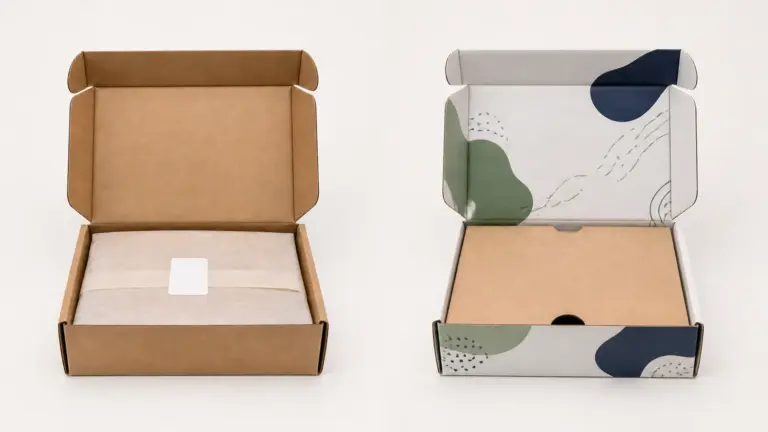
Mailer Box
A mailer box is a self-locking corrugated box designed primarily for shipping and e-commerce.
Mailer boxes are popular because they:
- Protect products during transportation
- Require no tape for assembly
- Offer large printable areas
- Create an excellent unboxing experience
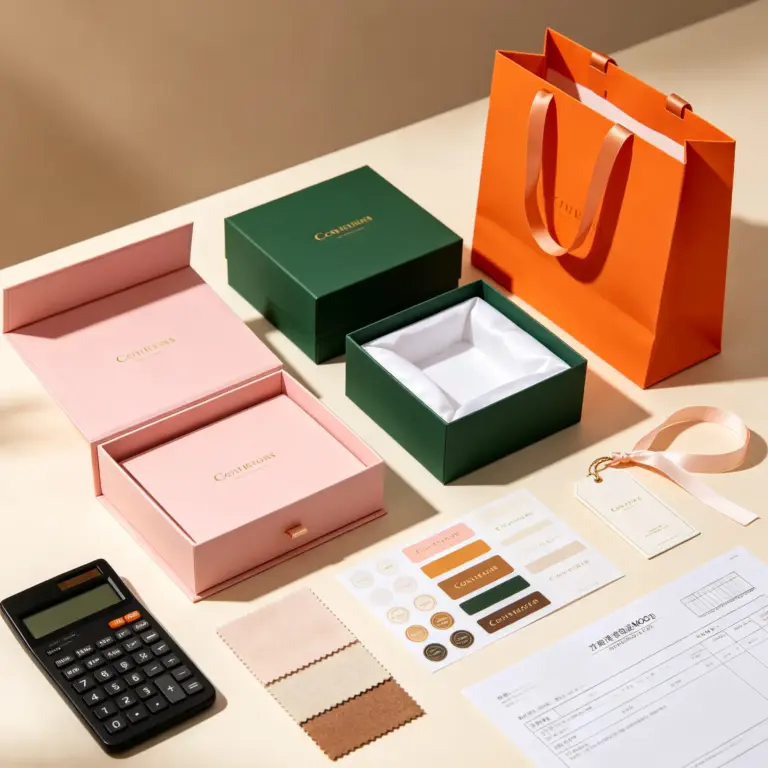
Magnetic Box
A magnetic box is a rigid box featuring concealed magnets in the lid.
It is one of the most luxurious packaging styles available and is commonly used for:
- Luxury Gifts
- Watches
- Jewelry
- Cosmetics
- Electronics
MOQ (Minimum Order Quantity)
MOQ refers to the minimum number of units a manufacturer requires for production.
Most custom packaging manufacturers recommend an MOQ of around 500 pieces because setup costs—such as printing plates, die-cutting molds, and machine preparation—remain nearly the same whether producing 100 or 1,000 boxes.
Mockup
A mockup is a digital or physical representation of packaging before mass production begins.
Designers use mockups to visualize:
- Colors
- Logos
- Box Structure
- Product Presentation
Mockups help brands identify design improvements before investing in production.
O
Offset Printing
Offset printing is the most widely used printing method for custom packaging.
It transfers ink from a printing plate to a rubber blanket and then onto paper.
Offset printing offers:
- Excellent color accuracy
- Sharp image quality
- High production efficiency
- Lower cost for large quantities
P
Pantone (PMS)
Pantone, also known as the Pantone Matching System (PMS), is an international color standard used to ensure consistent color reproduction.
Unlike CMYK, Pantone uses pre-mixed inks, making it ideal for:
- Brand logos
- Corporate identity colors
- Luxury packaging
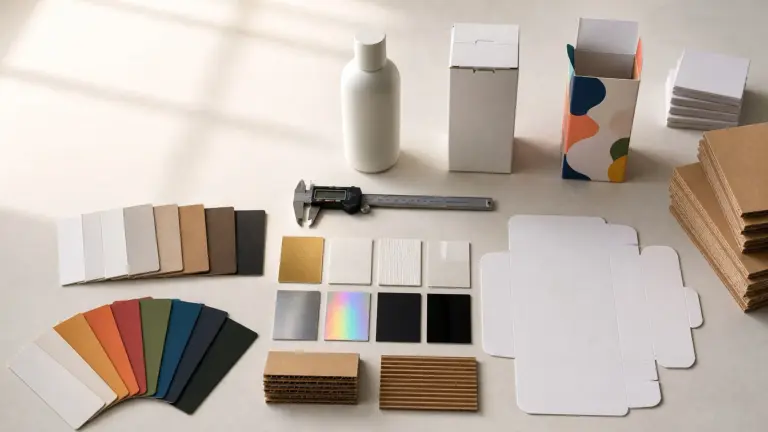
Paperboard
Paperboard is the primary material used to manufacture folding cartons.
Popular paperboard types include:
- SBS
- CCNB
- Kraft Paper
- Black Cardstock
Paperboard provides a balance between print quality, strength, and cost.
Q
QR Code
A QR code printed on packaging allows customers to access digital content instantly by scanning with a smartphone.
Brands often use QR codes to provide:
- Product information
- User manuals
- Authenticity verification
- Promotional campaigns
- Loyalty programs
R
Rigid Box
A rigid box is a premium packaging solution made from thick greyboard wrapped with decorative paper.
Unlike folding cartons, rigid boxes cannot be folded flat.
They are widely used for:
- Luxury Cosmetics
- Jewelry
- Watches
- Wine
- Gift Packaging
S
Score Line
A score line is a pre-pressed crease that allows paperboard to fold cleanly without cracking.
Score lines ensure boxes maintain precise folds during assembly.
Spot UV
Spot UV is a finishing technique that applies a high-gloss UV coating to selected areas of printed packaging.
Common applications include:
- Logos
- Product Names
- Decorative Patterns
Spot UV creates visual contrast and enhances premium branding.
Sleeve
A sleeve is a printed paper wrap that slides over a box or product.
Sleeves provide additional branding while reducing packaging costs compared to printing the entire box.
T
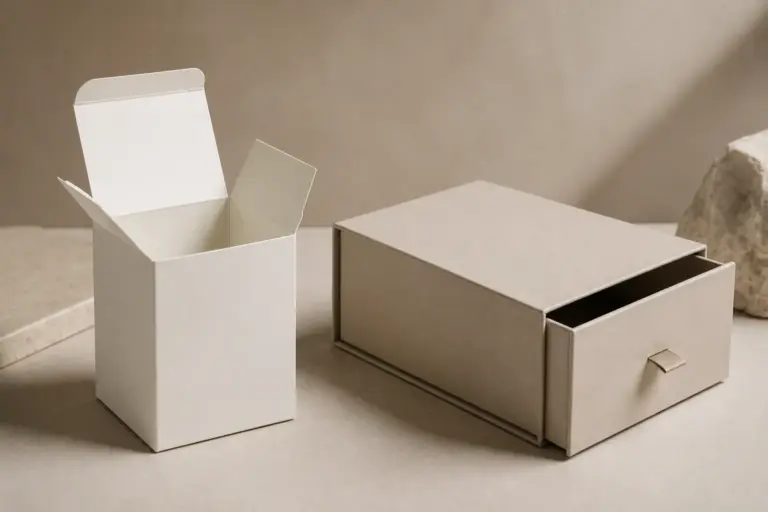
Tuck End Box
A tuck end box is one of the most common folding carton structures.
The box closes using folding flaps instead of adhesive or magnets.
Common styles include:
- Straight Tuck End (STE)
- Reverse Tuck End (RTE)
U
UV Coating
UV coating is a clear liquid coating cured instantly using ultraviolet light.
Benefits include:
- Scratch resistance
- Improved durability
- Enhanced gloss
- Fast curing time
V
Varnish
Varnish is a transparent protective coating applied after printing.
It improves print durability while adding either a matte or glossy finish.
Compared with lamination, varnish is thinner and generally more economical.
W
White Ink
White ink is commonly used when printing on dark-colored or transparent materials.
Without white ink, colors printed on black paper or clear plastic may appear dull or transparent.
Window Patch
A window patch is a transparent plastic film attached behind a die-cut opening in packaging.
It allows customers to see the product while protecting it from dust and damage.
Window patches are commonly used for:
- Bakery Boxes
- Toy Packaging
- Cosmetic Boxes
- Gift Packaging
W
Wrap
Wrap refers to the decorative paper or specialty material covering a rigid box.
Popular wrapping materials include:
- Printed Art Paper
- Linen Paper
- Leather Texture Paper
- Metallic Paper
- Soft Touch Paper
Related Packaging Guides
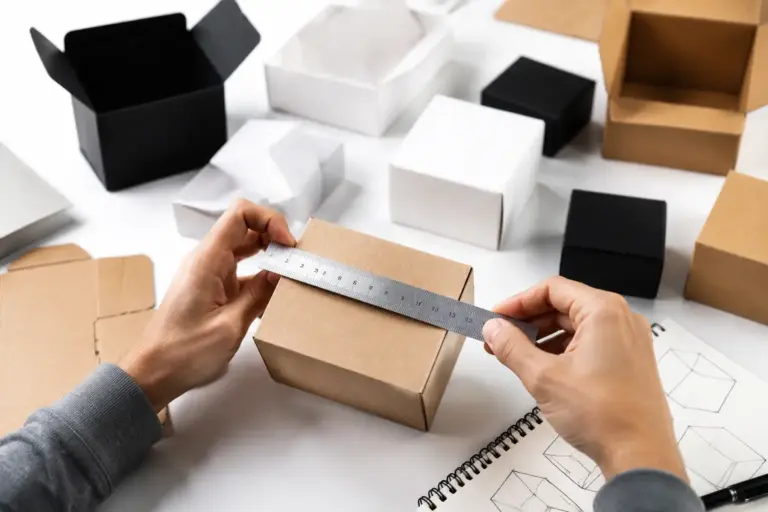
- Custom Box Dimensions Guide: How to Measure Packaging
- Packaging Paper Guide: 7 Materials for Custom Boxes
- CMYK Offset vs Digital Printing for Custom Packaging
Final Thoughts
Learning packaging terminology helps you communicate more effectively with your packaging supplier and reduces the risk of misunderstandings during production.
Whether you’re discussing paper materials, printing methods, surface finishes, or box structures, understanding these common terms allows you to make better decisions and create packaging that reflects your brand professionally.
At Shenzhen Ron & An Technology Co., Ltd., we’re committed to making custom packaging simple and transparent. If you’re unsure about any packaging term or need expert guidance, our team is always ready to help you choose the right materials, printing methods, and box styles for your project.