
PACKAGING FOR APPAREL BRANDS
Custom Clothing Packaging Boxes for Apparel Brands
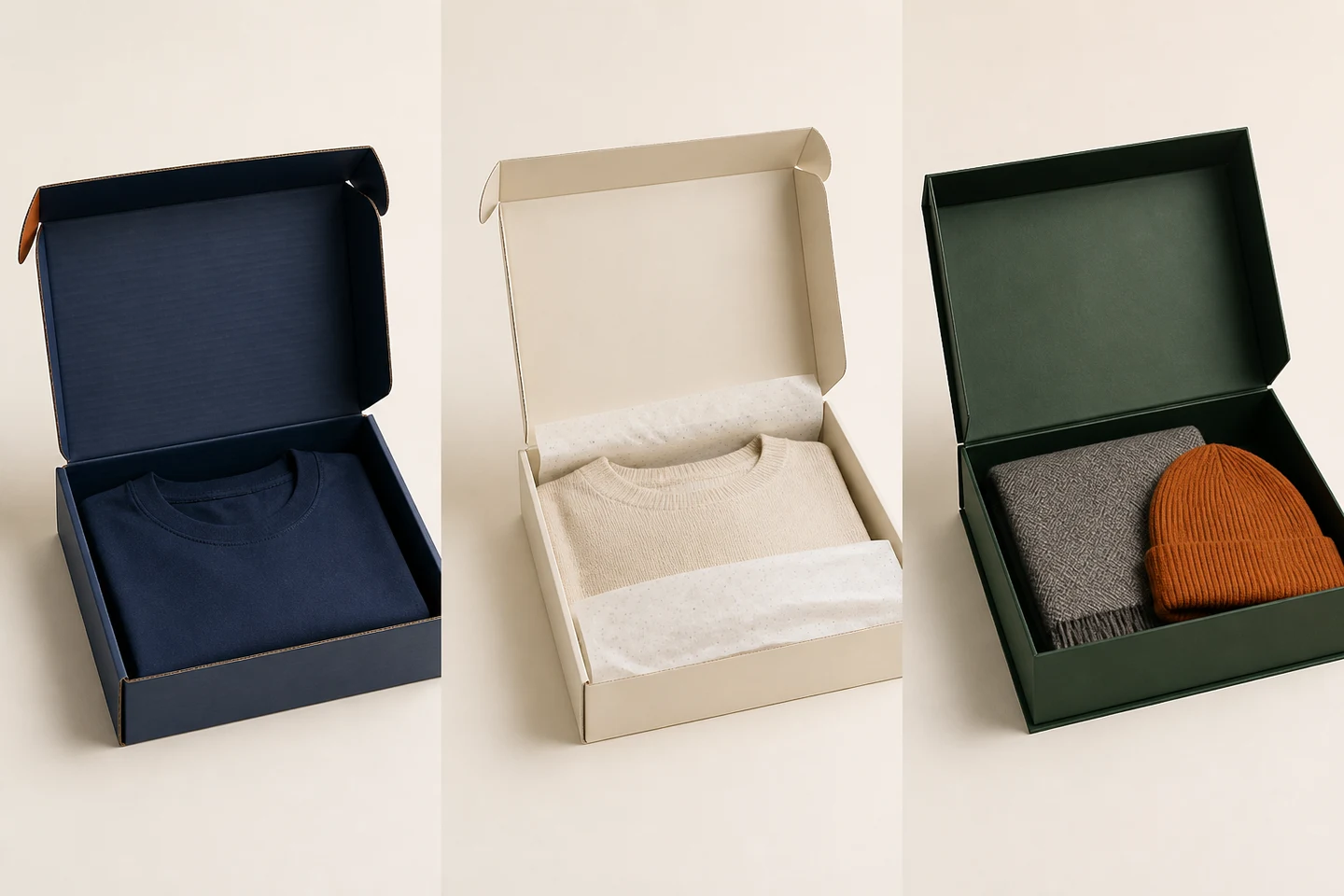
Fold-flat, mailer and presentation packaging developed around garment dimensions, folding method, fulfillment workflow and delivery channel.
Best for: Folded apparel and accessories · Ecommerce and subscription orders · Premium gifting and launch sets
PRODUCT
Folded garment dimensions
FORMAT
Mailer, folding or rigid
PACKING
Fold, tissue and accessories
ROUTE
Retail, gifting or parcel
QUICK ANSWER
What should buyers specify first?
Custom clothing packaging boxes should be sized from the garment after its real folding and bagging process, not from an unfolded size chart. Buyers need to define the SKU range, packed stack height, tissue or inner bag, ecommerce or retail route, fulfillment speed and whether the box is intended for shipping or presentation only.
Important limitation: A rigid presentation box can create unnecessary storage and freight volume for basic apparel shipments. A right-sized corrugated mailer or folding box may provide a better balance of protection, packing speed and brand experience.
COMPARE PRACTICAL STRUCTURES
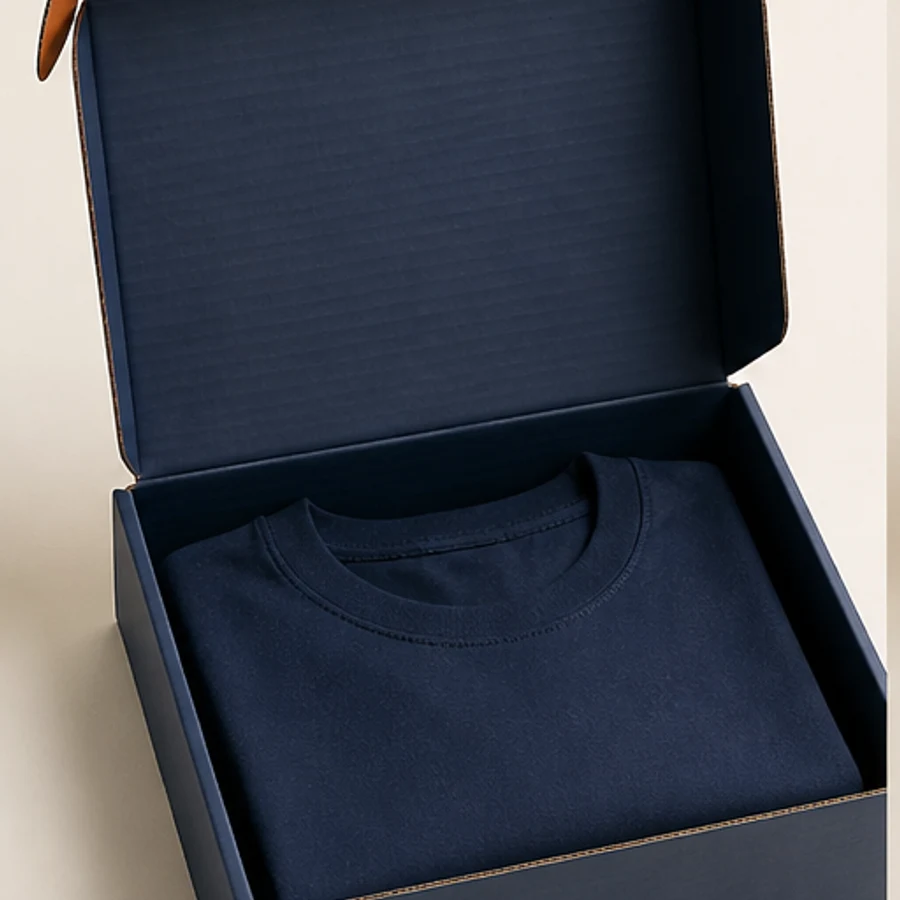
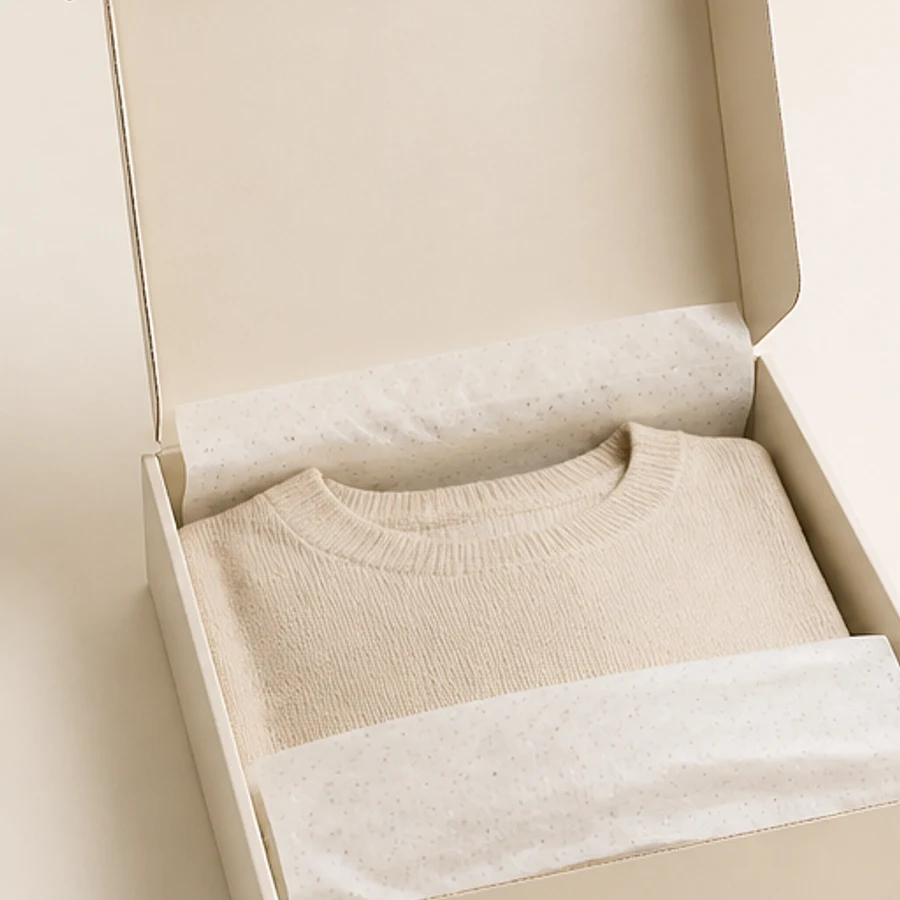
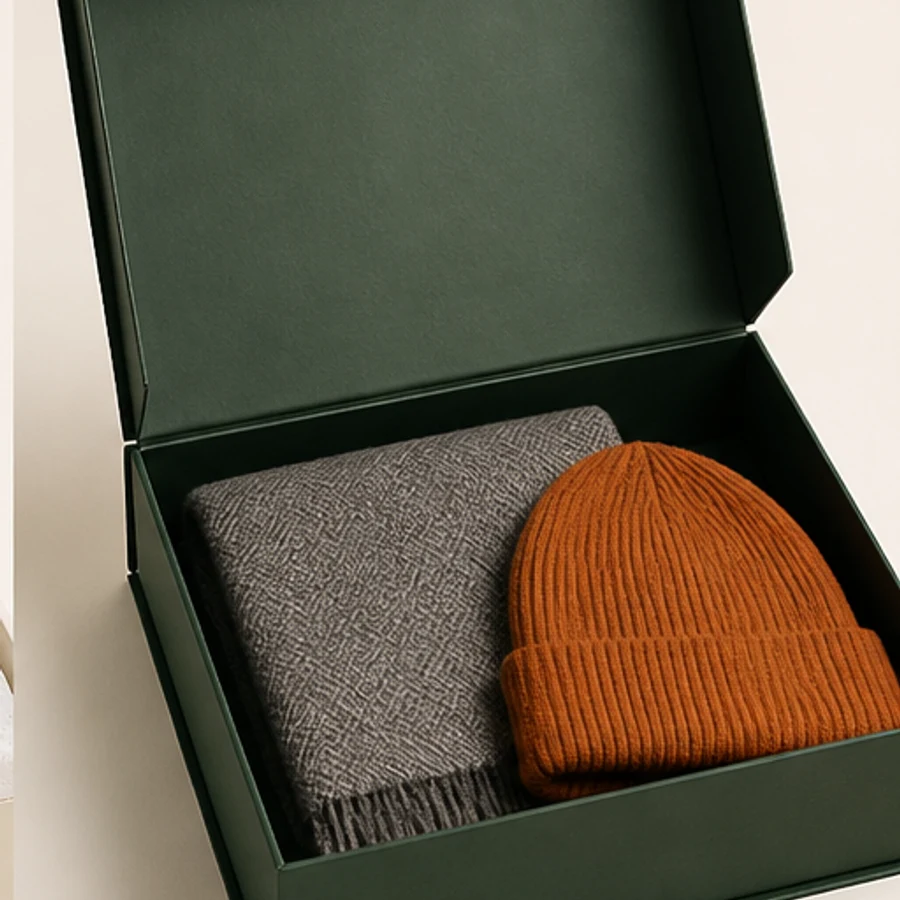
Three packaging routes for this product category
Choose from the packed product, sales channel and delivery route. Decoration comes after the structure can be loaded, handled and approved.
MATERIAL AND PRODUCT FIT
Select the board from the packed product
Corrugated board provides parcel protection for ecommerce; folding paperboard supports light retail presentations; wrapped set-up board suits premium gifting. Select dimensions and board using the packed garment, SKU variation, compression tolerance, label placement and route rather than ordering a generic apparel box size.
Outside print creates the first delivery or retail impression, while inside print can carry a brief reveal, care prompt or campaign message. Keep the design useful and allow space for shipping labels, seals and variable fulfillment marks. Approve dark surfaces and delicate coatings for scuffing during flat packing and assembly.
Four decisions before artwork
Choose the structure
Custom clothing packaging boxes should be sized from the garment after its real folding and bagging process, not from an unfolded size chart.
Specify the material
Corrugated board provides parcel protection for ecommerce; folding paperboard supports light retail presentations; wrapped set-up board suits premium gifting.
Plan print and information
Outside print creates the first delivery or retail impression, while inside print can carry a brief reveal, care prompt or campaign message.
Approve the loaded sample
Pack the largest and smallest intended garment configurations.
Custom packaging boxes for clothing, custom packaging boxes for clothes and branded apparel packaging boxes should be answered here as natural language variations rather than repeated as separate headings.
SAMPLE WITH THE REAL PRODUCT
Approve fit, handling and the delivery system
Pack the largest and smallest intended garment configurations. Check folding consistency, box assembly, bulging, closure, tissue placement and packing time. For ecommerce, evaluate the closed pack with labels and seals through a representative delivery trial; for rigid gifting, review master-carton cube and storage.
- Plain sample: verify fit, assembly, loading and opening.
- Printed sample: check copy, color, folds and finish placement.
- Golden sample: record the accepted structure, orientation and packing method.
BUYER CHECK
Avoid unsupported performance claims
A rigid presentation box can create unnecessary storage and freight volume for basic apparel shipments. A right-sized corrugated mailer or folding box may provide a better balance of protection, packing speed and brand experience.
Ask for a structure review →Send a quote-ready brief
Comparable quotations need the same product, structure, printing, quantity, packing and delivery scope.
- Folded garment dimensions and stack height
- SKU range and maximum packed configuration
- Tissue, inner bag or accessory requirements
- Retail, gifting or ecommerce route
- Mailer, folding or rigid-box preference
- Outside and inside artwork versions
- Quantity by size and delivery destination
Related packaging resources
Custom mailer boxes → · Custom gift boxes → · Custom packaging cost guide →
These links explain the structure and approval decisions in more detail without forcing technical topics into this commercial page.
FAQ
Questions packaging buyers ask first
What box is best for ecommerce clothing?
A right-sized corrugated mailer is a common starting point because it can protect folded apparel and provide a branded opening. Test dimensions with the real packing method.
How should an apparel box be measured?
Fold and bag the garment exactly as fulfillment will pack it, measure the maximum length, width and stack height, then add realistic loading clearance.
Can clothing boxes ship flat?
Folding cartons and corrugated mailers normally ship flat. Traditional rigid set-up boxes usually ship assembled and use more storage and freight volume.
Can apparel packaging include inside printing?
Yes, on suitable structures. It should serve a clear customer or packing purpose and be included in artwork, cost and sample approval.
READY TO BUILD THE SPECIFICATION?
Build the quote around a real product.
Share product dimensions, packed weight, quantity, delivery destination and artwork status. We will review the structure, material and sample route before quoting.