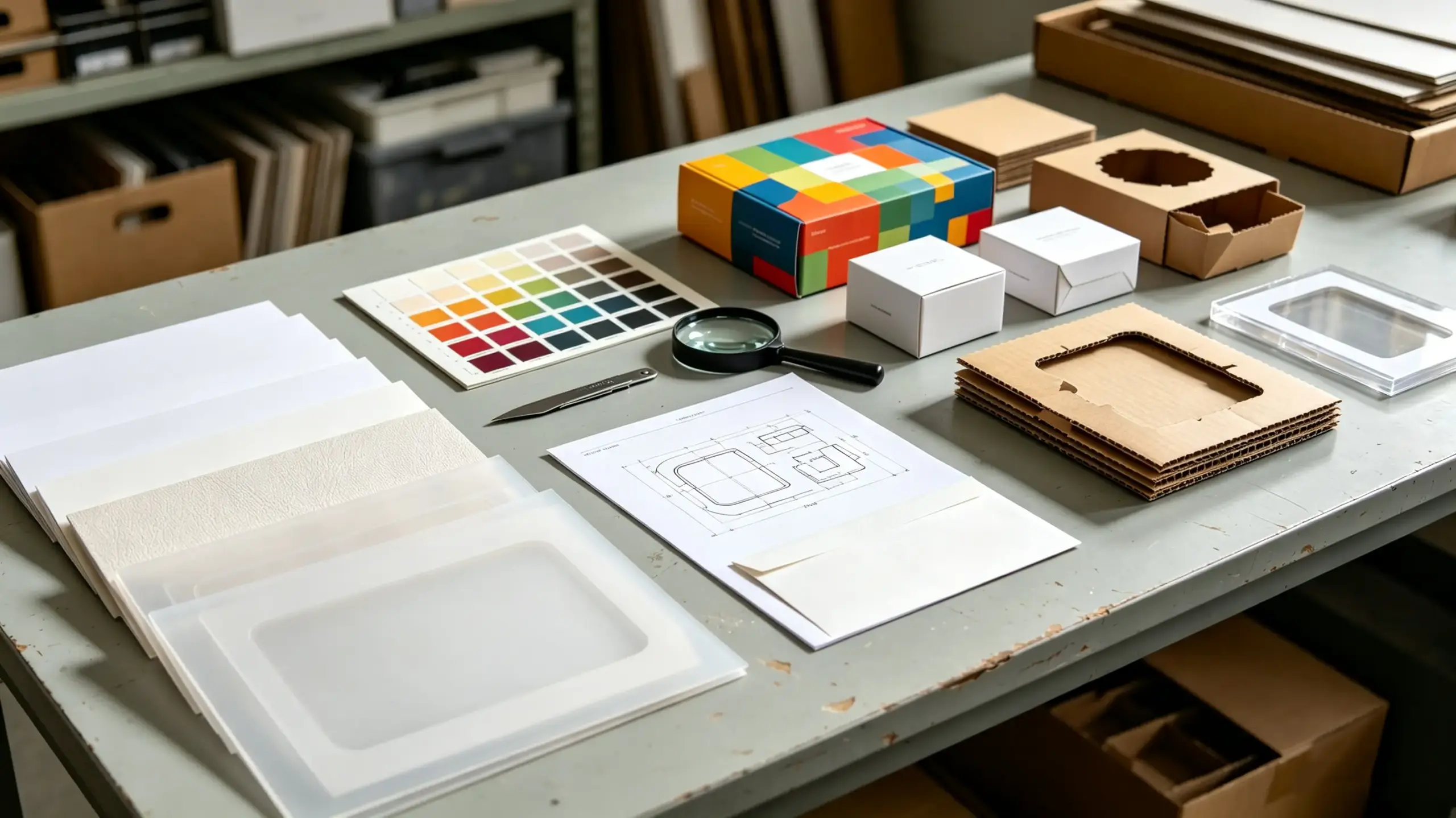
Cardstock Boxes and Paperboard Packaging Guide
Compare cardstock boxes, SBS, FBB, kraft, recycled paperboard and corrugated board. Learn how board grade, caliper, stiffness and print affect packaging selection.
Quick answer
Cardstock boxes are usually lightweight, printed paperboard packages made as folding cartons. They are a strong choice for cosmetics, skincare, supplements, confectionery and other retail products that need a smooth print surface and compact flat storage. They are not the same as corrugated shipping boxes. Start with the product weight, box dimensions, distribution route and desired finish, then approve a named board grade, caliper and physical sample.
North American buyers often use cardstock, paperboard and cardboard interchangeably. That language is understandable in a search, but it is too vague for a production quote. This guide translates those everyday terms into a practical material specification for custom packaging.
What are cardstock boxes?
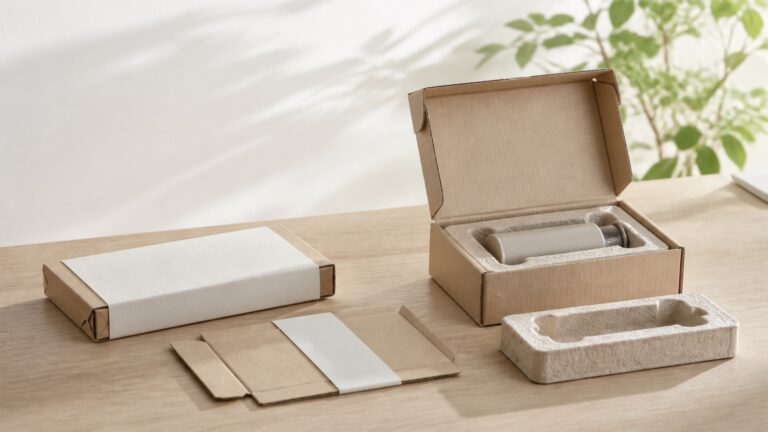
A cardstock box is normally a cut, creased and folded package made from a single layer of relatively stiff paperboard. In packaging production, the more useful term is usually folding carton. These cartons can ship flat, accept detailed graphics and be glued or locked into many structures, including straight-tuck, reverse-tuck, auto-bottom, sleeve and window cartons.
The Paperboard Packaging Council describes folding cartons as flat-shipping packages made from paperboard grades that can include SBS, unbleached kraft, recycled board and FBB. Its overview notes a typical range of 10 to 36 point board, but that range is context—not a universal recommendation. The correct stock still depends on the size and job of the finished package. See the PPC explanation of paperboard packaging formats.
Cardstock vs. paperboard vs. cardboard
| Buyer term | Useful production meaning | Common packaging use |
|---|---|---|
| Cardstock | A general commercial term for heavier paper; not a complete board specification | Light retail boxes, sleeves, inserts and cards |
| Paperboard | A solid fiber-based board category with named grades, calipers and surface treatments | Folding cartons, sleeves and the cores of some rigid boxes |
| Cardboard | An everyday umbrella term that may mean paperboard or corrugated board | Clarify before quoting |
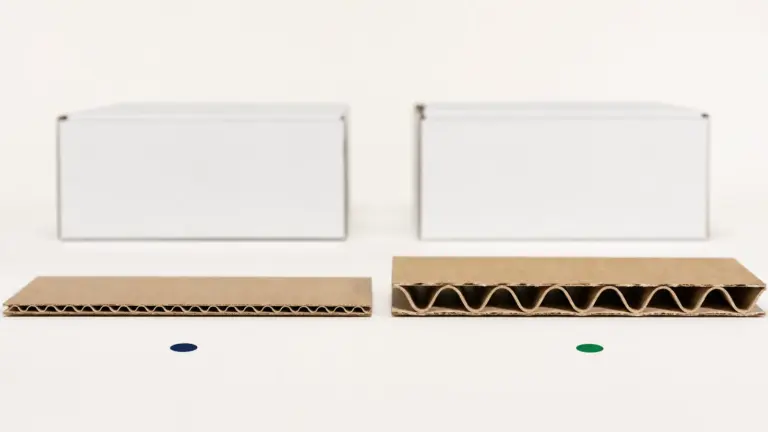
| Corrugated board | One or more fluted mediums bonded between liners | Mailer boxes, shipping cases and protective structures |
| Greyboard or chipboard | A dense board commonly wrapped rather than printed directly | Rigid set-up boxes |
If a request says only “18 pt cardboard,” ask whether it means solid paperboard or corrugated material. That one clarification can prevent a structurally wrong quote. Buyers comparing multiple formats can also use our custom foldable boxes guide to separate retail cartons, ecommerce mailers and fold-flat rigid boxes.
Paperboard grades used for cardstock packaging
| Material | Typical strengths | Important tradeoff |
|---|---|---|
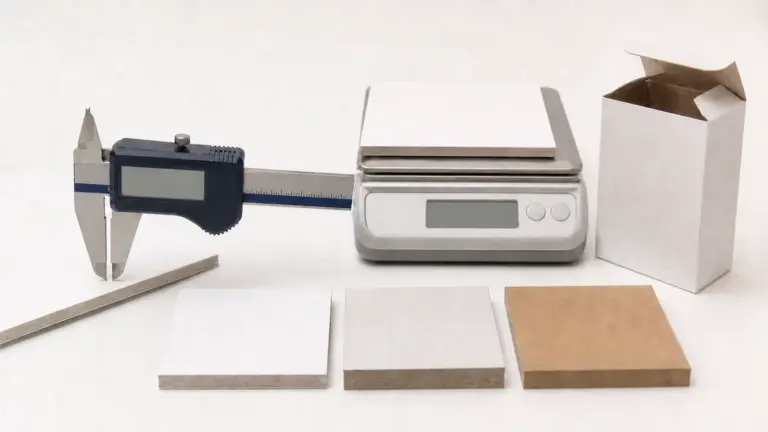
| SBS (solid bleached sulfate) | Bright, smooth surface; strong reproduction of fine graphics | Usually selected for appearance and converting performance, not the lowest material cost |
| FBB (folding boxboard) | Multi-ply construction with good stiffness-to-weight potential and printability | Availability and grade names vary by supply market |
| CUK/SUS and natural kraft boards | Visible fiber tone and good strength characteristics | Brown substrate changes printed color and white areas may require white ink |
| CRB/CCNB recycled board | Recycled-fiber option for many dry retail applications | Back color, smoothness, odor and product-contact requirements need review |
| Corrugated board | Fluting adds cushioning and stacking performance | Thicker construction and a different print surface from solid paperboard |
| Greyboard | Dense core for permanent-feeling rigid structures | Usually wrapped; assembled boxes take more freight and storage volume |
SBS is a common starting point for premium folding cartons because its clean white surface supports detailed printing, coatings, foil and embossing. Confirm whether the board is coated on one or two sides when the inside appearance matters. A white board is not automatically approved for product contact; compliance must cover the exact grade, inks, coatings and use.
FBB can provide useful stiffness at an efficient basis weight, but results vary by mill grade. Natural kraft and unbleached boards support a visible fiber tone, yet the brown substrate changes every printed color. Request the technical data sheet and a proof on the production stock rather than assuming two boards with the same GSM will perform alike.
Coated recycled board—often called CRB, and sometimes CCNB in commercial conversation—can suit many dry retail goods. Review back appearance, odor, surface, scoring and contact requirements. “Recycled” is not a complete specification; request documented recycled content. Corrugated board is a separate layered structure whose fluting adds cushioning and compression resistance. For a direct-ship format, use the custom mailer box buyer’s guide.
GSM, caliper and stiffness are not interchangeable
GSM measures mass per square meter. Caliper measures thickness and may be reported in millimeters, microns or points in North American packaging. One point equals one-thousandth of an inch. Stiffness describes resistance to bending and is affected by fiber composition, board construction, grain direction and moisture as well as thickness.
This is why a request for “350 GSM cardstock” is incomplete. Two 350 GSM grades can have different caliper, stiffness, surface and folding behavior. Long panels and heavy products demand more structural performance than compact cartons for lightweight items. The safe workflow is to share the packed product and panel dimensions, compare named grades, make an unprinted structural sample, and then approve the production stock.
Choose the material from the product outward
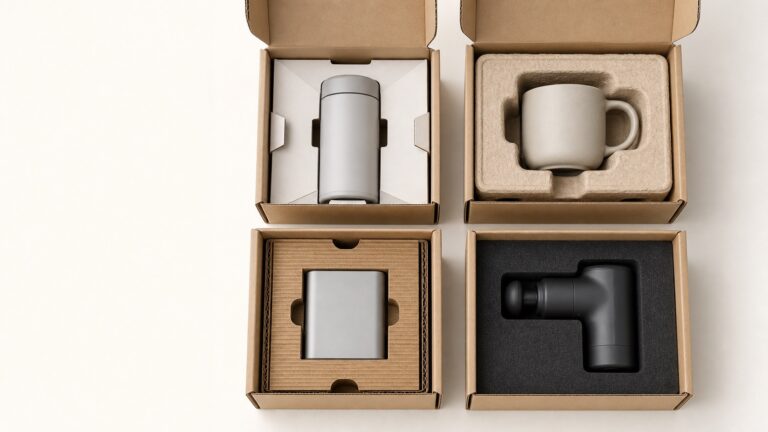
| Packaging job | Practical starting point | Validation needed |
|---|---|---|
| Light cosmetic or skincare carton | SBS or FBB folding carton | Product fit, panel stiffness, print and finish sample |
| Natural-look retail package | Kraft or unbleached board | Ink appearance, rub resistance and color proof |
| Cost-sensitive dry retail goods | CRB/CCNB, subject to application | Back appearance, odor, crease and compliance review |
| Ecommerce parcel | Corrugated mailer or shipping case | Packed-product drop, compression and real-lane tests |
| Premium gift or presentation set | Wrapped greyboard rigid box or engineered fold-flat rigid format | Insert fit, corners, closure, assembly and freight volume |
These are starting points, not engineering limits. Product fragility, liquid risk, temperature and humidity, fulfillment method, stacking and parcel route can change the answer. Cardstock boxes usually serve as retail or inner packaging; they should not be treated as courier-ready shippers without testing the complete packed unit.
How printing and finishing affect board choice
- Offset lithography: supports fine retail graphics at production scale but needs a stable print surface and controlled color approval.
- Digital printing: can suit shorter runs and multiple versions; confirm color, coating and crease performance on the chosen equipment.
- Lamination and coatings: change gloss, scuff resistance and sometimes folding behavior. Film layers may also affect end-of-life claims.
- Foil, embossing and spot effects: require separate artwork, tolerances and enough board support. Avoid critical details across scores.
- Grain and creasing: influence fold quality and panel shape. Heavy ink or a brittle coating can reveal cracking if scores are not engineered for the finished sheet.
Approve color and finish on the intended substrate. A screen proof can confirm content and position, but it cannot reliably show kraft ink appearance, tactile feel or crease cracking.
Paperboard packaging RFQ checklist
- Product type, maximum dimensions, packed weight and fragility
- Required internal box dimensions and packing orientation
- Box style, closure, insert and filling method
- Target quantity and number of artwork versions
- Preferred named board grade, caliper and surface—or permission to recommend them
- Print process, colors, ink coverage and inside-print requirements
- Coating, lamination, foil, embossing and other finish layers
- Product-contact, testing, recycled-content or certification requirements
- Destination, delivery date, master-carton and pallet requirements
- Sample stage: material swatch, plain prototype, printed sample or production proof
For custom folding cartons, the structural brief should also define the dieline, glue flap, grain direction and packing-line constraints. Review our custom folding carton manufacturing page when the application is ready to move from material research to a commercial specification.
Frequently asked questions
Are cardstock boxes strong enough for shipping?
Usually they are designed as retail or inner packaging, not as standalone parcel shippers. Use corrugated protection or an outer shipping case when the distribution route demands it, and validate the complete pack.
What thickness of cardstock is best for packaging?
There is no universal best thickness. Product weight, panel dimensions, board grade, grain, closure, finish and desired feel all influence the decision. Specify a named grade and caliper after testing a physical sample.
Is cardstock the same as paperboard?
In everyday buying language, the terms often overlap. For manufacturing, paperboard is more precise because the quote can identify a grade such as SBS, FBB, CUK or CRB plus caliper, coating and other performance details.
Are paperboard boxes recyclable?
Many paper and paperboard packages are accepted by recycling programs, but coatings, laminates, windows, adhesives, food residue and local rules can change acceptance. The U.S. EPA advises checking the relevant community program rather than making a universal disposal claim; see its current municipal recycling terminology.
Turn the material choice into a production sample
Packaging For manufactures folding cartons, corrugated mailers, rigid boxes and other custom paper packaging for global brands. Share the product dimensions, weight, quantity, destination and artwork status through our custom packaging quotation form. We can compare suitable board constructions and define the sample route before mass production.