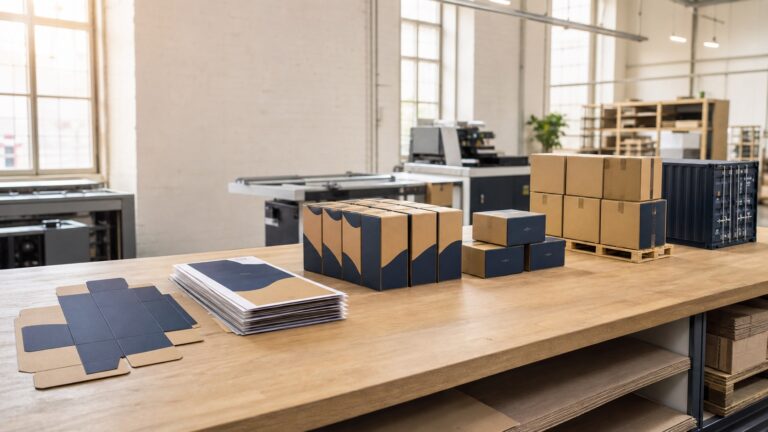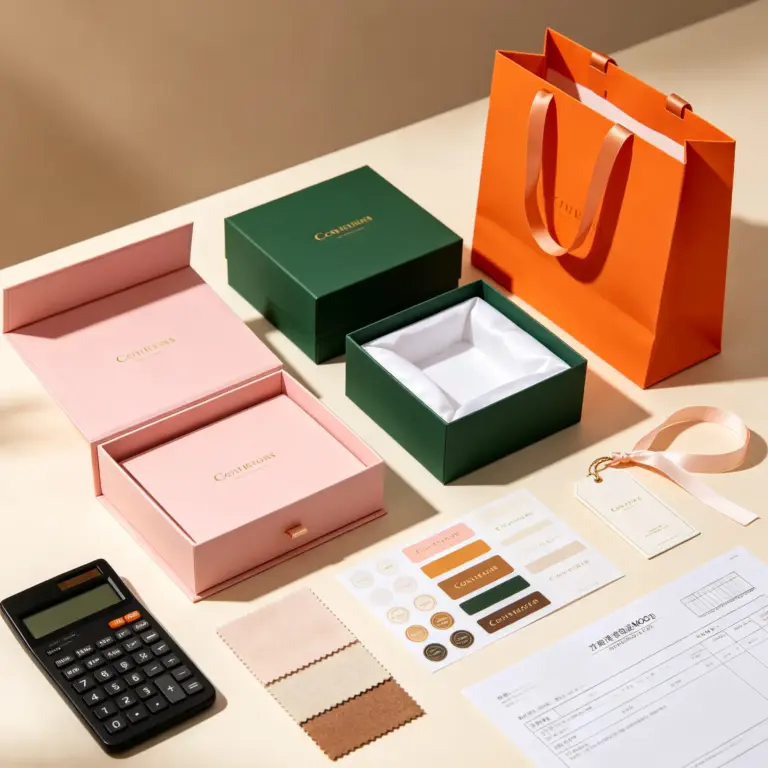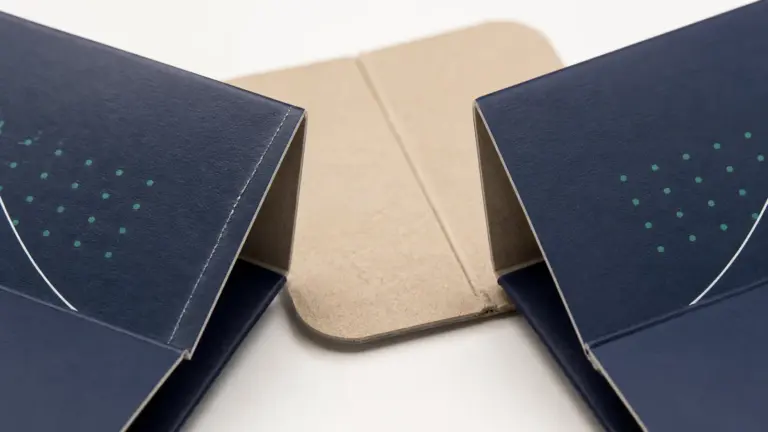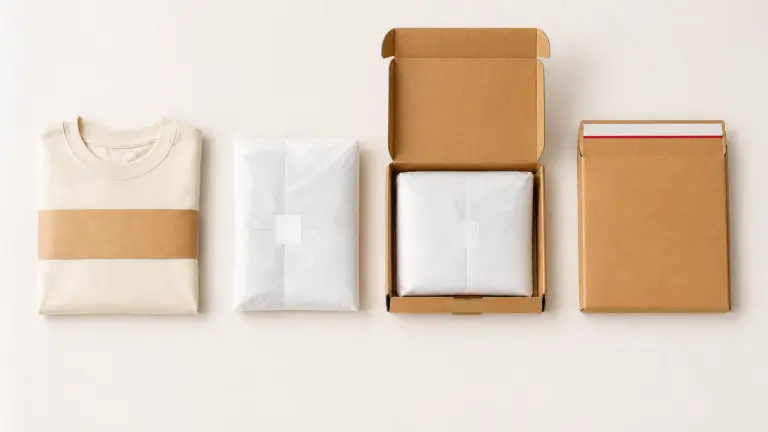
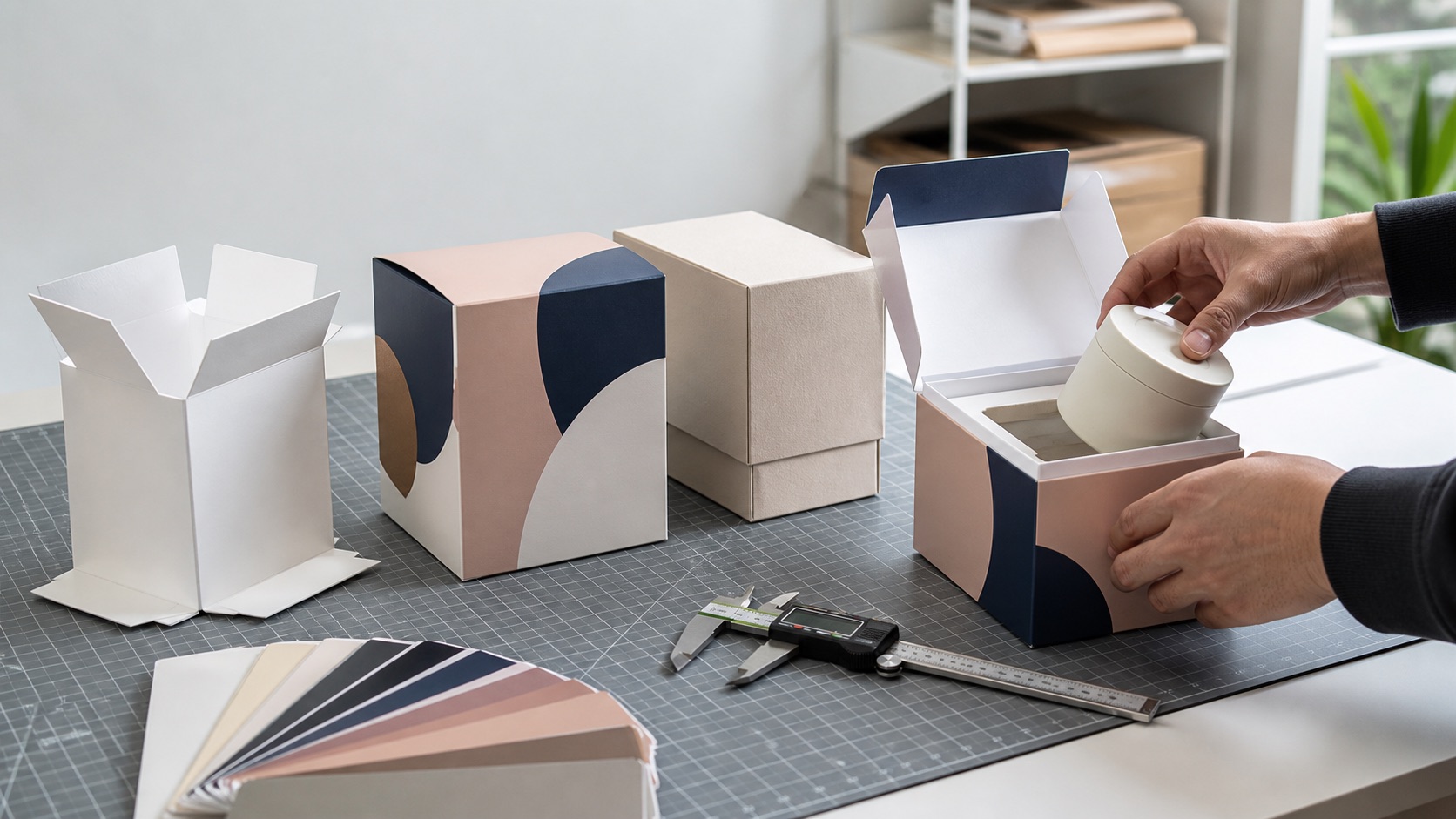
Custom Packaging Prototypes: A Sample Approval Guide
How to choose and approve structural, printed and pre-production packaging samples before committing to a full manufacturing run.
Quick answer: Custom packaging prototypes reduce risk by testing structure, product fit, assembly, graphics and finishes before mass production. Use a plain structural sample for dimensions and function, a printed prototype for artwork and visual direction, and a pre-production sample when color, material or special finishes carry significant risk. Approve each stage against a written checklist.
A digital rendering can show intent, but it cannot prove that a bottle fits, a drawer opens smoothly, a foil stamp registers or a mailer survives the shipping route. A prototype closes that gap. The mistake is expecting one low-cost sample to answer every question. Different sample methods are built for different decisions, and their limitations should be recorded alongside approval.
What a packaging prototype should prove
Every sample request should begin with a decision. Are you approving the dieline? Comparing paper feel? Checking Pantone color? Testing a magnetic closure? Presenting a realistic sales sample? Running a parcel test? If the objective is unclear, teams may approve appearance while assuming that untested performance is also approved.
- Structure: dimensions, folds, panels, lid fit, drawer friction and closure.
- Product fit: clearance, retention, removal, orientation and tolerance.
- Packing: assembly sequence, speed, glue or seal behavior and instructions.
- Graphics: panel order, copy, barcode location, bleed and safe areas.
- Color: expected process color or spot-color match on the selected paper.
- Finish: foil, emboss, spot UV, lamination, wrap and seam behavior.
- Distribution: compression, vibration, drops, scuffing and master-carton protection.
Four useful sample types
| Sample | Best for | Does not reliably prove |
|---|---|---|
| 3D render / digital mock-up | Panel layout, concept alignment, stakeholder review | Physical fit, color, material feel or performance |
| Plain structural sample | Dimensions, folds, closure, assembly and product fit | Production color or special-finish result |
| Digitally printed prototype | Artwork content, scale and overall visual direction | Exact offset/flexo color or production foil/emboss |
| Pre-production sample | High-risk material, print, finish and construction approval | Every natural variation across the full run |
1. Digital mock-ups
A 3D rendering is fast and useful for checking which artwork lands on each panel. It helps marketing, product and procurement discuss the same concept. It can reveal an upside-down side panel or a hidden legal line before physical sampling. However, lighting, shadows and material effects are simulated. Never use a render as evidence that paper, color, texture, closure or fit is approved.
Label renders “visual reference only” and attach the actual dieline version. If the structure changes, regenerate the rendering; otherwise stakeholders may keep approving an obsolete view.
2. Plain structural samples
A plain sample is cut from the proposed or similar board without production printing. For folding cartons and mailers it may be digitally cut, which avoids a production die. For rigid boxes it may be hand-wrapped in plain paper. This is the highest-value early sample because structural errors are cheaper to fix before artwork is finalized.
Use real production products, including normal dimension variation. Load and remove the item repeatedly. Assemble the box with the actual packers if possible. Check whether tabs catch, panels bow, inserts tear, a product rattles or a lid traps air. Record internal dimensions and photograph the packing sequence. A structural sample should be signed only after fit and function pass.
3. Printed prototypes
A digitally printed prototype can show artwork at scale, panel flow, copy size and an approximate color impression. It is valuable for retail presentations and content photography. Yet digital toner or ink on sample material may not match the production press, ink set, coating or paper. Special effects may be simulated rather than produced with final tooling.
Write the limitations on the approval form. For example: “Approved for content and placement; color and gold foil are not approved.” This prevents a stakeholder from pointing to a simulated metallic area after production and calling it a defect.
4. Pre-production samples
A pre-production sample uses final or production-representative materials and processes. It may require dies, plates, foil tooling, setup and minimum press sheets, so it costs more and takes longer. Use it when the consequences of a mismatch exceed the sampling cost: luxury launches, strict brand colors, complex wrapped boxes, fit-critical inserts or large runs.
Clarify which operations are fully representative and which are still hand-made. A hand-assembled rigid sample may show the right materials but not the exact speed or variation of the production line. Conversely, a press proof may represent color but not final die-cut registration. The supplier should state what the sample controls.
Approve structure before color
Keep the decision sequence disciplined. First freeze product dimensions and structure. Then issue the final dieline. Next complete artwork preflight. Finally approve print and finishes. If the product or box size changes after color approval, panels, folds, foil position and sheet layout may all move.
Packaging-specific preflight verifies the dieline version, artwork position, bleed, safe areas, image resolution, color definitions, overprint and finishing layers. Esko’s prepress process guide describes these stages and why a generic PDF check is not enough for packaging.
A 20-point physical sample checklist
- Correct project, SKU, version and date.
- Internal L × W × H within agreed tolerance.
- Product fits at high and low production dimensions.
- Product cannot move into a vulnerable impact zone.
- Customer can remove the product without damage.
- Packer can assemble consistently.
- Closure holds through repeated cycles.
- Glue seams and tabs align.
- Box stands, stacks and displays correctly.
- All panels and copy are present and oriented.
- Barcode has sufficient quiet area and is verified separately.
- Critical graphics respect folds and cut tolerance.
- Color is judged under the agreed light and reference.
- Foil, UV or emboss aligns within tolerance.
- Folds do not crack beyond the agreed limit.
- Surface resists expected rub and handling.
- Insert, ribbon, magnet and accessories are correct.
- Master-carton packing protects edges and finishes.
- Distribution test requirement is completed or scheduled.
- Approval scope and exceptions are written and signed.
Color approval without false certainty
A screen is not a press standard. Define whether color is process CMYK, a named spot ink or an appearance matched to a physical reference. The substrate, coating and light change perception. Natural kraft shifts ink; uncoated paper absorbs; lamination changes saturation and gloss. For critical colors, approve a drawdown, press proof or production-representative sample under controlled light.
Also define acceptable variation. Printed paper is a manufactured material, not a backlit display. A signed target and measurable tolerance are more useful than “match our website.” If several packaging formats use different print processes, aim for an agreed visual family rather than assuming identical numerical values create identical appearance.
Test the packed unit, not the empty box
Transit performance comes from the product, insert, box, seal and master pack together. ASTM D4169 provides a framework for sequential laboratory evaluation of shipping units against representative distribution hazards. For parcel shipments, a carrier, retailer or test laboratory may specify another procedure. The official ASTM D4169 overview notes that the complete unit is normally kept closed through the test sequence when the objective is performance evaluation.
At minimum, run a small real-lane shipment using production-like packing. Inspect product, insert, retail box, outer carton and surfaces separately on arrival. A box can protect the product but arrive too scuffed for a luxury unboxing; that is still a design issue.
Create a golden sample and change record
The final approved sample should receive a unique version, approval date and signatures. Photograph all views and store the physical piece safely. List deviations that are acceptable and those still to be corrected. If any material, color, structure or supplier changes, issue a controlled revision. Do not allow “approved except for…” to live only in chat messages.
The golden sample is a comparison reference, not a guarantee that every natural paper fiber or handmade seam will be identical. Combine it with written tolerances and an inspection plan. For large or high-risk orders, agree on in-process and pre-shipment inspection points.
What to test on a folding carton sample
Quick answer: Test a folding carton with the real packed product. The sample should prove usable internal fit, crease behavior, closure, glue-seam alignment, base support, insert retention, opening and repacking—not just the appearance of an empty box.
- Plain structural sample: check loading direction, product movement, flap engagement and assembly time.
- Printed sample: check panel orientation, barcode placement, text clearance and finish registration.
- Loaded handling check: inspect bulging, bottom support and contact points after normal handling.
- Approved reference: record the board, dieline revision, artwork version and signed acceptance criteria.
Use the folding carton specification guide to record the approved construction, or review custom folding cartons before requesting a production sample.
Frequently asked questions
How many packaging prototypes do I need?
Use as many stages as the decisions require. Many projects need at least a plain structural sample and a printed/finished approval; high-risk work may add a pre-production sample.
Can a digital sample match offset printing exactly?
No guarantee. It can show content and approximate appearance, but different inks, devices, papers and coatings produce different color and surface results.
Should the product sample be sent to the factory?
Yes when fit, weight, fragility or packing behavior matters. Send representative units and state any dimensional tolerance.
What should I sign on the sample?
Identify the version, approval scope, exceptions, color reference, materials, dimensions and date. Keep one controlling sample with both parties where practical.
Sample the risk before you buy the run
Packaging For supports structural mock-ups, printed samples and production-representative approvals across folding cartons, rigid boxes, mailers and inserts. Share your product, artwork status, sample objective, quantity and launch date through our custom packaging quote form. We will recommend the minimum sample path that answers the important decisions before production.