
PACKAGING FOR DEVICES AND ACCESSORY KITS
Custom Electronics Packaging Boxes for Devices and Accessories
Custom electronics packaging boxes for retail and presentation, built around device geometry, surface protection, cable routing, opening order and distribution.
Best for: Headphones and audio accessories · Wearables and compact devices · Chargers, cables and launch kits

DEVICE
Geometry and vulnerable surfaces
KIT
Cables, chargers and documents
INSERT
Retention plus finger access
ROUTE
Retail, gifting or ecommerce
QUICK ANSWER
Map every device and accessory before sizing the box
Map the production device, cable, charger, documents and every regional accessory before sizing the box. Custom device packaging needs maximum dimensions and weight, no-contact surfaces, connector locations, cable bend limits, removal access and the intended opening order. This page covers paper-based retail and presentation boxes; it does not refer to semiconductor or component-level electronic packaging.
Important limitation: A fitted paperboard insert is not automatically ESD protective, waterproof or transit certified. State electrostatic-discharge, moisture, battery, dangerous-goods and other technical controls separately, then validate the complete system with the appropriate qualified specialists.
COMPARE PRACTICAL STRUCTURES
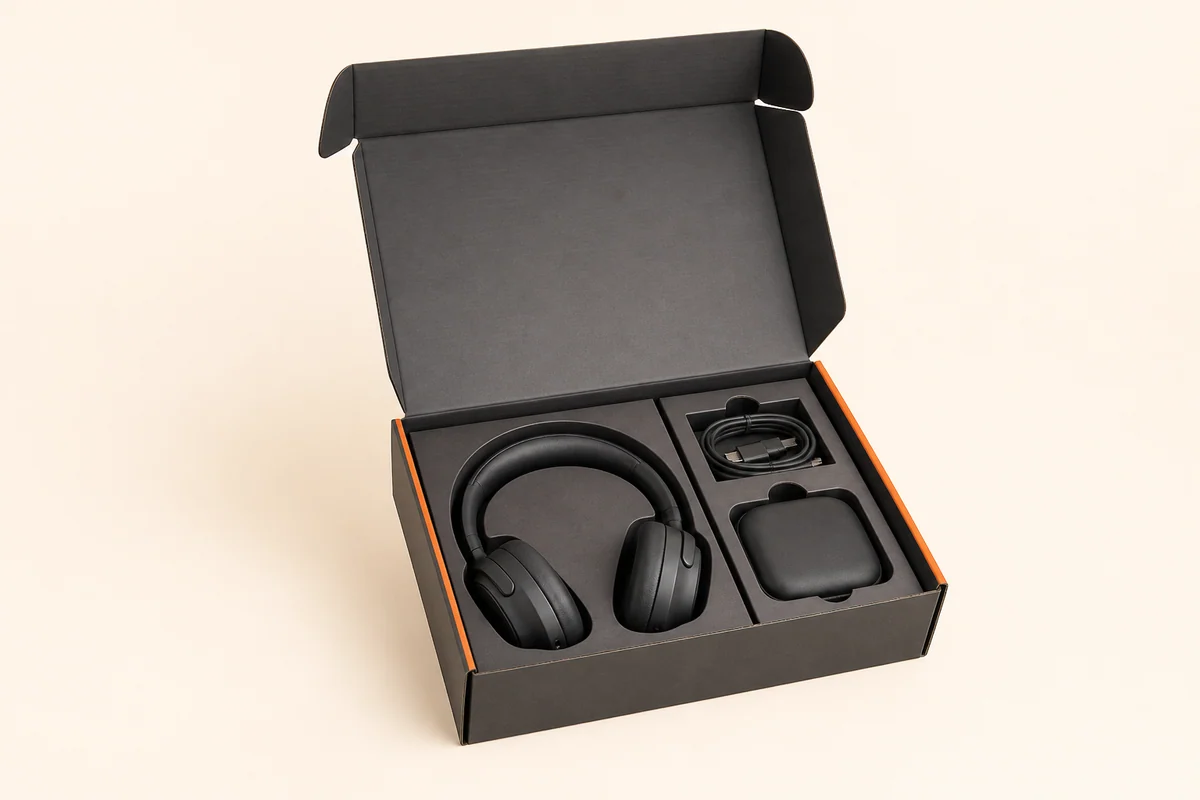
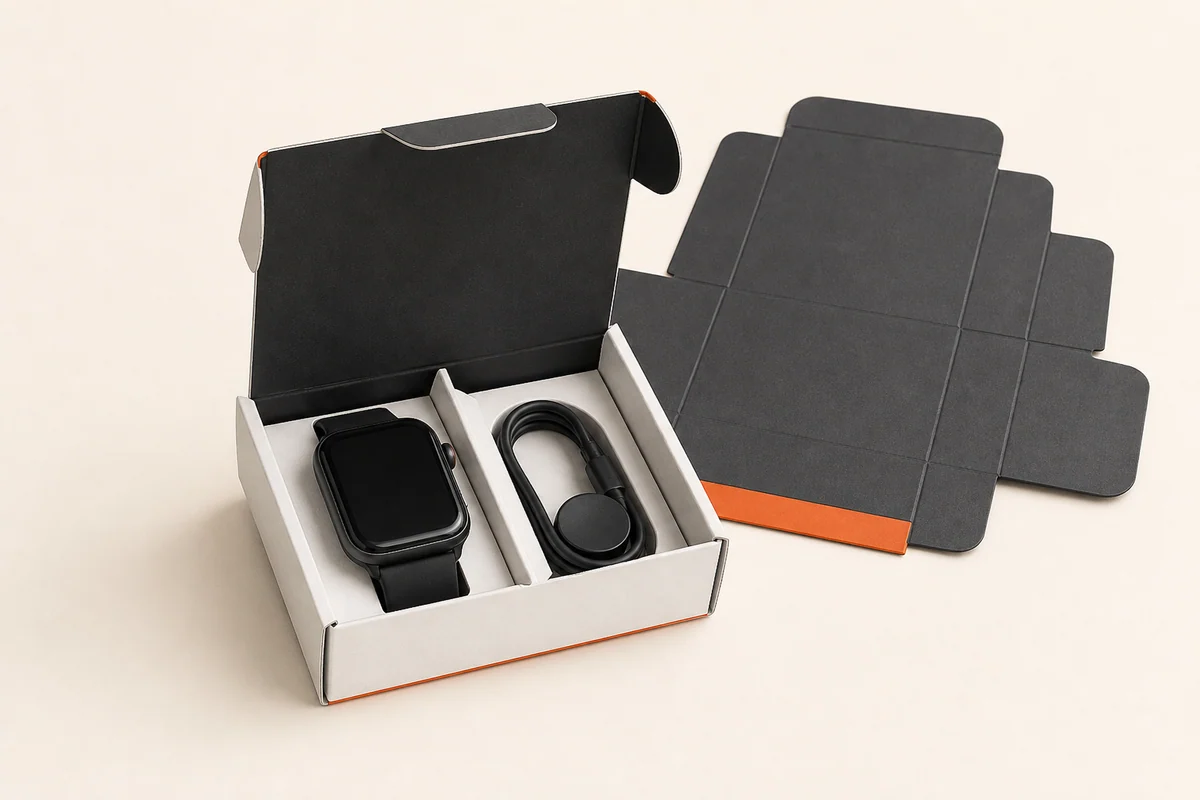
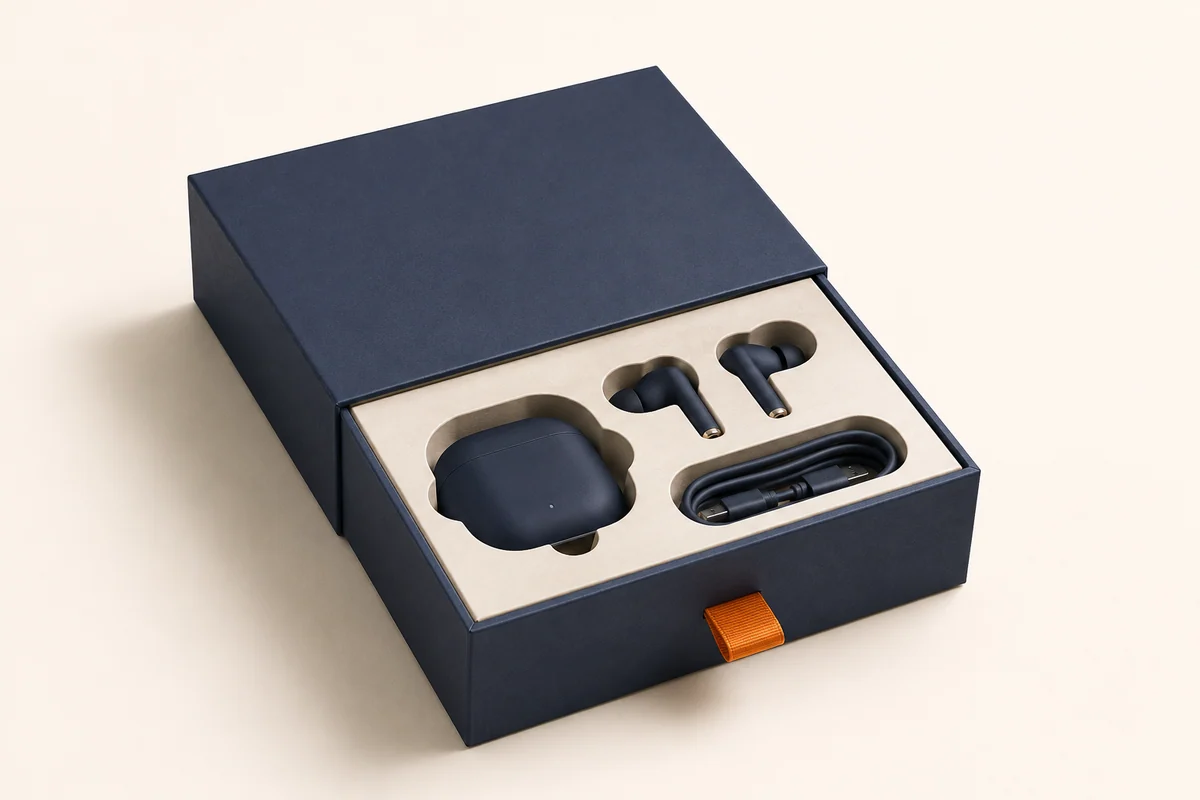
Electronics packaging boxes with inserts: three routes
Choose from the packed product, sales channel and delivery route. Decoration comes after the structure can be loaded, handled and approved.
MATERIAL AND PRODUCT FIT
Choose board and inserts from device requirements
Folding paperboard suits compact retail devices that do not require a heavy structural shell. Corrugated board supports larger accessory kits and parcel routes, while wrapped set-up board provides a more substantial presentation at the cost of assembled storage volume. Choose the insert from device weight, contact surfaces, retention points, cable geometry and documented technical requirements—not from appearance alone.
Exterior print should identify the exact model and configuration; interior print can guide setup or component order. Leave working areas for barcodes, serial labels, seals and regional variable data. On dark solids and delicate finishes, review rubbing at edges and insert contact points. Foil and coatings also need clearance from scores, adhesive zones and downstream labels.
Resolve fit and component order before artwork
Map every component
Confirm the device, charger, cable, documents and all regional accessory variants.
Define contact limits
Mark screens, polished housings, connectors and other areas the insert must not damage.
Plan variable labels
Leave controlled areas for model, serial, barcode, seal and regional information.
Test the full configuration
Approve removal, cable placement, surface condition and the final shipping pack.
Electronics packaging with inserts has two fit problems: the device must stay clear of damaging contact, and cables or chargers must remain in their assigned spaces without pressing against it. Headphone packaging boxes need room for cable memory and ear-cup geometry; smartwatch packaging boxes need controlled access to the watch body, band and charging components.
SAMPLE WITH THE REAL PRODUCT
Test removal, abrasion and the complete shipping pack
Build the sample with production-equivalent devices, cables and accessories. Turn the pack through likely handling orientations, then check retention, removal force, cable memory, screen or housing abrasion, closure, document placement and packing time. For ecommerce, add the final shipper and labels before testing. Record the approved component map and revision so a later charger or cable change does not create an unnoticed fit problem.
- Plain sample: verify fit, assembly, loading and opening.
- Printed sample: check copy, color, folds and finish placement.
- Golden sample: record the accepted structure, orientation and packing method.
BUYER CHECK
Avoid unsupported performance claims
List ESD, moisture, battery and dangerous-goods requirements as separate RFQ lines with the required evidence or test method. Do not expect an ordinary paper insert or a general “protective packaging” description to satisfy them.
Ask for a structure review →What to include in an electronics packaging RFQ
Comparable quotations need the same product, structure, printing, quantity, packing and delivery scope.
- Device and accessory dimensions and weight
- Vulnerable surfaces and no-contact zones
- Cable, charger and document arrangement
- Retail, gifting or ecommerce route
- Folding, corrugated or rigid-box preference
- Insert material and technical requirements
- Quantity by configuration, destination and launch date
Related packaging resources
Custom gift boxes → · Custom mailer boxes → · Packaging inserts compared → · Packaging sample guide →
Use these guides to compare structures and approval steps before requesting a production quotation.
FAQ
Electronics packaging and insert questions
What should a custom electronics packaging RFQ include?
Include production device and accessory dimensions, weights, surface restrictions, component map, technical controls, box style, insert, artwork versions, quantity, route, destination and required date.
Can paperboard inserts hold electronics and cables?
They can retain many compact devices and accessories when the geometry and load are suitable. Test retention, finger access, abrasion and cable placement with production-equivalent components.
Is a paper insert automatically anti-static?
No. Standard paper packaging should not be represented as ESD protective without an appropriate material system, design, test method and documented result for the application.
Should electronic product packaging boxes use an outer shipper?
A presentation box often needs an outer shipping system for parcel distribution. Evaluate the complete loaded pack rather than assuming a rigid or folding box is a shipping container.
READY TO BUILD THE SPECIFICATION?
Build the quote around a real product.
Share product dimensions, packed weight, quantity, delivery destination and artwork status. We will review the structure, material and sample route before quoting.