
PAPER PACKAGING FOR FOOD BRANDS
Custom Food Packaging Boxes for Food Brands
Secondary paper packaging developed around the sealed product, retail channel, handling conditions and the information your brand must display.
Best for: Packaged snacks and confectionery · Bakery and specialty foods · Retail and promotional food sets
PRODUCT
Sealed unit, tray or gift set
FORMAT
Folding, corrugated or rigid
EXPOSURE
Grease, moisture and temperature
APPROVAL
Product, contact and market review
QUICK ANSWER
What should buyers specify first?
Custom food packaging boxes are secondary paper packages made to fit a defined food product, primary wrap or container. Buyers should provide the packed dimensions, weight, holding conditions, required information panels and whether any component will touch food before selecting board, coating, window, insert or box style.
Important limitation: A printed paper box does not automatically qualify for direct food contact, grease resistance, refrigeration or freezer use. Those requirements must be stated, documented and tested for the complete construction and destination market.
COMPARE PRACTICAL STRUCTURES
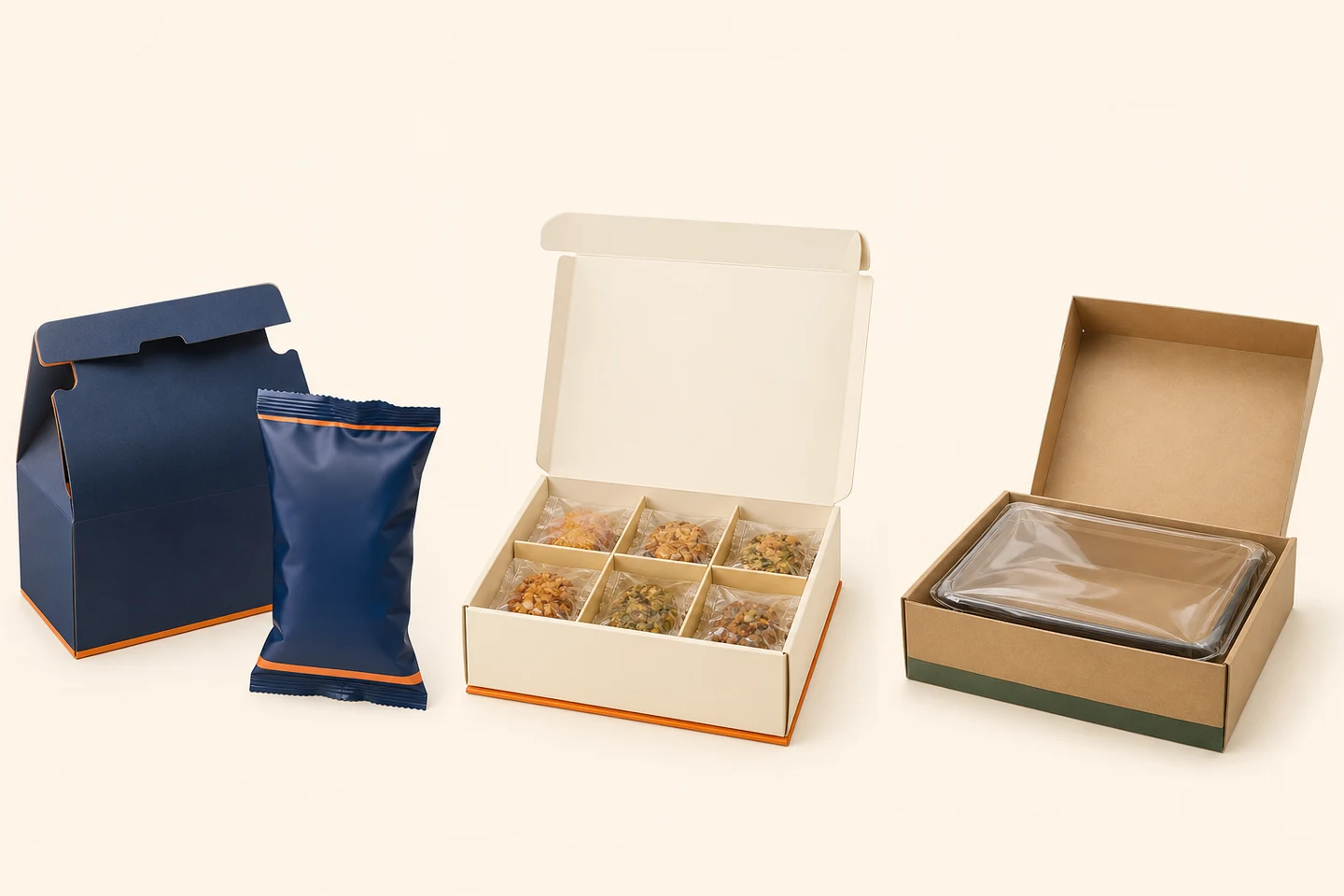
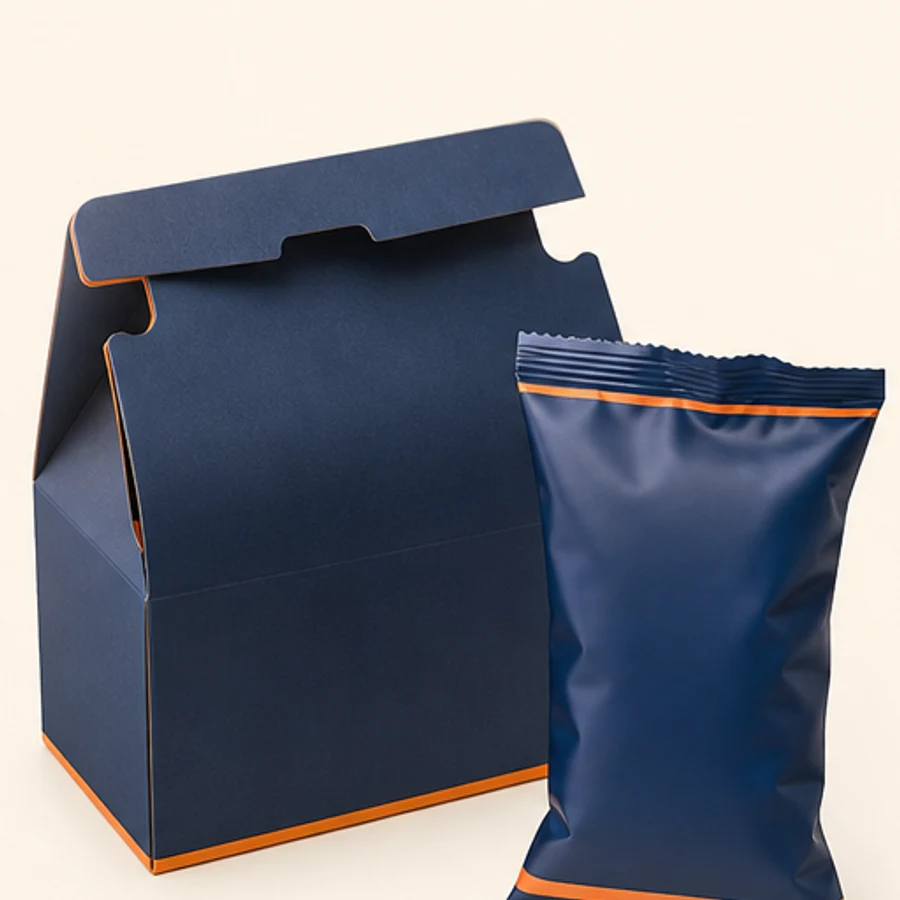
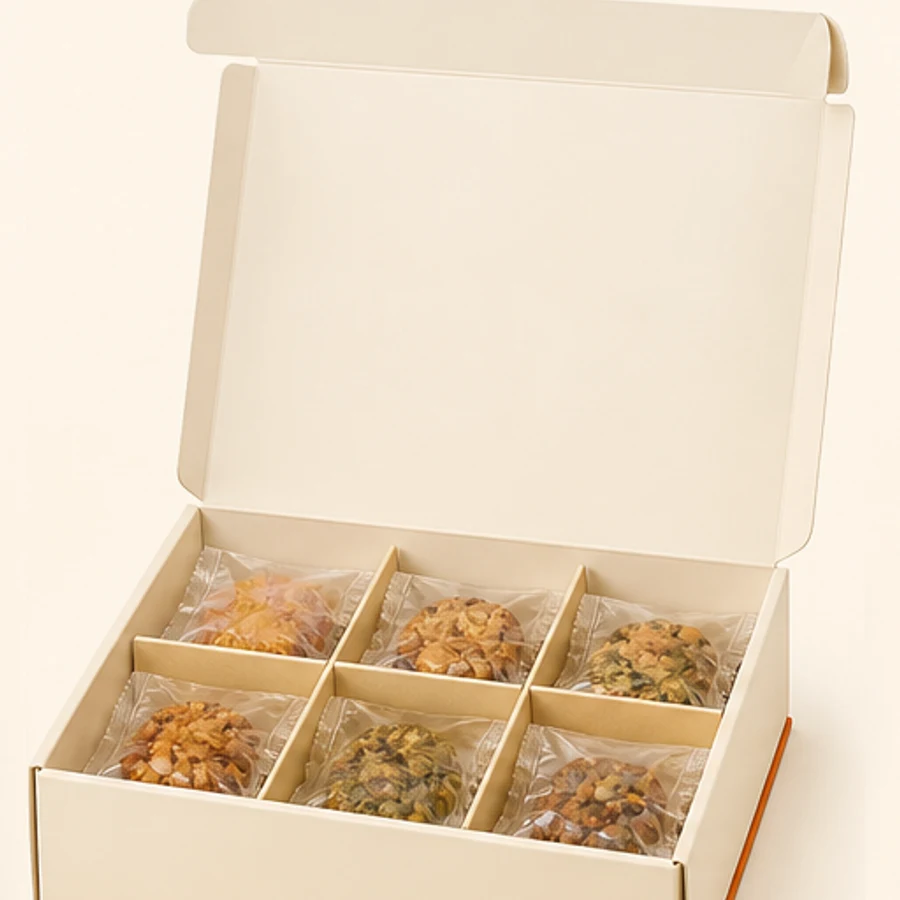
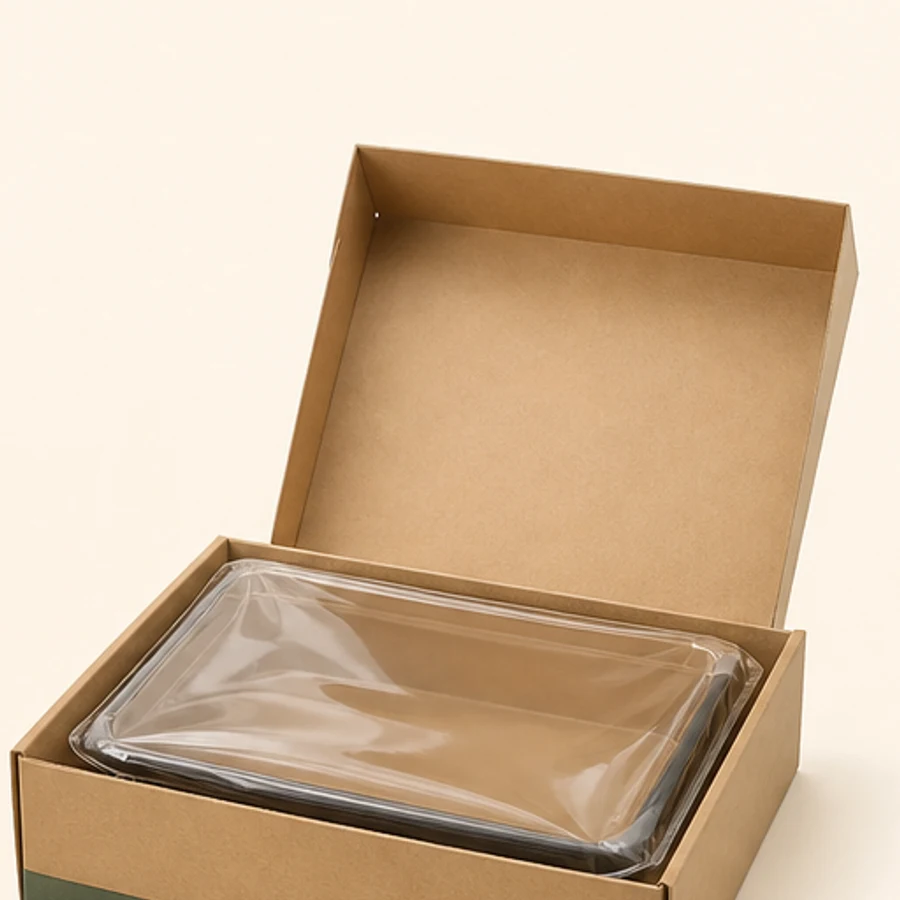
Three packaging routes for this product category
Choose from the packed product, sales channel and delivery route. Decoration comes after the structure can be loaded, handled and approved.
MATERIAL AND PRODUCT FIT
Select the board from the packed product
Paperboard is a practical starting point for lightweight retail units; corrugated board supports larger sets and distribution; wrapped set-up board suits premium assortments. Select a named construction using packed weight, panel size, humidity, grease exposure and print needs. If food contact is possible, identify the contact surface and request project-specific documentation rather than relying on a generic paper name.
Use print and finishing to organize flavor, size, instructions and required product information before adding decoration. Large dark solids, film lamination, foil, windows and coatings can change scuffing, fold behavior and the material pathway. The brand remains responsible for final product claims and destination-market labeling review.
Four decisions before artwork
Choose the structure
Custom food packaging boxes are secondary paper packages made to fit a defined food product, primary wrap or container.
Specify the material
Paperboard is a practical starting point for lightweight retail units; corrugated board supports larger sets and distribution; wrapped set-up board suits premium assortments.
Plan print and information
Use print and finishing to organize flavor, size, instructions and required product information before adding decoration.
Approve the loaded sample
Approve a plain sample with the sellable food unit or sealed primary pack.
Custom food packaging boxes with logo, a custom food packaging box and custom printed food packaging boxes should all begin with the same facts: product condition, primary pack, size, weight, exposure, quantity and destination.
SAMPLE WITH THE REAL PRODUCT
Approve fit, handling and the delivery system
Approve a plain sample with the sellable food unit or sealed primary pack. Check loading, closure, headspace, crushing, grease or moisture exposure, opening and condition after the intended distribution route. Record exactly what touches the product and retain the approved construction and packing method.
- Plain sample: verify fit, assembly, loading and opening.
- Printed sample: check copy, color, folds and finish placement.
- Golden sample: record the accepted structure, orientation and packing method.
BUYER CHECK
Avoid unsupported performance claims
A printed paper box does not automatically qualify for direct food contact, grease resistance, refrigeration or freezer use. Those requirements must be stated, documented and tested for the complete construction and destination market.
Ask for a structure review →Send a quote-ready brief
Comparable quotations need the same product, structure, printing, quantity, packing and delivery scope.
- Packed product dimensions and weight
- Sealed primary pack or direct-contact requirement
- Storage temperature, grease and moisture exposure
- Required information panels and artwork versions
- Preferred folding, corrugated or rigid format
- Window, divider or insert requirements
- Quantity by SKU and delivery destination
Related packaging resources
Custom pastry boxes → · Custom folding cartons → · Packaging paper guide →
These links explain the structure and approval decisions in more detail without forcing technical topics into this commercial page.
FAQ
Questions packaging buyers ask first
What information is needed for custom food packaging boxes?
Provide the sellable product dimensions, weight, primary pack, storage conditions, retail or shipping route, quantity, artwork versions and any direct-contact requirement.
Can a paper box touch food directly?
Only when the specific board, inks, coatings, adhesives and converting conditions are reviewed for that use. State the contact requirement before quotation and do not assume every paperboard is suitable.
Should food gift sets use folding or rigid boxes?
Folding cartons reduce storage and freight volume. Rigid boxes provide a more permanent presentation but normally ship assembled. Product weight, price point and delivery route should decide.
Can food boxes include windows or dividers?
Yes, when the window and divider support product visibility, separation or loading. Their materials, glue areas and product-contact relationship must be defined in the sample.
READY TO BUILD THE SPECIFICATION?
Build the quote around a real product.
Share product dimensions, packed weight, quantity, delivery destination and artwork status. We will review the structure, material and sample route before quoting.