
PACKAGING FOR JEWELRY RETAILERS
Custom Jewelry Box Packaging for Retail Brands
Compact folding and rigid boxes developed around the jewelry type, insert retention, opening experience, retail presentation and delivery method.
Best for: Rings and earrings · Necklaces and bracelets · Jewelry sets and gifting
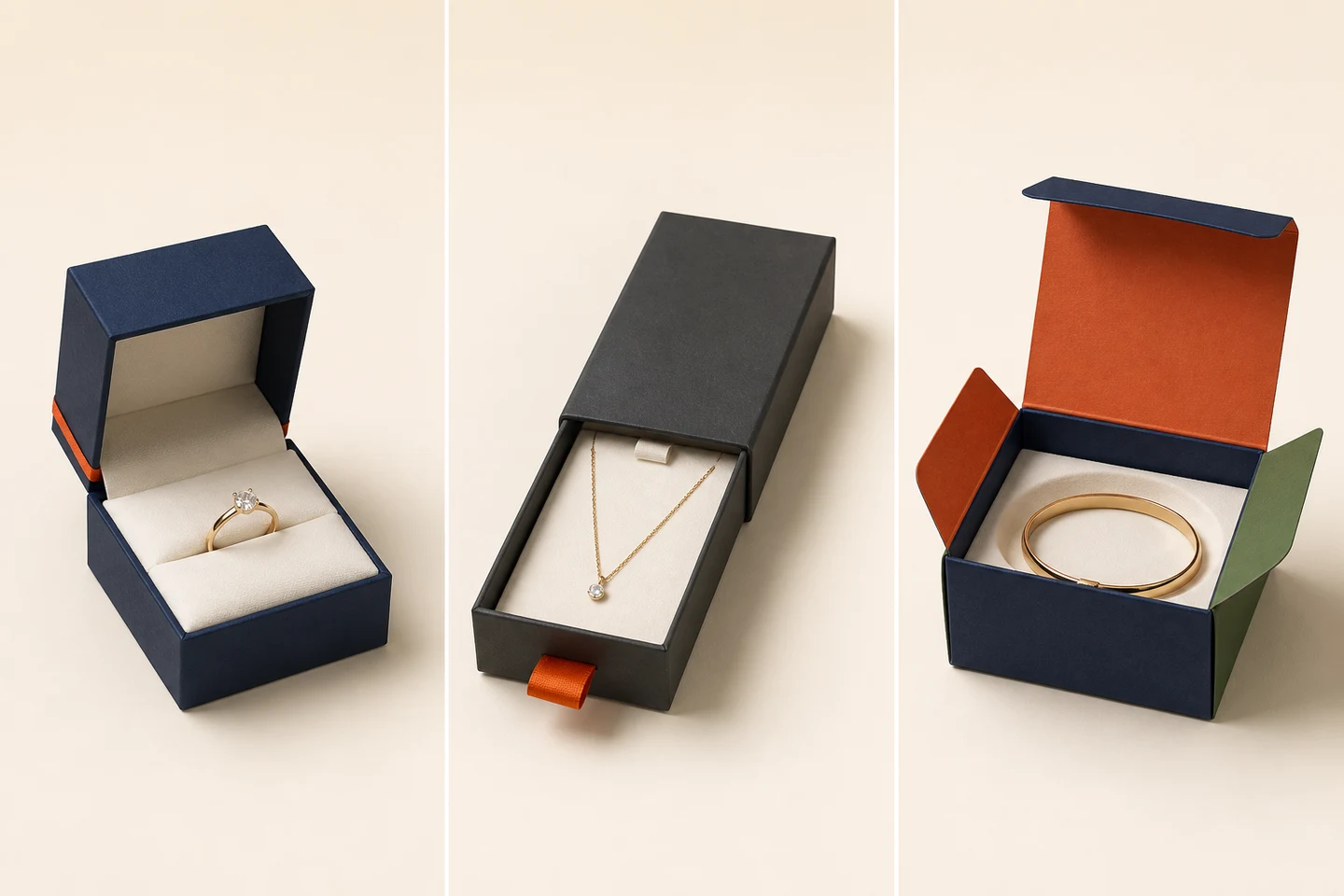
PRODUCT
Ring, earring, necklace or set
FORMAT
Rigid, drawer or folding
INSERT
Paperboard or approved fitted material
FIT
Retention plus easy removal
QUICK ANSWER
What should buyers specify first?
Custom jewelry box packaging should hold the item in a deliberate orientation without making it difficult to remove. Buyers need to define the jewelry dimensions, chain or clasp behavior, insert material, opening sequence, retail or ecommerce route and whether the outer box must also function as a gift presentation.
Important limitation: A large rigid box can add freight and material without improving a small product. Lightweight or price-sensitive lines may be better served by a compact folding carton, card insert or pouch-and-carton system.
COMPARE PRACTICAL STRUCTURES
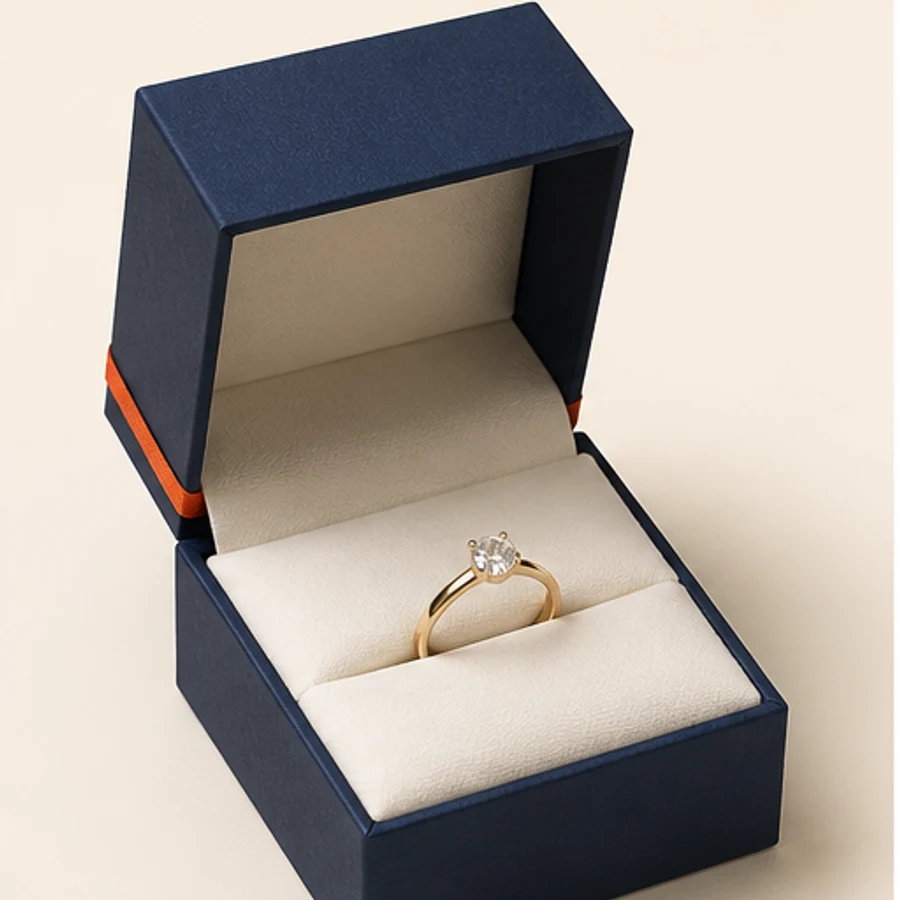
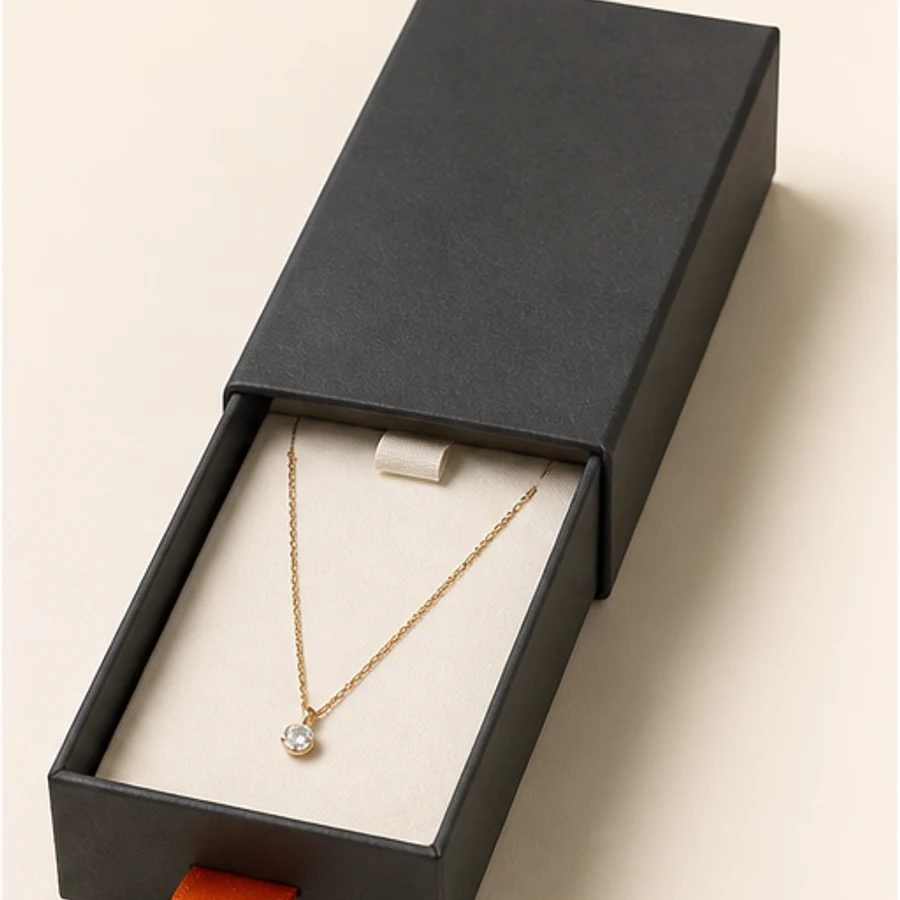
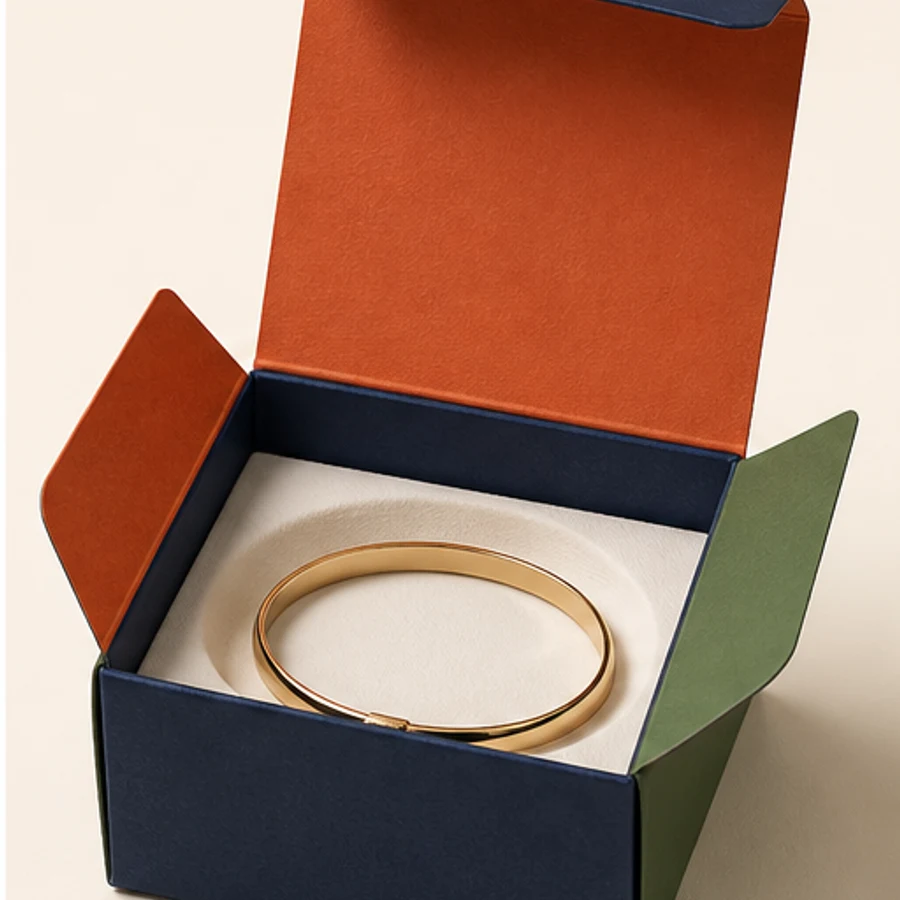
Three packaging routes for this product category
Choose from the packed product, sales channel and delivery route. Decoration comes after the structure can be loaded, handled and approved.
MATERIAL AND PRODUCT FIT
Select the board from the packed product
Wrapped set-up board creates a durable presentation for compact rigid boxes; folding paperboard reduces cube and unit complexity; specialty papers can add texture without covering every panel in finish. The insert needs enough stiffness and retention for the item while avoiding abrasion, snagging or excessive removal force.
Use foil, embossing or a printed mark as a controlled focal point and review registration at the small scale of jewelry packaging. Dark wraps can show dust or glue, pale uncoated papers can mark, and delicate finishes may rub where drawers slide. Approve the actual paper and finished sample, not a screen rendering.
Four decisions before artwork
Choose the structure
Custom jewelry box packaging should hold the item in a deliberate orientation without making it difficult to remove.
Specify the material
Wrapped set-up board creates a durable presentation for compact rigid boxes; folding paperboard reduces cube and unit complexity; specialty papers can add texture without covering every panel in finish.
Plan print and information
Use foil, embossing or a printed mark as a controlled focal point and review registration at the small scale of jewelry packaging.
Approve the loaded sample
Test the smallest and largest intended jewelry items.
Custom jewelry packaging boxes, custom jewelry boxes packaging and custom jewelry packaging boxes wholesale should be scoped by jewelry type, insert retention, box size, artwork versions and packed delivery volume.
SAMPLE WITH THE REAL PRODUCT
Approve fit, handling and the delivery system
Test the smallest and largest intended jewelry items. Turn and shake the closed box, open it in the expected orientation, remove the product and inspect contact points. For chains, confirm that loose sections cannot tangle beneath the insert. Record the approved loading method for production packing.
- Plain sample: verify fit, assembly, loading and opening.
- Printed sample: check copy, color, folds and finish placement.
- Golden sample: record the accepted structure, orientation and packing method.
BUYER CHECK
Avoid unsupported performance claims
A large rigid box can add freight and material without improving a small product. Lightweight or price-sensitive lines may be better served by a compact folding carton, card insert or pouch-and-carton system.
Ask for a structure review →Send a quote-ready brief
Comparable quotations need the same product, structure, printing, quantity, packing and delivery scope.
- Jewelry type and maximum dimensions
- Product weight and vulnerable surfaces
- Required orientation and opening sequence
- Rigid, drawer or folding-box preference
- Insert material, slots and finger access
- Print, foil or embossing details
- Quantity by size and delivery destination
Related packaging resources
Custom rigid boxes → · Custom drawer boxes → · Packaging inserts compared →
These links explain the structure and approval decisions in more detail without forcing technical topics into this commercial page.
FAQ
Questions packaging buyers ask first
What packaging works for rings and earrings?
Compact rigid boxes or folding cartons with a fitted card or insert can work. Choose by retail price point, desired reveal, shipping cube and packing method.
How should necklace packaging control the chain?
The insert should locate the pendant and manage the chain or clasp without sharp bends, hidden tangles or excessive removal force. Test it with real items.
Can jewelry boxes include a logo?
Yes. Printing, foil, embossing or debossing may be used on suitable papers. Small graphics and edge placement need production-representative approval.
Are rigid jewelry boxes shipped flat?
Traditional rigid set-up boxes usually ship assembled. A folding carton or collapsible structure can reduce cube when storage and freight are priorities.
READY TO BUILD THE SPECIFICATION?
Build the quote around a real product.
Share product dimensions, packed weight, quantity, delivery destination and artwork status. We will review the structure, material and sample route before quoting.