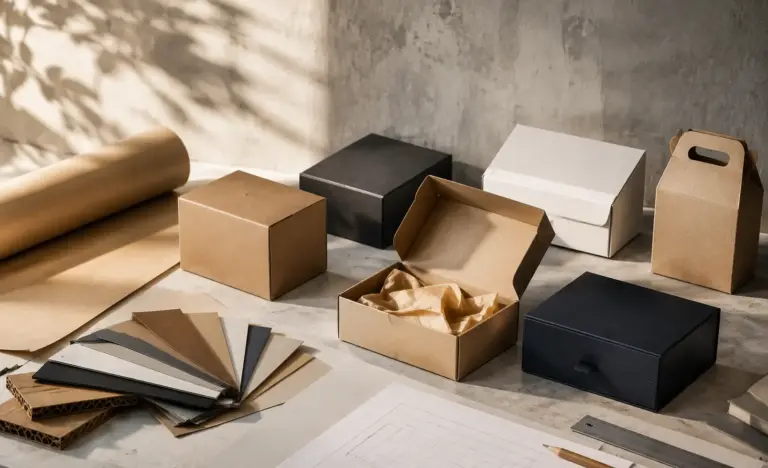
Why Is the Minimum Order Quantity (MOQ) Usually 500 Pieces for Custom Packaging?
Wondering why most custom packaging manufacturers require a minimum order of 500 boxes? Learn how printing setup, die-cutting, materials, and production costs determine the MOQ for custom packaging.
Understanding the Real Cost Behind Custom Packaging Production
If you’re ordering custom packaging for the first time, one question probably comes to mind:
“Why can’t I just order 100 custom boxes?”
It’s a fair question—and one we hear from startups, small businesses, and growing brands all the time.
After all, if you only need 100 boxes, shouldn’t the factory simply print 100 boxes?
The reality is that custom packaging doesn’t work like printing business cards or ordering products from a shelf. Every custom packaging project requires a complete production setup before the first box can even be made.
Whether the factory produces 100 boxes or 10,000 boxes, many of the preparation costs are exactly the same.
That’s why most custom packaging manufacturers recommend a minimum order quantity (MOQ) of around 500 pieces. It’s not an arbitrary number—it’s the point where production becomes efficient and cost-effective for both the manufacturer and the customer.
In this article, we’ll explain why.
Custom Packaging Requires Preparation Before Production Begins
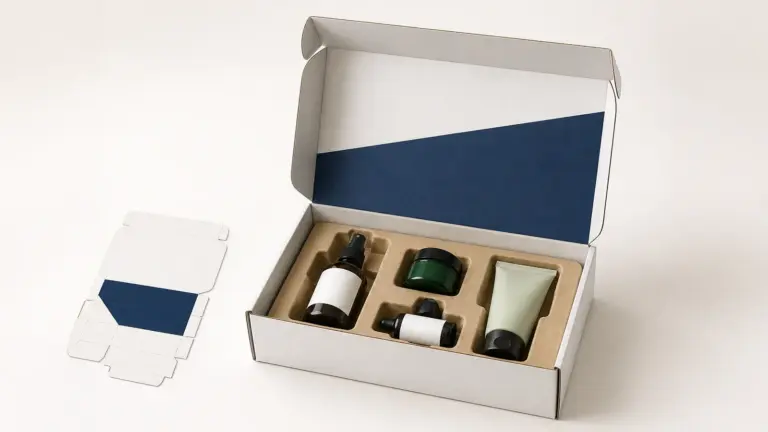
Unlike stock packaging, every custom box is made specifically for your product.
Before production starts, several processes must be completed:
- Creating the structural dieline
- Manufacturing the die-cutting mold
- Preparing printing plates
- Calibrating printing machines
- Mixing ink colors
- Testing color accuracy
- Adjusting registration
- Setting up finishing equipment
These preparation steps take time and labor regardless of how many boxes will eventually be produced.
Whether your order is 100 boxes or 1,000 boxes, the factory still needs to complete the same setup procedures.
Printing Setup Costs Are Almost the Same for 100 Boxes and 1,000 Boxes
This is one of the biggest reasons behind the MOQ.
Many customers assume that printing 100 boxes should cost one-tenth as much as printing 1,000 boxes.
In reality, that’s not how commercial printing works.
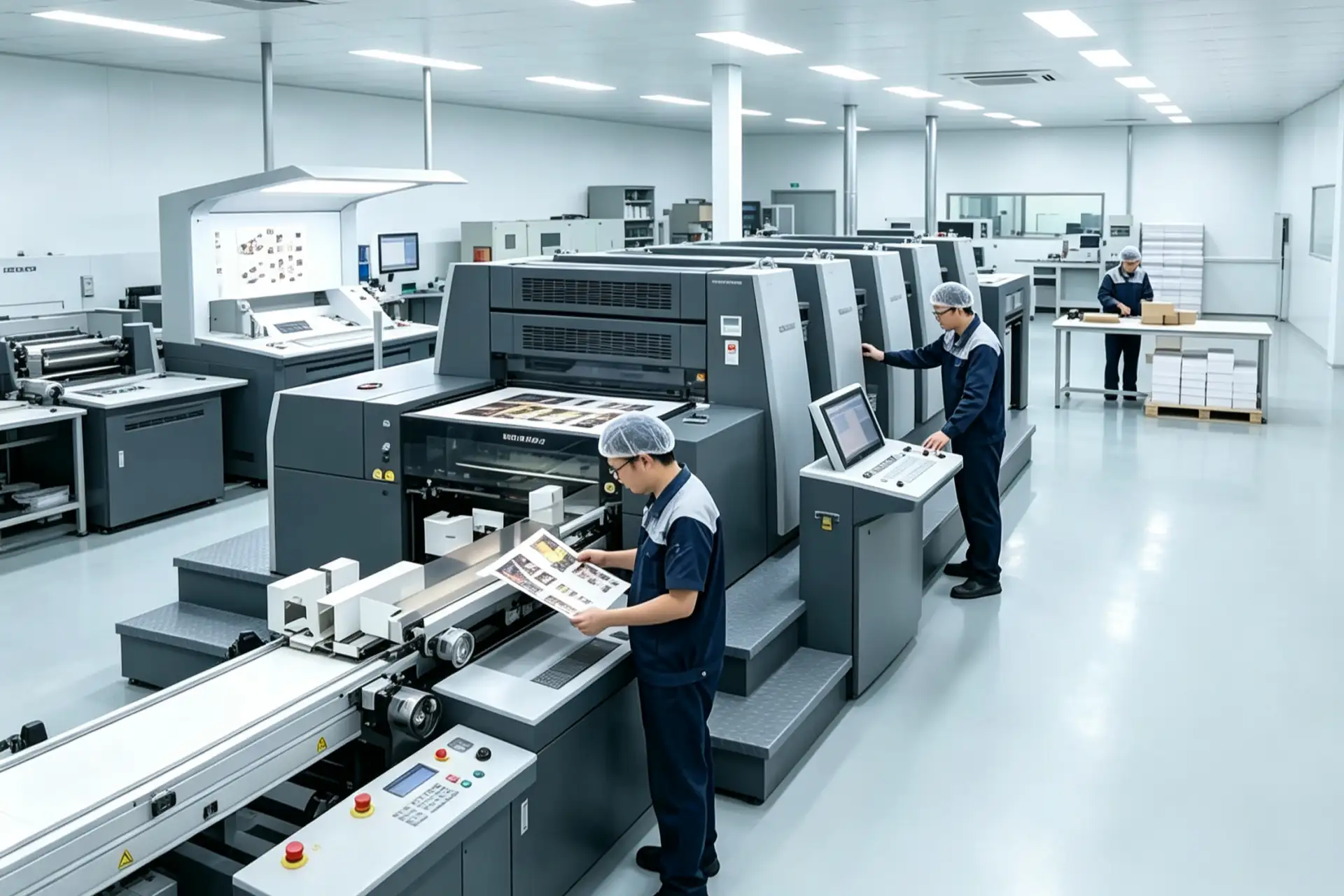
Before the printing press begins running, operators must:
- Install the printing plates
- Adjust paper feeding systems
- Calibrate color density
- Check print registration
- Perform test prints
- Fine-tune color accuracy
- Approve production samples
This process can take 30 minutes to over an hour, depending on the complexity of the design.
Whether the machine prints 100 sheets or 10,000 sheets, this setup process is required only once.
That means:
The machine setup cost for printing 100 boxes is almost the same as printing 1,000 boxes.
The only real difference is how long the machine continues running after the setup is complete.
This is why small orders often have a much higher cost per box.
Die-Cutting Requires a Custom Steel Rule Die
Every custom box has its own unique shape.
Even if two boxes look similar, different dimensions require different die-cutting tools.
Before production begins, a custom steel rule die must be manufactured.
This die is used to:
- Cut the box shape
- Create fold lines
- Produce locking tabs
- Form structural details
The cost of producing this die does not change based on quantity.
Whether you’re making 100 boxes or 5,000 boxes, the factory still needs to create the same die.
Paper Materials Are Purchased More Efficiently in Larger Quantities
Paper mills typically supply paper in standard sheet sizes and minimum purchase quantities.
Factories cannot purchase paper one box at a time.
For very small orders, leftover materials are often unavoidable, increasing material waste and production costs.
Larger production runs make better use of each sheet, improving efficiency and reducing the cost per box.
Machine Time Is Valuable
Printing presses, die-cutting machines, laminating machines, and gluing equipment are designed for continuous production.
Every time production switches from one order to another, operators must:
- Remove the previous job
- Clean the machine
- Install new tools
- Adjust settings
- Run test samples
- Perform quality inspections
Frequent machine changeovers reduce factory efficiency.
For this reason, manufacturers prefer production runs that keep machines operating continuously.
Surface Finishing Also Requires Setup
Premium finishes don’t simply happen automatically.
Processes such as:
- Foil Stamping
- Spot UV
- Embossing
- Debossing
- Matte Lamination
- Soft Touch Lamination
all require separate equipment setup.
Each finishing process involves its own preparation time before production can begin.
Again, these setup costs are nearly identical whether you’re producing 100 boxes or 1,000 boxes.
Quality Control Takes the Same Effort
Every production order goes through quality inspection.
Inspectors check:
- Dimensions
- Color consistency
- Print quality
- Die-cutting accuracy
- Surface finishing
- Folding precision
- Packaging
These inspections must be completed regardless of order quantity.
Producing fewer boxes doesn’t eliminate the need for quality control.
Why 500 Pieces Is Often the Sweet Spot
Through years of production experience, many packaging manufacturers have found that around 500 pieces provides the right balance between setup costs and unit price.
At this quantity:
- Printing setup costs are spread across more boxes.
- Die-cutting costs become more economical.
- Paper waste is reduced.
- Machine efficiency improves.
- Labor costs per box decrease.
As a result, customers receive a much lower price per unit compared with very small production runs.
A Simple Example
Imagine the total setup cost for a packaging project—including printing setup, die-cutting setup, and machine preparation—is USD $300.
If you order 100 boxes, the setup cost alone is:
$300 ÷ 100 = $3.00 per box
If you order 500 boxes, the same setup cost becomes:
$300 ÷ 500 = $0.60 per box
If you order 1,000 boxes, it drops even further:
$300 ÷ 1,000 = $0.30 per box
Notice something?
The setup cost didn’t increase.
Only the quantity changed.
This is why ordering a larger quantity often provides significantly better value.
Can I Order Less Than 500 Boxes?
Yes—in some cases.
Digital printing technology has made smaller production runs more practical.
Small orders may be suitable if:
- You’re testing a new product.
- You need a prototype.
- You’re launching a limited edition.
- You require sample packaging.
- You want personalized packaging.
However, it’s important to understand that the price per box will usually be much higher than for a standard production run.
Our Recommendation
At Shenzhen Ron & An Technology Co., Ltd., we always recommend the most cost-effective solution based on your project—not simply the largest order.
If you’re launching a new product, we can help you evaluate whether a smaller digital print run or a standard offset production is the better option.
For most retail packaging projects, an MOQ of 500 pieces offers the best balance between quality, production efficiency, and cost.
Our goal is to help you maximize your packaging investment while ensuring professional results that reflect your brand.
Frequently Asked Questions
Why can’t I order only 50 custom boxes?
Technically, you can for certain projects, especially with digital printing. However, setup costs remain almost the same, making the price per box significantly higher.
Is the machine setup really the same for 100 and 1,000 boxes?
Yes. The printing press still requires the same preparation, color calibration, plate installation, and testing before production begins. The difference is only how long the machine runs after setup.
Can digital printing reduce the MOQ?
Yes. Because digital printing doesn’t require traditional printing plates, it can support smaller quantities. However, it may not always be the most economical choice for larger production runs.
Will ordering more boxes always reduce the unit price?
In most cases, yes. As production volume increases, fixed setup costs are distributed across more units, resulting in a lower cost per box.
Final Thoughts
The 500-piece MOQ isn’t a random rule—it’s the result of how custom packaging is manufactured. From printing setup and die-cutting to quality control and machine preparation, many production costs remain the same whether you’re making 100 boxes or 1,000.
By understanding how these fixed costs work, you can make smarter purchasing decisions and achieve better value for your investment.
At Shenzhen Ron & An Technology Co., Ltd., we’re committed to providing honest advice and practical solutions. Whether you’re launching a new brand or scaling an existing one, our team will help you choose the right packaging quantity, printing method, and production approach to fit your goals and budget.