CMYK Offset vs Digital Printing for Custom Packaging
Compare CMYK offset and digital printing for custom packaging by print quality, setup cost, MOQ, lead time and order quantity.
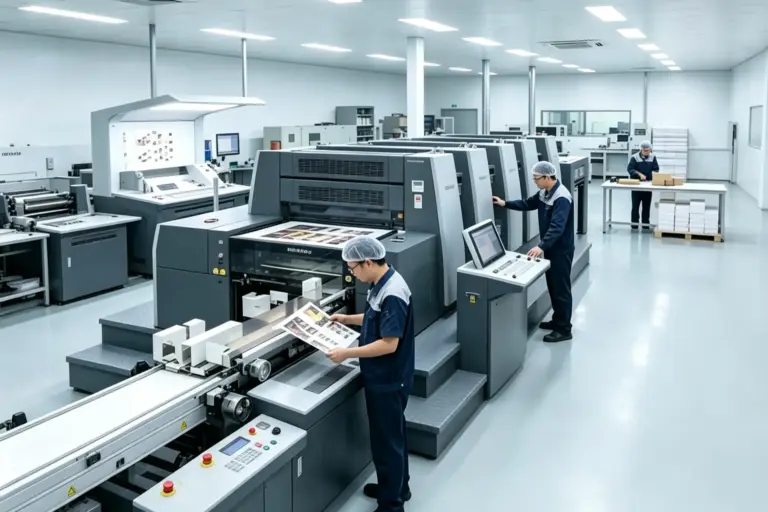
Offset and digital printing solve different production problems. Offset usually adds plates and make-ready but can suit repeatable production runs and established finishing routes. Digital printing sends artwork directly to the press and can suit shorter runs, prototypes or multiple artwork versions. The decision depends on the complete job—not one universal quantity breakpoint.
First, separate color mode from print process
CMYK describes a four-color process model: cyan, magenta, yellow and black. It does not by itself mean offset printing. Both offset and digital equipment can reproduce CMYK artwork, although press technology, ink or toner, substrate, profiling and finishing compatibility differ.
Ask the supplier to name the actual process and proofing method instead of treating “CMYK” as the machine specification.
When offset may make more sense
Offset printing can be a strong candidate when:
- the production quantity justifies plate and make-ready work;
- repeatability across a longer run matters;
- the selected board is approved for the press and coating route;
- spot colors or a controlled ink specification are required;
- downstream foil, embossing, coating, lamination or die cutting follows an established route; and
- the buyer has time to approve the appropriate proof or sample.
These conditions do not prove offset is always cheaper or better. A supplier must quote the actual sheet layout, board, setup, run and finishing sequence.
When digital may make more sense
Digital printing can be useful when:
- the order is a prototype or short run;
- several artwork versions share one structure;
- variable text, codes or graphics are required;
- avoiding conventional plates reduces setup for the job; or
- turnaround is driven by versioning and proofing rather than a long press run.
Digital capability varies by press. Confirm maximum sheet size, accepted board, color-management method, opaque-white capability where relevant, surface durability and compatibility with the intended finish.
Compare the two processes on the same specification
| Decision | Offset question | Digital question |
|---|---|---|
| Quantity | Do plate and make-ready costs become efficient at the quoted run? | Does the press support the quantity without a high unit penalty? |
| Artwork versions | Does each version require separate plates or setup? | Can variable or versioned artwork run efficiently? |
| Color | What proof and press reference will control production? | What profile, device and approved proof control production? |
| Board | Is the grade, caliper and surface approved for the press? | Is the sheet size, caliper and coating compatible with the device? |
| Finish | Are ink curing, coating and registration suitable for downstream work? | Will toner/ink adhesion and heat exposure support the finish? |
| Approval | Which proof or sample represents production? | Does the sample use the same device, board and settings as production? |
Color control requires an agreed reference
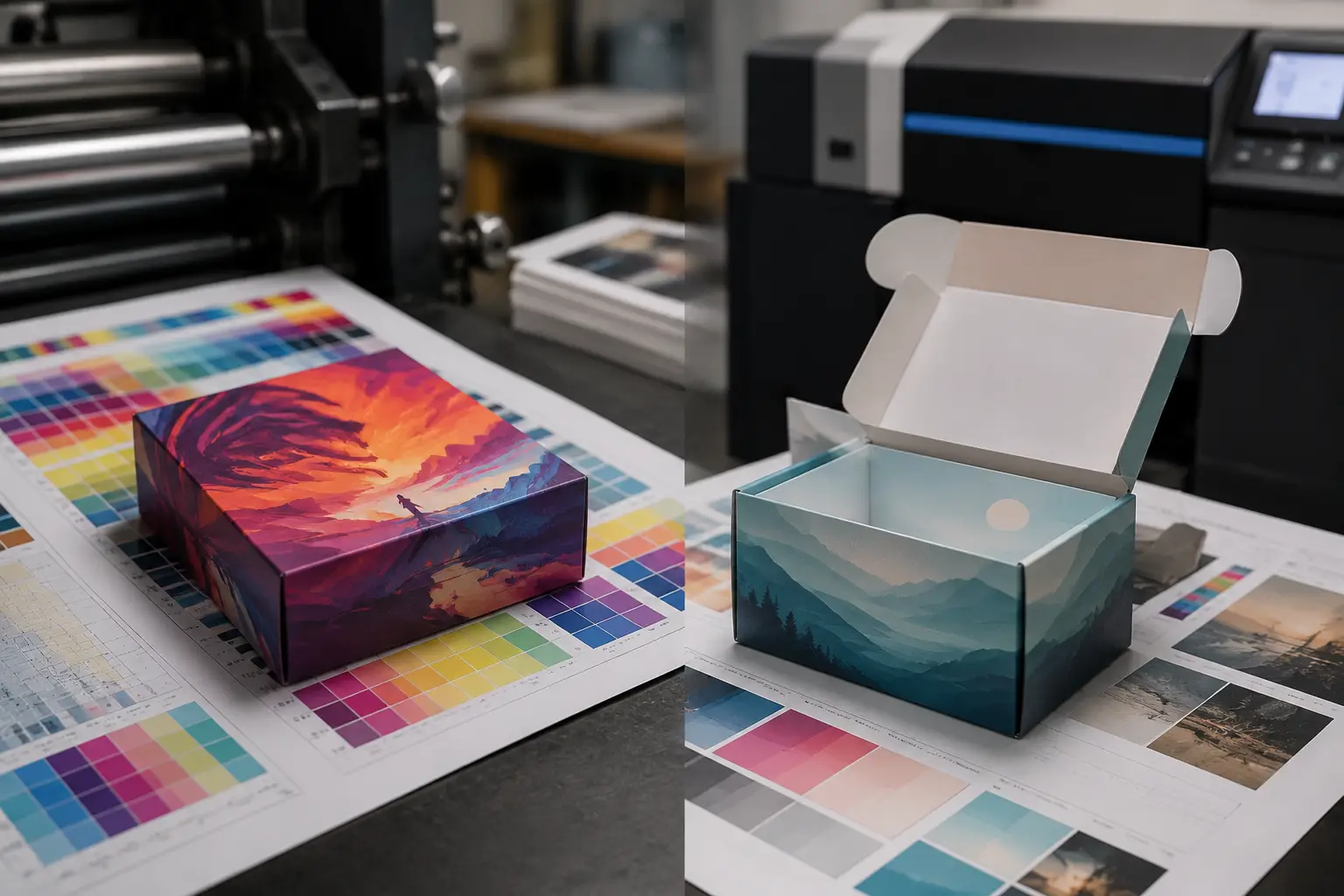
A screen preview is not an exact production color standard. The buyer and supplier should agree on artwork revision, color definition, proof type, substrate and any physical reference. Paper shade, coating and lamination can change the perceived result.
Neither process guarantees an exact match under every condition. If color is critical, define the acceptance method before production.
Finishing can reverse an otherwise obvious choice
A print process that appears efficient may become unsuitable when the job requires a large foil area, tight emboss registration, a coating with adhesion constraints or a board the press cannot handle. Confirm the full route from printing through die cutting, gluing and packing.
MOQ and cost are project-specific
The packaging MOQ guide explains why tooling, material purchasing and finishing can set a minimum independently of printing. The separate article on why a 500-piece MOQ may appear addresses that commercial starting point without treating it as universal.
For terminology used in a quotation or artwork review, consult the packaging glossary.
Decision rule
Choose offset when its setup supports the required run, board, color control and finishing route. Choose digital when short-run economics, versioning or direct-to-press workflow better fits the job. In either case, approve a production-relevant proof or sample and compare quotations on the same specification.