Candle Packaging for Shipping: Protect the Vessel, Wax and Presentation
Design candle packaging for shipping around vessel material, movement, inserts, heat, leakage, labels and product-package testing.
A candle pack has to protect two different products at once: the wax formulation and the vessel that contains it. Glass can break, a lid can lift, wax can soften, oil can mark paper and a decorative label can scuff long before the customer lights the wick.
A printed carton handles retail presentation; it rarely provides the full parcel solution for a filled glass or ceramic candle. The shipping system usually needs an insert and corrugated outer box tested with the filled product. Empty jars are inadequate development samples because weight, lid fit and leakage behavior change after filling.
The filled candle is the design sample
“Candle” is not one packaging specification. Record:
- glass, ceramic, metal or other vessel;
- filled weight and outside dimensions;
- lid material, fit and retention;
- wax type and temperature sensitivity;
- wick, dust cover and accessory configuration;
- surface finish, label and decoration;
- single unit, pair, trio or gift-set arrangement;
- retail carton, direct mailer or both;
- intended parcel and pallet route.
A straight-sided jar, tapered tumbler and lidded ceramic vessel need different retention. Provide production samples from normal tolerance extremes.
Presentation and transit are different jobs
A folding carton can display the candle and carry required information. It is usually not a complete parcel shipper for a heavy glass jar. A practical system may include:
- a product-contact or dust-protection component;
- a folding carton or presentation sleeve;
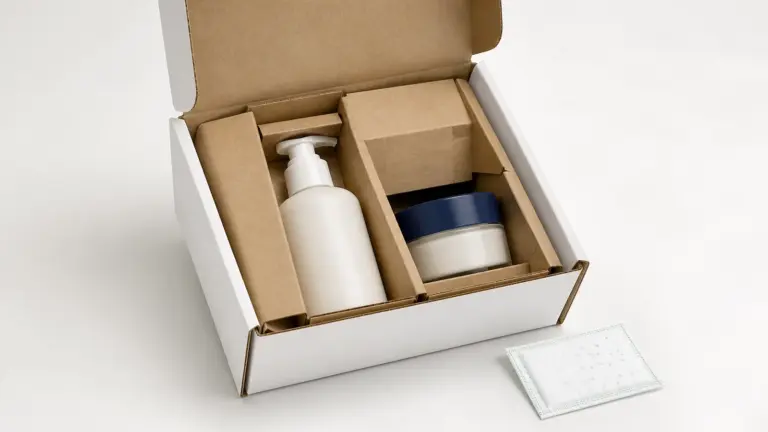
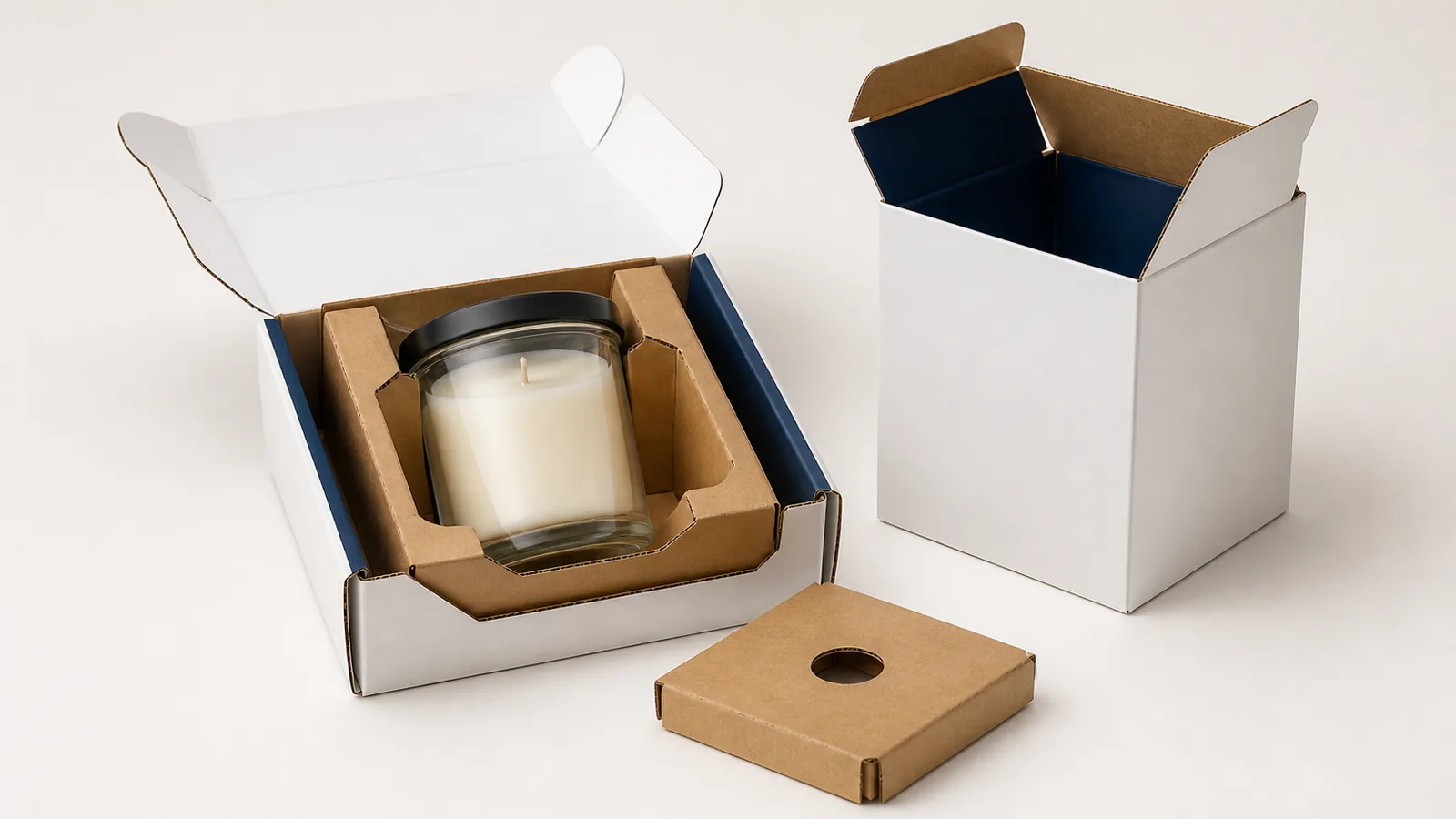
- a fitted paperboard, molded-pulp or corrugated insert;
- a corrugated mailer or shipping carton;
- an outer master carton for inbound or wholesale transport.
Every layer should have a job. Do not add tissue and filler around an insert that already controls movement unless testing shows a need.
Restrain the vessel without loading the glass edge
The candle should not slide toward any side, lift into the lid or rotate so a weak or decorated surface takes an impact. The insert can retain the base, side wall, shoulder or lid, depending on the vessel.
Check:
- base support under the complete footprint;
- clearance around glass and decoration;
- top retention without pressing the wick or lid;
- finger access for safe removal;
- separation between multiple vessels;
- load transfer to the outer box;
- movement after vibration or repeated handling.
A die-cut hole that matches the jar diameter may still fail if the taper allows upward movement. A very tight collar can scratch labels or transfer force to one glass edge.
The lid needs its own retention decision
Metal, wood, ceramic and glass lids behave differently. A loose lid can become a moving object inside the box. A tight decorative lid can scuff. A top pad or insert feature may retain it, but should not place force on a fragile knob or wax surface.
Test the packed candle upside down and on its sides as part of handling evaluation. If the lid depends on gravity to stay in place, the package needs another retention method.
Warm-weather risk sits outside the paper specification
Packaging does not control the temperature of an uncontrolled delivery network. Warm conditions can soften wax, move fragrance oil, loosen labels or change decorative surfaces. A paperboard box cannot be called thermal protection without a validated system.
Define:
- acceptable product temperature range;
- seasonal shipping regions and dwell times;
- whether a liner, sealed inner wrap or absorbent component is required;
- orientation markings and whether the carrier will honor them;
- the response to leakage or surface oil;
- summer hold or expedited-delivery rules, if used by the brand.
Run controlled trials using the actual filled candle and production packaging. Do not make a universal “summer safe” claim from one successful shipment.
Select the corrugated outer after the insert
For direct shipping, compare a die-cut mailer with an insert against a regular shipping carton with cushioning. A mailer can create a cleaner opening and faster pack-out. A regular carton may provide more flexibility for varying candle sets.
Specify the complete corrugated board, not only “cardboard.” Flute, liners, board grade, box geometry and packed weight all matter. PackagingFor’s E-flute vs B-flute guide explains why flute letters alone do not establish performance.
For multi-candle orders, decide whether each candle has an individual retail carton, whether partitions prevent glass-to-glass contact, and whether the total packed weight requires a different board or closure.
Decorative finishes reveal every rub point
Candle packaging often uses dark ink, foil, embossing, soft-touch surfaces or uncoated kraft. Those finishes can scuff where the insert touches or where the outer package rubs in transit.
During sample review, inspect:
- label transfer or abrasion;
- foil cracking at folds;
- dark ink rub;
- coating near glue areas;
- odor from printing or adhesives;
- tissue color transfer;
- wax or oil staining;
- surface appearance after the test route.
If the retail carton must arrive pristine, use a protective outer shipper rather than expecting decorative paperboard to absorb parcel damage invisibly.
Test the configuration customers will receive
An empty jar or unfilled sample does not represent the packed load. Test the heaviest filled candle, the most fragile vessel and every multi-pack configuration that changes load distribution.
The International Safe Transit Association describes Procedure 3A for individual packaged products moving through parcel delivery and other procedures for other routes in its test overview. Define pass/fail before testing: no glass breakage, no lid release, no unacceptable wax movement, no label damage, no leakage, insert retention and acceptable box condition.
Monitor field shipments after launch. Retest when the vessel, fill weight, lid, insert, board, closure or route changes.
The packer and customer need safe hand access
At the packing station, the insert should be obvious to assemble and should not require pushing the jar against a fragile lip. A loaded box should close without forcing the lid. Missing pads or accessories should be visible.
For the customer, add finger access and avoid a cavity so tight that the candle must be pulled by the lid. If broken-glass risk exists, the opening sequence should not expose the customer to hidden shards.
Time the assembly and record errors during a pilot. A complex insert that looks excellent in a photograph may create inconsistent protection at production speed.
Quote from a filled sample and a defined route
Provide:
- filled production samples and tolerance range;
- vessel, lid and label materials;
- complete weight;
- single and multi-pack configurations;
- presentation and shipping-layer plan;
- insert function and preferred material constraints;
- board, print and finish requirements;
- seasonal or temperature conditions;
- testing criteria;
- quantity, destination and schedule.
Use PackagingFor’s RFQ checklist to keep supplier scope comparable.
Questions candle brands should settle early
What is the best box for shipping candles?
The best system fits the filled vessel, controls movement, protects the lid and matches the route. Glass candles often require a fitted insert and corrugated outer package, not only a retail folding carton.
Should candles be wrapped before boxing?
Only when the wrap performs a defined job such as surface protection, containment or cleanliness. Validate it with the insert and outer box rather than adding layers by habit.
Can paper inserts protect glass candles?
Paperboard, corrugated and molded-pulp inserts can be designed for glass vessels, but material name alone does not prove protection. Test the complete packed system.
How do I ship candles in hot weather?
Define the product’s temperature tolerance and delivery exposure, then validate a seasonal shipping plan. Ordinary paper packaging is not a thermal-control guarantee.
Work from the vessel outward
PackagingFor manufactures custom candle packaging boxes, corrugated mailers and fitted paper-based inserts. A filled sample, complete weight, quantity and route give the designer the evidence needed to develop the pack around the real candle.