Custom Packaging RFQ Checklist: 15 Details for an Accurate Quote
The 15 inputs packaging suppliers need to provide an accurate, comparable custom box quotation for North American brands.
Quick answer: A custom packaging RFQ checklist should define the product, internal box size, style, board, print, finishes, insert, quantity by artwork, quality tests, sample plan, packing, destination, delivery date and freight term. When a detail is unknown, ask the supplier to quote clearly labeled alternatives instead of allowing each bidder to assume something different.
A packaging quote is only as accurate as the specification behind it. “Price 1,000 luxury boxes” leaves unanswered whether the box is a folding carton or set-up box, whether 1,000 units share one artwork, whether foil covers a small mark or the full lid, and whether delivery means factory gate or a warehouse in Texas. Suppliers will fill those gaps differently, so the resulting numbers cannot be compared.
Separate requirements, targets and options
Mark each line of the RFQ as:
- Required: cannot change, such as product fit, legal copy or warehouse date.
- Target: desired performance or budget that allows engineering.
- Optional: quote separately, such as soft-touch film versus matte varnish.
- Supplier recommendation: unknown item that needs a proposed solution.
This structure invites useful value engineering without losing control. Ask for every alternative to list the exact material, process, cost and lead-time change.
The 15-point custom packaging RFQ checklist
1. Product description and risk
State what the packaging holds, the packed product weight, value, fragility, surface sensitivity and any liquid, battery, food, cosmetic or regulated characteristics. Note the sales channel: retail shelf, DTC parcel, Amazon fulfillment, wholesale case or gift presentation. The same product can need different packaging systems by channel.
2. Product dimensions and tolerances
Give maximum L × W × H, not only a nominal drawing. Include caps, pumps, bags, cables and accessories. For fit-critical inserts, send physical samples and a tolerance range. Identify surfaces that may not be clamped, rubbed or covered.
3. Box type and opening experience
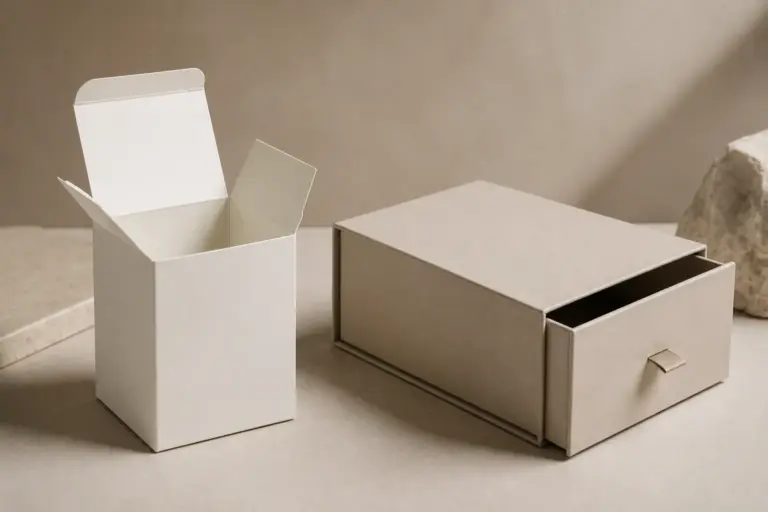
Name the structure if known: straight-tuck folding carton, corrugated mailer, lid-and-base rigid box, magnetic book box, drawer box or paper tube. Add photos as visual references, but describe the required function because an image does not show board, closure or packing method. If the style is open, ask for two recommendations.
4. Internal dimensions
State that dimensions are internal and use L × W × H. If the factory will engineer the size from the product, write that clearly. Include the insert before freezing the box. Our box dimensions guide shows how to avoid inside/outside confusion.
5. Material or performance target
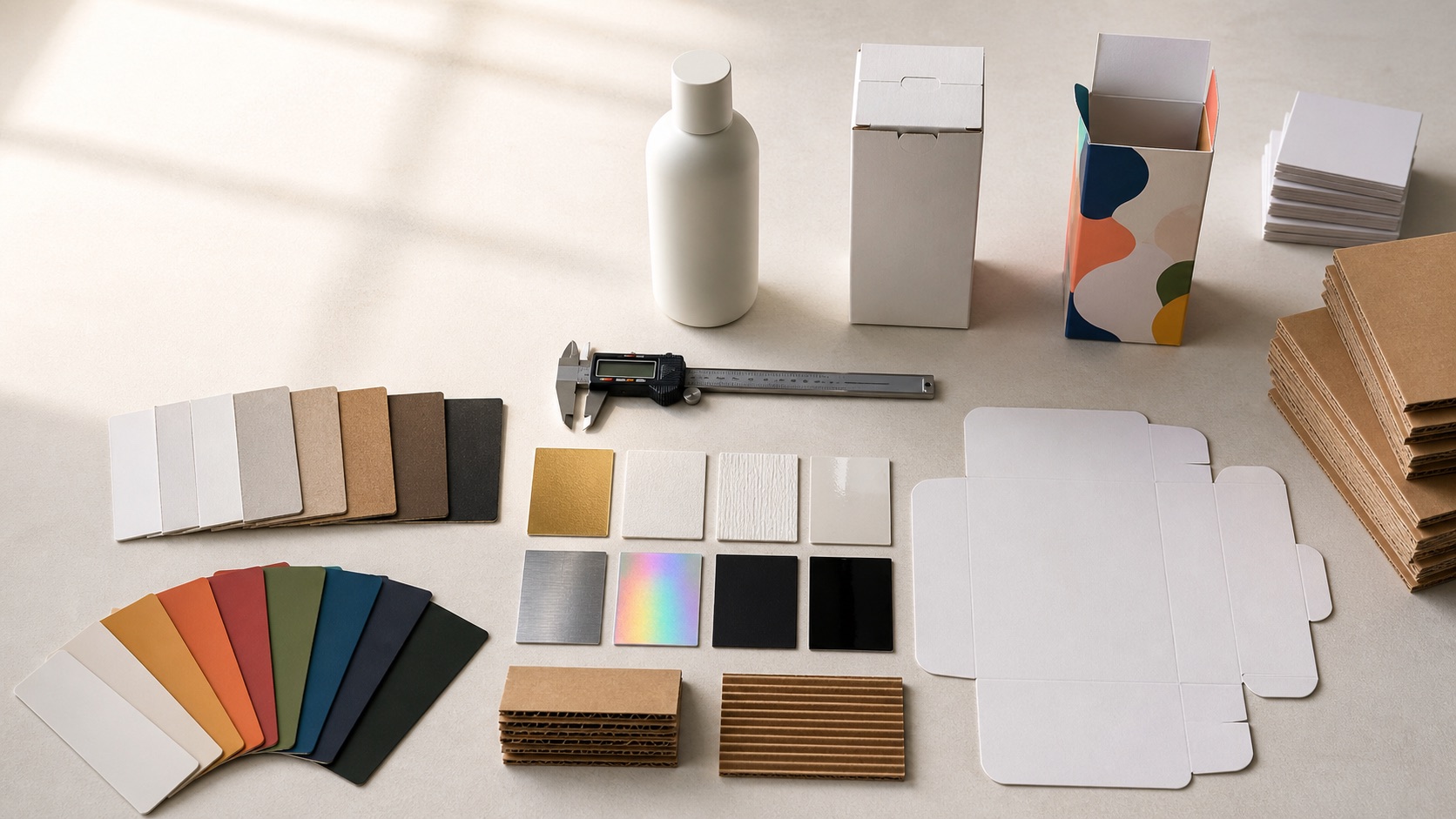
For folding cartons, identify paperboard grade, caliper or stiffness target. For corrugated, state liner color, board construction or required performance. For rigid boxes, define greyboard thickness and wrap. When you do not know, provide product weight, size and route, then request a named material recommendation and sample.
6. Printing
Specify outside, inside or two-sided printing; number of colors; CMYK and spot colors; coverage; and whether color matching is critical. State quantity per artwork version because setup repeats across SKUs. Ask the supplier to identify digital, offset, flexographic or litho-laminated production in the quote.
7. Surface finishes
List coating or lamination and each special effect: foil reference and area, emboss/deboss, spot UV, varnish, textured paper, ribbon or hardware. Attach a finish map. If budget is sensitive, request the base printed box and each finish as a line item. Use our custom packaging finishes guide after it publishes for detailed trade-offs.
8. Insert and accessory requirements
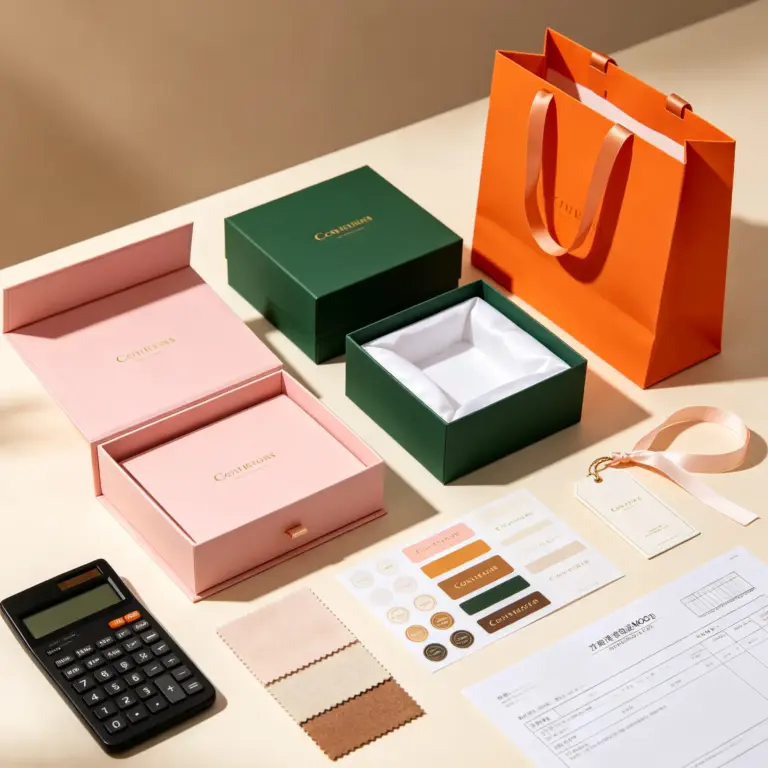
Define the number of products, orientation, removal method and protection need. State preferred paperboard, corrugated, molded pulp or foam—or request alternatives. Include trays, sleeves, tissue, paper bags, labels and tags only if they are part of the quote. A visual set may hide several separately priced components.
9. Quantity by SKU and reorder forecast
Give quantity per size and artwork, not only a grand total. Request price breaks that reflect realistic forecasts. More units can reduce unit cost but increase cash, storage and obsolescence. The packaging MOQ guide explains why process setup matters.
10. Sample and approval plan
State whether you need a plain structural sample, digitally printed prototype, color proof, finish sample or pre-production sample. Ask for sample price, lead time, shipping and whether sample cost is credited. Define who approves structure, copy, color and production release.
11. Quality and testing
List dimension tolerances, color reference, cosmetic defect criteria, functional cycles, barcode verification, product-fit check and transit test. If a retailer or carrier program applies, name the exact protocol and current version. Do not ask simply for “export quality.”
12. Unit packing and master cartons
Specify whether boxes ship flat or assembled, how inserts are packed, whether each unit needs a protective bag or tissue, and the desired units per master carton. Request final master-carton dimensions, gross weight, labels and pallet data. Rigid boxes may need surface protection that a flat folding carton does not.
13. Delivery location and required date
Provide country, postal code, commercial or residential address type, dock capability and required warehouse date. A quote to a port is not the same as delivered-duty-paid service to a warehouse. If several destinations are possible, quote them separately.
14. Incoterm, freight and customs responsibility
Ask the supplier to state the Incoterm and named place. Clarify who books freight, buys insurance, acts as importer of record, clears customs, pays duties and delivers inland. For U.S. imports, CBP emphasizes that the importer is ultimately responsible for compliance even when using a customs broker; review the agency’s broker guidance.
15. Commercial assumptions
Request currency, quote validity, payment terms, tooling ownership, sample fees, over/under quantity policy, tax or duty exclusions, warranty or claim window, production lead-time start condition and estimated shipping schedule. Ask whether plates, dies, foil tools, export cartons, pallets and inspection are included.
Use a comparison table
| Line | Supplier A | Supplier B | Supplier C |
|---|---|---|---|
| Exact structure and internal size | |||
| Named board / caliper / construction | |||
| Print process and colors | |||
| Finish and insert | |||
| Unit price at same quantity | |||
| Tooling and sample cost | |||
| Master carton / total cube | |||
| Incoterm and named place | |||
| Production and delivery estimate | |||
| Quality/testing included |
Normalize every quote to the same scope. Convert currency on the same date, add excluded tooling and freight, and calculate landed unit cost. Also compare cash timing, storage, defect risk and schedule. The cheapest factory-gate price may not be the lowest warehouse cost.
Red flags in a packaging quotation
- Material described only as “high-quality cardboard.”
- No distinction between internal and external size.
- One total quantity priced despite multiple artwork versions.
- Special finishes shown in a picture but absent from the line item.
- No sample type or approval limitation.
- Lead time with no stated start condition.
- “Shipping included” with no term, mode, destination or customs scope.
- No master-carton dimensions for a bulky rigid-box order.
- A broad environmental claim without grade or documentation.
- A dramatically low price that cannot be mapped to the same specification.
Example of a quote-ready brief
Product: 50 ml glass skincare jar, 72 mm maximum diameter × 58 mm high, 210 g filled. Channel: U.S. retail and DTC inside a separate shipper. Box: straight-tuck folding carton with folded paperboard platform, internal size to be engineered from samples. Material: white SBS, supplier to recommend caliper. Print: four-color outside plus one approved spot color; no inside print. Finish: matte water-based coating; quote small gold foil mark separately. Quantity: 5,000 units, one size, two artworks at 2,500 each. Approval: plain fit sample and production-representative color/foil sample. Delivery: commercial warehouse, Los Angeles ZIP code, required October 15. Quote FOB Shenzhen and DDP separately, with assumptions.
This brief does not dictate engineering that the buyer cannot verify, but it gives the supplier enough information to recommend a controlled solution.
Frequently asked questions
Do I need finished artwork to request a quote?
No, but provide expected color count, coverage and finish. Final pricing may change after production artwork reveals greater complexity.
Should I give suppliers my target price?
A realistic target can guide value engineering, but still require an itemized specification so the offer is comparable and does not hide performance reductions.
Why do quotes vary so much?
They may use different board, construction, print, finish, quantity allocation, packing, freight or commercial terms. Normalize the assumptions before judging.
What files should I attach?
Product drawing and photos, reference packaging, quantity table, destination, brand color standards and current artwork or visual concept. Send confidential data through an agreed channel.
Send one complete brief for a comparable answer
Packaging For’s custom packaging quote form already collects box type, size, material, quantity, colors, logo treatment, surface finish, destination and shipping method. Add product weight, fragility, artwork count, required warehouse date and sample/testing needs in the notes. Our team can then return a clearer structure, material, sample path and delivered-cost option with fewer revision cycles.