
Sustainable Custom Packaging: Materials, Claims and Design Choices
A practical guide to lower-impact paper packaging choices and credible environmental claims for brands selling in the United States.
Quick answer: Sustainable custom packaging is not a single material or logo. Start by preventing damage, right-sizing the box and removing unnecessary components. Then choose documented fiber sources or recycled content, design compatible material combinations, minimize hard-to-separate finishes and use specific, substantiated environmental claims for the markets where the package is sold.
A package that fails and causes a product replacement is not optimized. A very heavy “recyclable” box may use more material than a lighter structure that protects equally well. A paper carton laminated with film, foam and magnets may require different disposal than the unqualified word “paper” suggests. Good environmental decisions balance product protection, material use, manufacturing, transport and end-of-life without pretending one attribute solves the whole system.
Use a practical decision hierarchy
- Protect the product: avoid damage, leakage and returns.
- Use less: right-size and remove components that serve no function.
- Improve sourcing: specify recycled content or credible fiber certification where appropriate.
- Design for separation: favor compatible materials and removable components.
- Reduce production complexity: question large films, full-surface effects and unnecessary inks.
- Plan logistics: ship flat, improve pallet density and avoid air freight created by late planning.
- Communicate accurately: state the attribute, scope, percentage and conditions.
This order prevents the common mistake of selecting a fashionable substrate before the protection and distribution job is understood.
Right-size before changing materials
Measure the product, required insert and safe clearance, then design the smallest box that passes performance and packing tests. Reducing empty space can lower board area, void fill, master-carton cube and parcel dimensional weight. Consolidate box sizes only when the extra filler and freight do not erase the inventory benefit.
A right-sized insert can replace loose fill. Folded paperboard, corrugated cradles and molded pulp can control movement with predominantly fiber-based components. However, do not underbuild: fragile or heavy goods may need added cushioning. Test the complete packed unit using the expected route.
Compare common paper-based options
| Option | Useful attribute | Question to verify |
|---|---|---|
| Recycled paperboard | Uses recovered fiber | What percentage and is it pre- or post-consumer? |
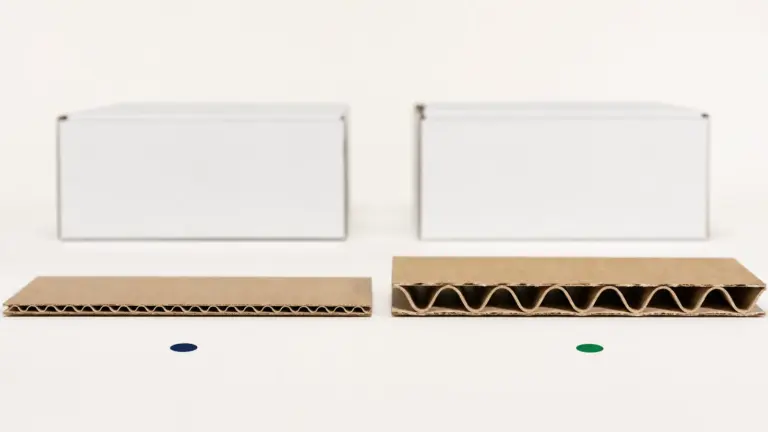
| Kraft/corrugated | Strong fiber-based shipping structures | What board construction passes the product test? |
| FSC-certified paper | Fiber is controlled through certified chain of custody | Is the supplier and job eligible for the intended FSC claim? |
| Molded pulp | Shaped fiber insert, often using recovered paper | What fiber content, tooling, surface and local acceptance apply? |
| Uncoated specialty paper | Can reduce need for film and add tactile value | Will it resist scuffing and meet print expectations? |
Recycled content: ask for evidence
Specify the percentage and whether the claim applies to the box, insert, wrap or total packaging. Ask for a supplier declaration or supporting documentation tied to the material grade. Recycled fiber can affect shade, specks, stiffness and print consistency; approve the actual paper rather than assuming it will look like virgin white board.
The U.S. EPA’s material-specific page reports that paper and paperboard represented a major share of municipal solid waste in its 2018 dataset and shows very different recycling rates for corrugated boxes versus other paper containers. Because the national figures are historical, cite the year. Review the EPA paper and paperboard data rather than converting one category into a claim about every paper package.
FSC claims require chain of custody
FSC certification is not simply permission to place a tree logo on any paper box. FSC explains that chain-of-custody certification tracks forest-based materials through manufacturing and distribution, and that the label on a finished product signals that required chain-of-custody steps have been met. See the official FSC chain-of-custody overview.
Ask the packaging supplier for its current certificate code, scope and the claim available for the quoted material. Confirm that printers, converters or brokers involved in legal ownership and processing are covered as required. The final artwork and label use should be approved through the correct trademark process. Do not download an FSC mark from the internet and add it to artwork independently.
Mono-material is a direction, not a magic word
A box and insert made primarily from compatible fiber components may be easier for consumers to understand and separate. Folded paperboard tabs can replace some plastic trays. Paper sleeves can replace shrink film in suitable applications. Water-based coatings or varnish may sometimes replace film lamination when the required performance is modest.
But “mono-material” should describe the actual configuration. Windows, magnets, ribbons, foam, pressure-sensitive labels, wet-strength treatments and barrier coatings may still be present. Decide whether components are necessary and whether they can be easily removed. If a small non-paper component remains, communicate disposal accurately.
Finishes and inks
Use ink and finish where they create value. Large dark solids can require more coverage and show scuffing. Full film lamination changes the material composition. Foil, adhesives and UV coatings add small but real material layers and may affect processing depending on design and local systems. Ask the converter about low-migration or product-contact requirements separately where relevant; “soy ink” or “water-based” does not automatically make a finished package harmless or recyclable everywhere.
An uncoated paper with limited print and blind embossing can create a premium result without film, but it must survive the pack line and retail handling. Run rub, fold and moisture checks. Do not trade a verified protective finish for an untested claim.
Avoid greenwashing in U.S. marketing
The FTC’s Green Guides advise against broad, unqualified claims such as “green” or “eco-friendly” because they are difficult to substantiate. The guidance also says marketers should qualify recyclable claims when appropriate facilities are not available to at least 60% of consumers or communities where the item is sold. Read the FTC environmental-claims summary and obtain legal review for the final market claim.
| Weak claim | More specific direction |
|---|---|
| Eco-friendly box | Box made with X% post-consumer recycled paperboard |
| 100% recyclable | Paperboard box; remove the foam insert before recycling where accepted |
| Sustainably sourced | FSC Mix packaging, with approved label and certificate support |
| Zero waste | Packaging weight reduced X% versus the previous same-size version |
| Biodegradable | Avoid unless the complete package and disposal conditions are substantiated |
Define the basis of comparison. If packaging weight is 15% lower, state “15% less packaging material by weight than our 2025 package for the same product,” supported by records. Do not imply an overall environmental benefit from a narrow change.
Measure what the packaging team can control
- Package weight and material breakdown per sellable unit.
- Percentage of verified recycled content by component.
- Certified fiber claim and certificate documentation.
- Product-to-package volume ratio.
- Units per master carton and pallet.
- Damage rate and return reasons.
- Number and weight of non-fiber components.
- Percentage shipped by air versus planned ocean freight.
- Comparison with the previous package on the same functional basis.
These metrics help procurement compare real redesigns. A lighter box that raises damage may not be an improvement; a modest material increase that removes a second shipping carton may be.
Sustainable-packaging RFQ checklist
- Product protection and distribution test requirement.
- Target packaging weight or right-size objective.
- Required recycled-content percentage and evidence.
- Required FSC claim, certificate and label approval.
- Preferred paper, board and insert construction.
- Components to avoid or make removable.
- Print coverage, coating and finish constraints.
- Destination markets and intended consumer claim.
- Flat packing, master-carton and pallet targets.
- Sample and performance-test plan.
Frequently asked questions
Is paper packaging always more sustainable than plastic?
No universal claim is valid. Compare protection, material amount, production, transport, recycled content and actual end-of-life for the specific system.
Can I print an FSC logo if I buy FSC paper?
Not automatically. The supply chain, job claim and trademark use must meet FSC requirements and receive the appropriate approval.
Does lamination make a paper box non-recyclable?
Acceptance depends on film type, amount, construction and local facilities. Avoid an unqualified claim; ask the supplier for the material specification and review target-market guidance.
What is the first sustainable packaging change to make?
Right-size the pack while maintaining protection. It can reduce board, filler and logistics volume without relying on a new marketing claim.
Design the claim and the construction together
Packaging For can quote recycled paperboard, kraft and corrugated structures, molded-pulp or folded-paper inserts, and eligible FSC-certified material routes. Share your product, protection requirement, destination market and intended claim through our custom packaging quote form. We will identify what must be documented and sampled before the claim reaches artwork.