
RETAIL PACKAGING FOR TOYS AND SETS
Custom Toy Packaging Boxes for Retail Products
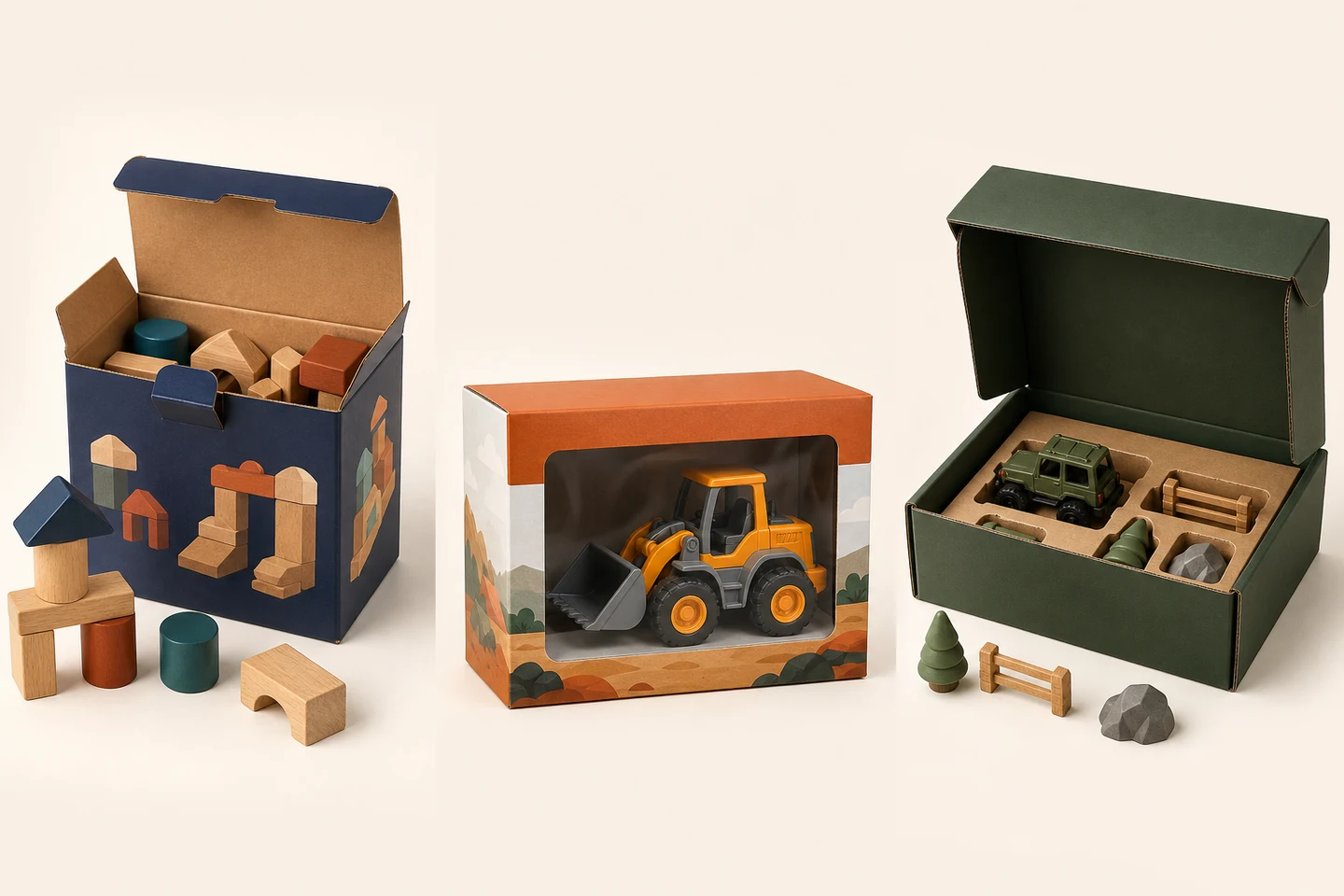
Retail cartons, window boxes and protective sets developed around product dimensions, loose parts, shopper visibility and the complete delivery route.
Best for: Small toys and collectibles · Toy sets with accessories · Retail and ecommerce programs
PRODUCT
Main item plus loose parts
FORMAT
Carton, window or corrugated
ACCESS
Visibility and removal
REVIEW
Label space and destination rules
QUICK ANSWER
What should buyers specify first?
Custom toy packaging boxes should organize the main product and every accessory, provide the required display and information panels, and protect the set through packing and distribution. The structural brief needs actual product dimensions, total weight, loose-part count, intended orientation and the retail or ecommerce route.
Important limitation: A paper box alone does not establish age grading, toy safety, warning language or regulatory compliance. The brand must supply and approve the required product information for each destination market.
COMPARE PRACTICAL STRUCTURES
Three packaging routes for this product category
Choose from the packed product, sales channel and delivery route. Decoration comes after the structure can be loaded, handled and approved.
MATERIAL AND PRODUCT FIT
Select the board from the packed product
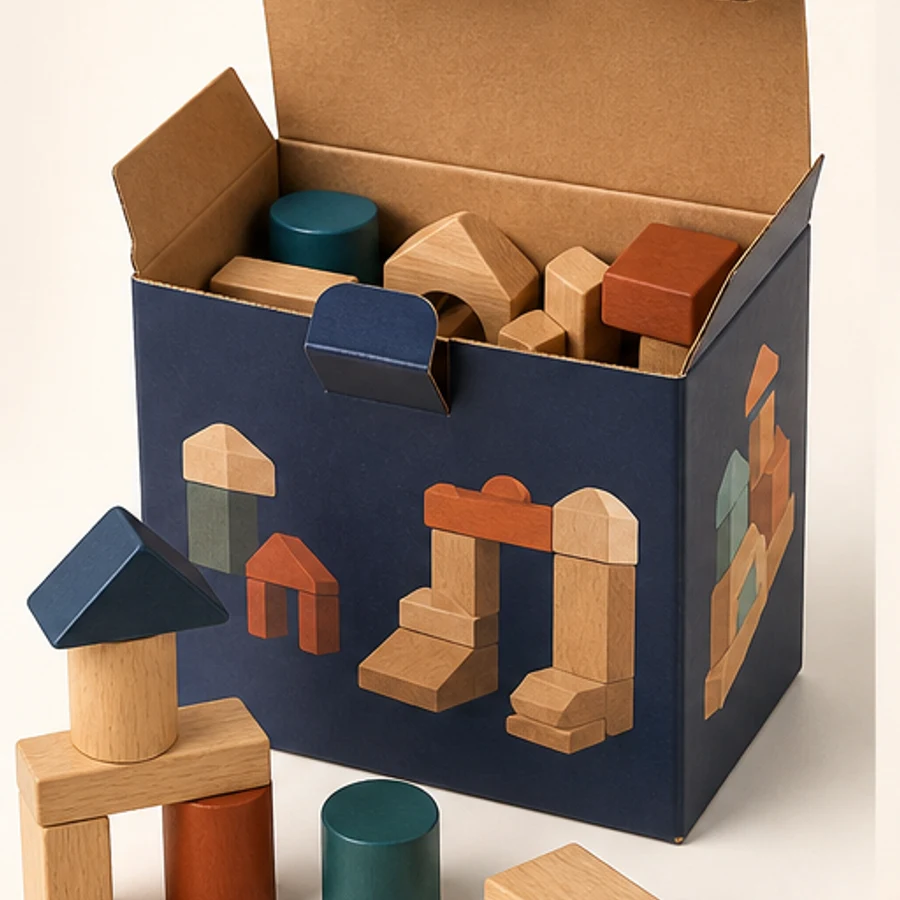
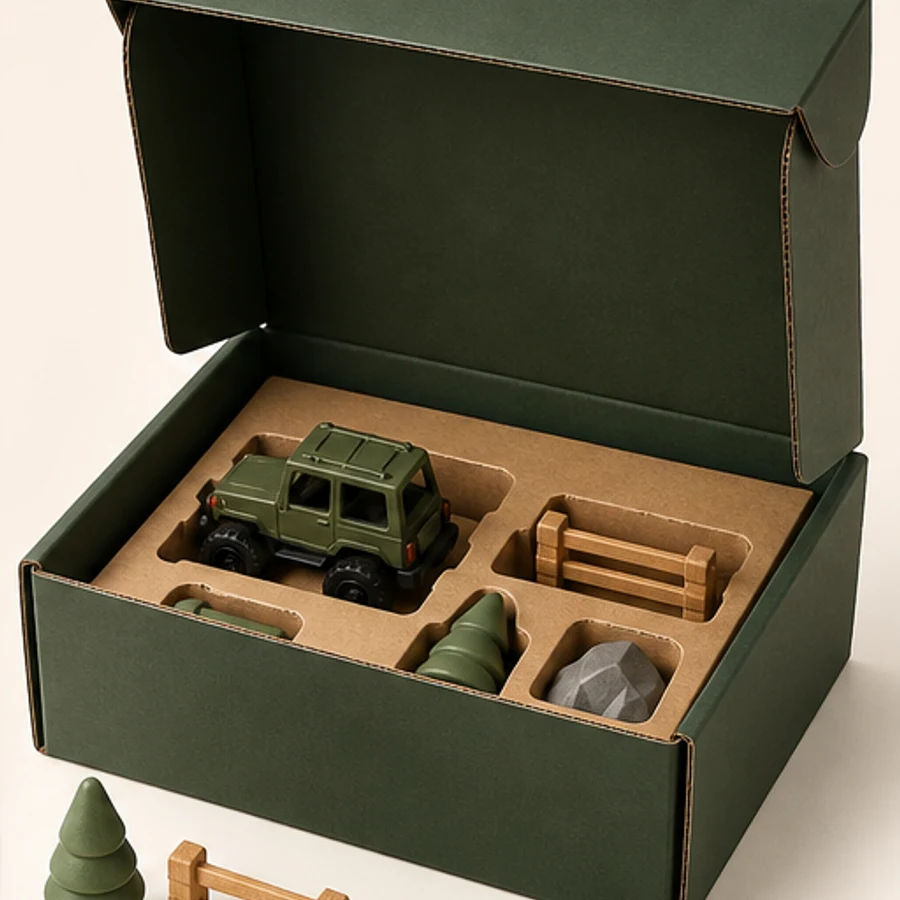
Paperboard works for compact lightweight retail products; corrugated board supports larger sets and delivery; folded paperboard or corrugated inserts can locate accessories. Choose board using total loaded weight, unsupported panel size, display opening and route rather than selecting by appearance alone.
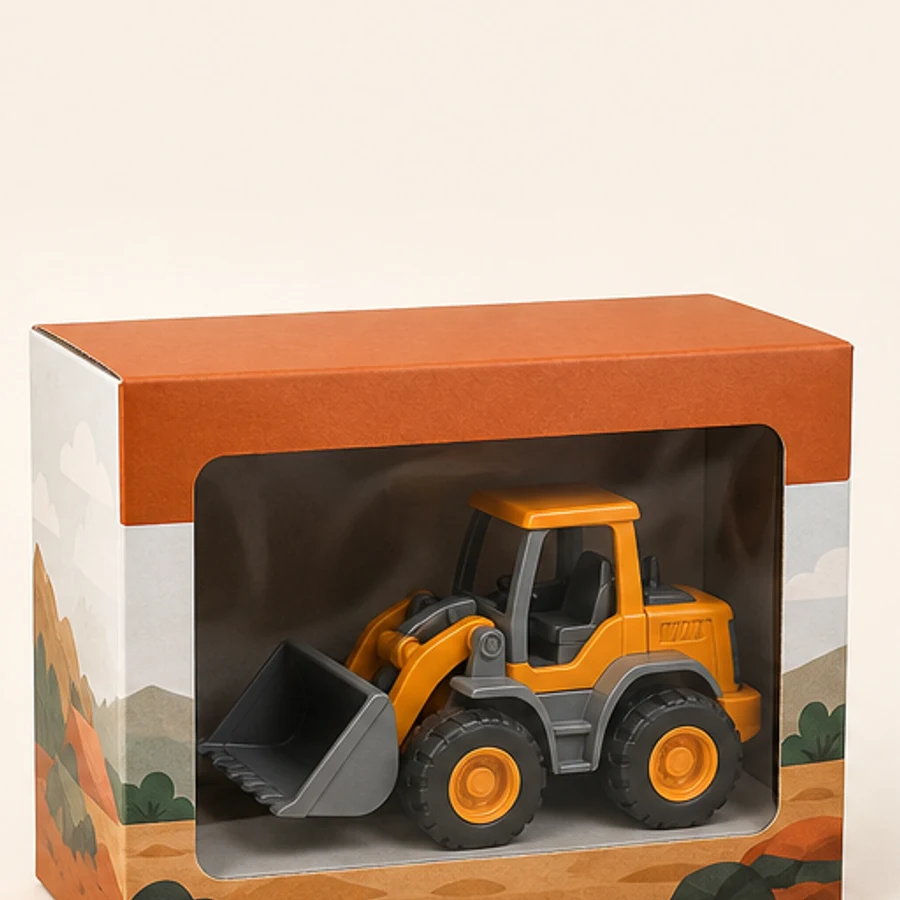
Plan the front display zone, side information panels, barcode area and any destination-specific warnings before decoration. Windows, perforations and hang features remove board area and can change stiffness. Confirm clear-film, glue and material choices for the actual market and approve artwork placement on a physical sample.
Four decisions before artwork
Choose the structure
Custom toy packaging boxes should organize the main product and every accessory, provide the required display and information panels, and protect the set through packing and distribution.
Specify the material
Paperboard works for compact lightweight retail products; corrugated board supports larger sets and delivery; folded paperboard or corrugated inserts can locate accessories.
Plan print and information
Plan the front display zone, side information panels, barcode area and any destination-specific warnings before decoration.
Approve the loaded sample
Load every component into the structural sample.
Custom toy box packaging, wholesale custom toy packaging boxes and custom toy packaging boxes with windows are best treated as variations of one commercial page, not separate thin pages.
SAMPLE WITH THE REAL PRODUCT
Approve fit, handling and the delivery system
Load every component into the structural sample. Check that small parts cannot migrate, the main item remains visible, panels do not bow and the customer can remove the product without damaging it. For ecommerce, test the retail pack inside the shipping system with realistic movement and impact.
- Plain sample: verify fit, assembly, loading and opening.
- Printed sample: check copy, color, folds and finish placement.
- Golden sample: record the accepted structure, orientation and packing method.
BUYER CHECK
Avoid unsupported performance claims
A paper box alone does not establish age grading, toy safety, warning language or regulatory compliance. The brand must supply and approve the required product information for each destination market.
Ask for a structure review →Send a quote-ready brief
Comparable quotations need the same product, structure, printing, quantity, packing and delivery scope.
- Main toy and accessory dimensions
- Total packed weight and loose-part count
- Required retail orientation and visibility
- Carton, window or corrugated format
- Insert, ties or retention requirements
- Information panels and artwork versions
- Quantity, destination and required date
Related packaging resources
Custom folding cartons → · Custom packaging inserts → · Packaging dimensions guide →
These links explain the structure and approval decisions in more detail without forcing technical topics into this commercial page.
FAQ
Questions packaging buyers ask first
What packaging works for retail toys?
Compact toys often use folding cartons; visible products may use a window carton; larger sets may need corrugated construction and an insert. Product size, weight and channel determine the choice.
Can toy boxes include a clear window?
Yes, when the window supports shopper visibility. Size, film, glue area, glare, structural strength and material separation should be reviewed in the sample.
How are toy accessories kept together?
Folded inserts, partitions or other approved retention features can organize parts. Test the loaded pack in multiple orientations and check customer removal.
Does the box supplier provide toy compliance approval?
Packaging For manufactures to the approved specification. The brand must determine and approve product safety, warnings, age grading and destination-market requirements.
READY TO BUILD THE SPECIFICATION?
Build the quote around a real product.
Share product dimensions, packed weight, quantity, delivery destination and artwork status. We will review the structure, material and sample route before quoting.