
PREMIUM SET-UP BOXES
Custom Rigid Boxes for Luxury Product Packaging
Premium set-up boxes developed with controlled fit, wrapped-board construction, fitted inserts and production-ready finishing specifications.
Best for: Beauty, fragrance and jewelry · Electronics and premium accessories · Gift sets and limited editions
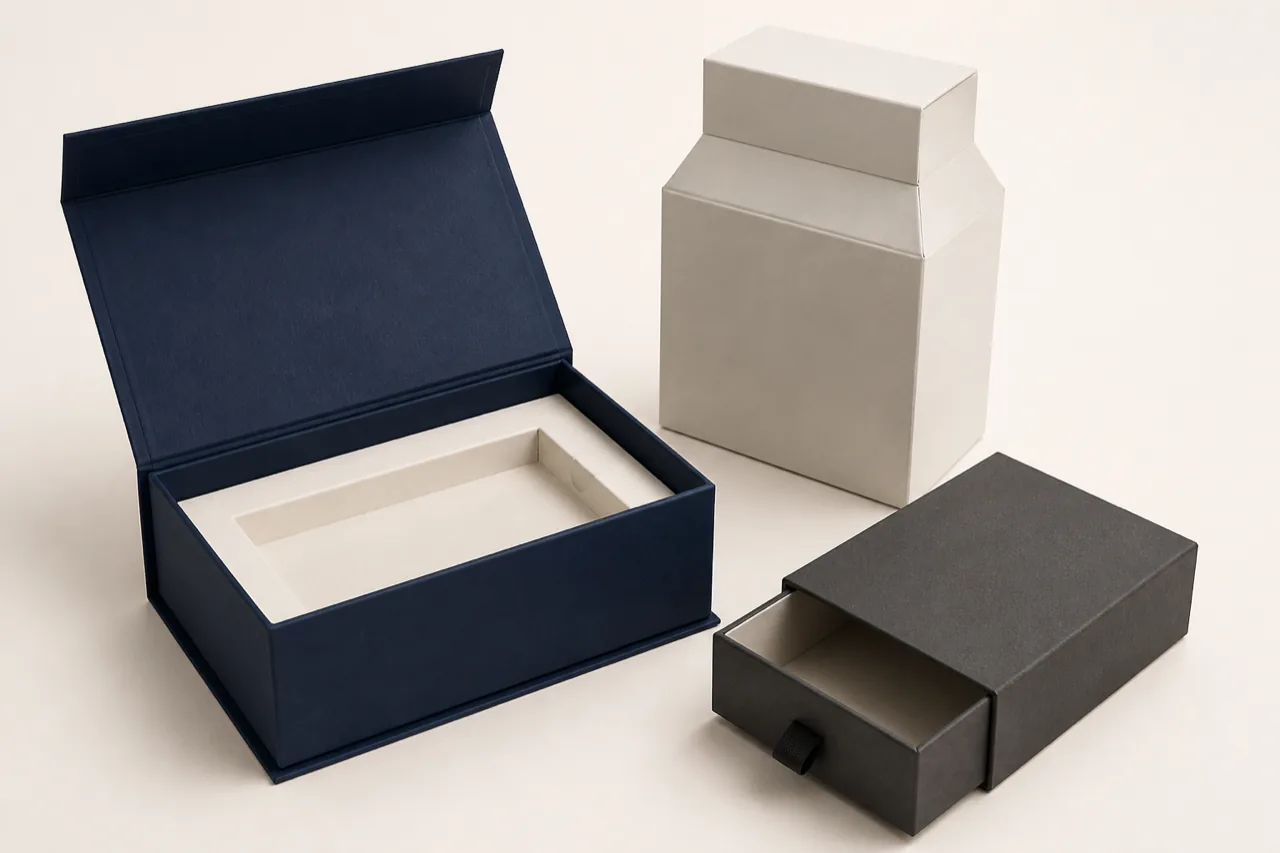
STRUCTURE
Lid-and-base, drawer or magnetic
BOARD
Wrapped set-up board
SURFACE
Printed or specialty-paper wrap
DELIVERY
Assembled or collapsible format
QUICK ANSWER
What buyers need to specify first
Custom rigid boxes use thick set-up board wrapped with printed or specialty paper. They suit premium gifts, beauty sets, jewelry, electronics and launches where structural permanence, tactile quality and a controlled reveal justify higher assembly and freight cost. For bottle presentation, compare structure and insert requirements for custom wine gift boxes.
When to consider another format: Traditional rigid boxes normally ship assembled, so they use more storage and freight volume than folding cartons. For cost-sensitive or high-volume light products, a well-engineered folding carton may be the more efficient premium solution.
COMPARE THE PRODUCT SYSTEM
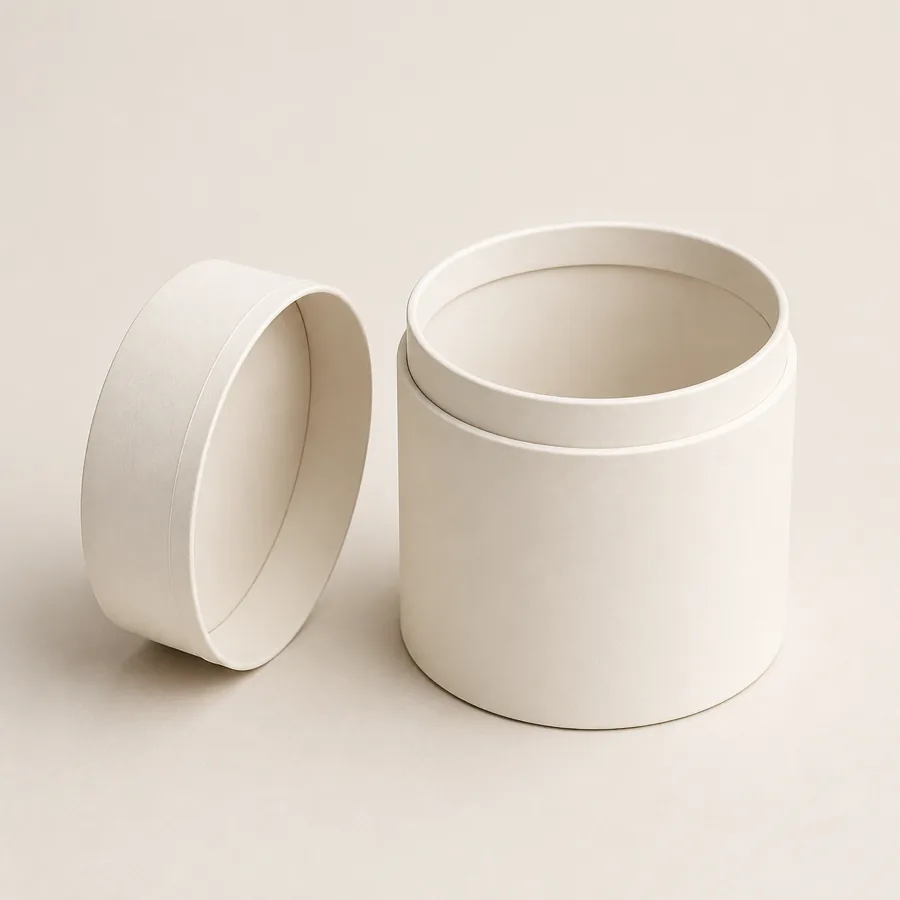
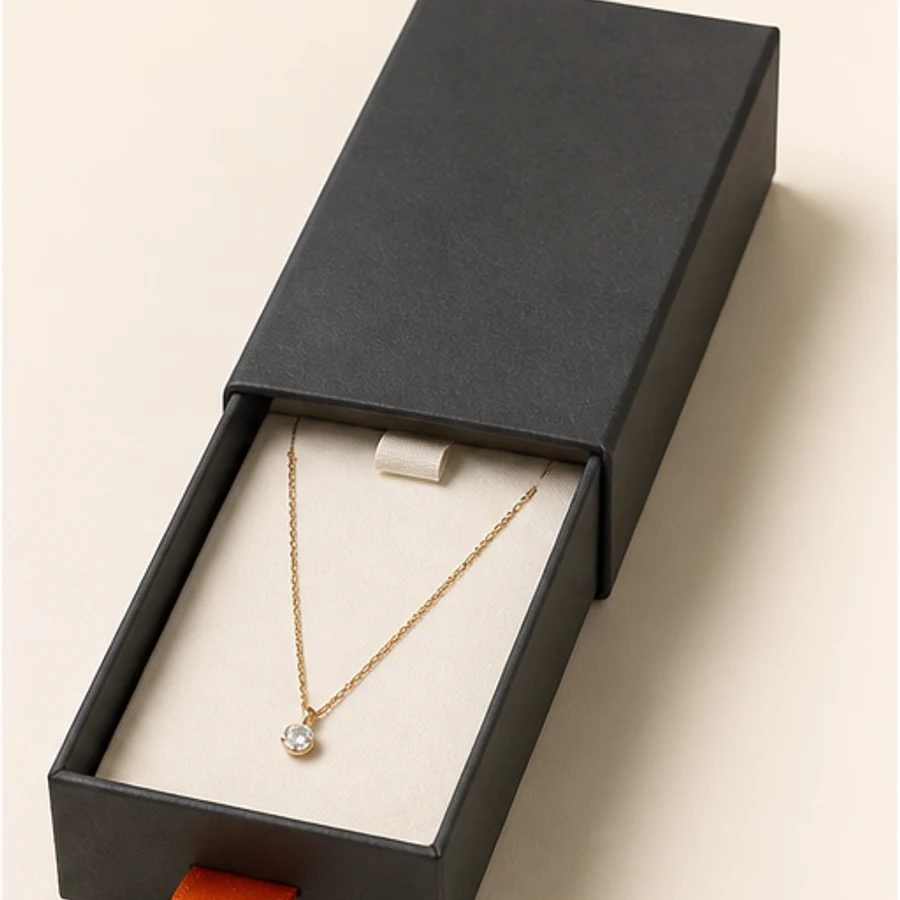
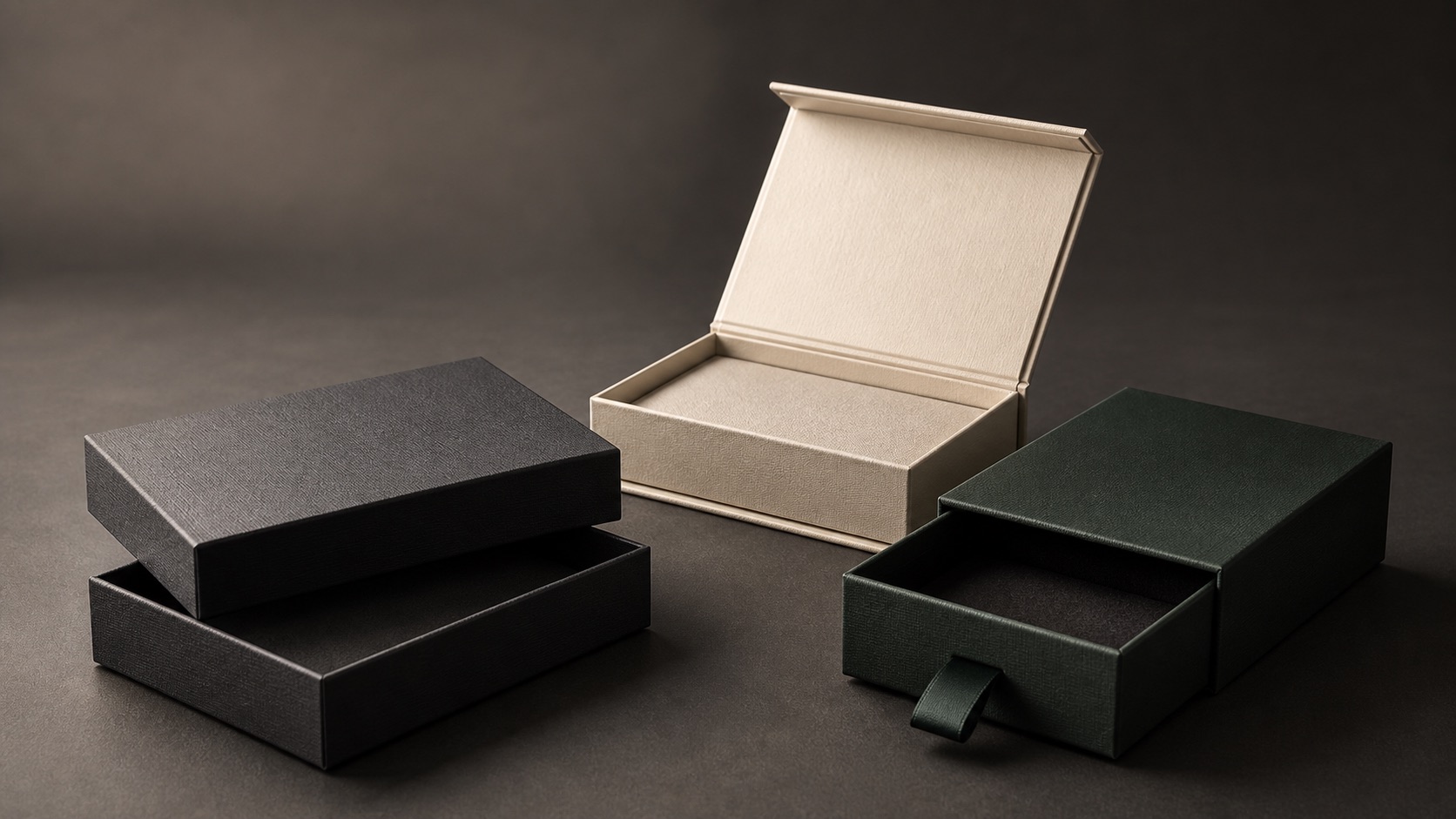
Three rigid-box opening systems
Start with the product, packing job and delivery route. Then select the structure, material and opening experience.

APPROVE THE PHYSICAL SYSTEM
Sample the opening feel—not just the artwork.
Sample the plain structure first, then the wrap and finished version. Evaluate overall dimensions, lid or drawer opening force, seams, corners, color, finish registration, insert cavity and product removal. Keep a signed golden sample and photographs of all sides as the production inspection reference.
- Verify dimensions: use the actual product and realistic tolerances.
- Approve handling: check assembly, loading, opening and removal.
- Record the standard: retain a signed sample and packing method.
Make four decisions before artwork
Structure
Custom rigid boxes use thick set-up board wrapped with printed or specialty paper.
Materials
Specify set-up board thickness and density together with the wrap material.
Print and finish
Printed wraps support complex graphics, while specialty papers often work well with controlled foil, screen print, embossing or debossing.
Approval
Sample the plain structure first, then the wrap and finished version.
Buyers comparing luxury rigid packaging boxes, custom rigid gift boxes with inserts and custom set-up boxes should define opening force, wrap quality, insert fit and landed shipping volume before choosing decorative finishes.
FROM BRIEF TO PRODUCTION
Approve the structure before the surface
01
Brief
Product, weight, quantity and route.
02
Dieline
Usable dimensions and construction.
03
Plain sample
Fit, assembly and handling.
04
Printed sample
Color, finish and production details.
05
Production
Golden sample and inspection points.
Send a quote-ready brief
Comparable quotes need the same product, structure, print, quantity, packing and delivery scope.
For the distinction between HTS rigid-box imports, domestic product statistics and project quotes, review our rigid-box trade and product data.
- Product dimensions, weight and orientation
- Preferred rigid-box structure and opening sequence
- Set-up board and wrap appearance
- Insert material and cavity requirements
- Print, foil, embossing, ribbon or magnet details
- Quantity per size and artwork
- Flat or assembled packing requirement
Rigid box sourcing guide → · Folding cartons vs rigid boxes → · Packaging inserts compared →
For a hinged premium rigid format, compare custom magnetic closure boxes.
BUYER CHECK
Do not approve from a rendering alone.
Traditional rigid boxes normally ship assembled, so they use more storage and freight volume than folding cartons. For cost-sensitive or high-volume light products, a well-engineered folding carton may be the more efficient premium solution.
Ask for a structure review →FAQ
Questions buyers ask first
What is the difference between a rigid box and a folding carton?
A rigid box uses thick set-up board and usually stays three-dimensional. A folding carton uses thinner paperboard and normally ships flat, reducing storage and freight volume.
Can rigid boxes ship flat?
Traditional set-up boxes do not. Collapsible rigid formats can reduce cube but add corner tapes, magnets or assembly steps that must be tested.
Which insert works best?
Folded paperboard, molded pulp and foam each offer different protection, presentation and material pathways. Select using product weight, fragility, removal force and end-of-life goals.
How are luxury-box tolerances approved?
Use a production-representative sample that defines dimensions, fit, seams, corners, finish registration and acceptable cosmetic variation.
READY TO BUILD THE SPECIFICATION?
Build the quote around a real product.
Share dimensions, packed weight, quantity, destination and artwork status. We will review the structure, material and sample route before quoting.