Custom Packaging Inserts: Paperboard, Pulp, Corrugated or Foam?
A buyer-focused comparison of paperboard, molded pulp, corrugated and foam inserts for custom boxes, including fit, testing and RFQ guidance.
Quick answer: Custom packaging inserts should be selected by product fragility, weight, presentation, packing speed, material goals and transport risk. Folded paperboard is printable and efficient for light products; corrugated adds stiffness; molded pulp forms protective fiber cavities; foam gives precise cushioning for demanding items. The best insert is the simplest one that passes fit and distribution tests.
Looking for a production quote? Review our custom packaging inserts capabilities, then send the product dimensions, quantity, destination and artwork status through the quotation form.
The insert is often more important to product protection than the outer box. It prevents movement, supports vulnerable areas, organizes components and controls the first reveal. Yet buyers frequently specify it last, after the box size and artwork are fixed. That order creates excess space, awkward cavities and avoidable material. Engineer the product, insert and box as one system.
Start with the failure you need to prevent
List the product’s vulnerabilities before choosing a material. Can a pump unlock? Can a glass shoulder hit the box wall? Will a cable scratch a device? Does a jar label scuff? Can several parts collide? Is the product damaged by static, moisture or compression? Then map the expected route: retail shelf, parcel network, pallet freight or a combination.
For parcel shipping, the insert must limit movement and manage shock without transferring every impact to the product. UPS notes that appropriate cushioning should protect internal items and that corrugated liners or inserts can increase box strength. The carrier’s packaging tips are a useful baseline, but a custom pack still requires product-specific validation.
Four common custom insert materials
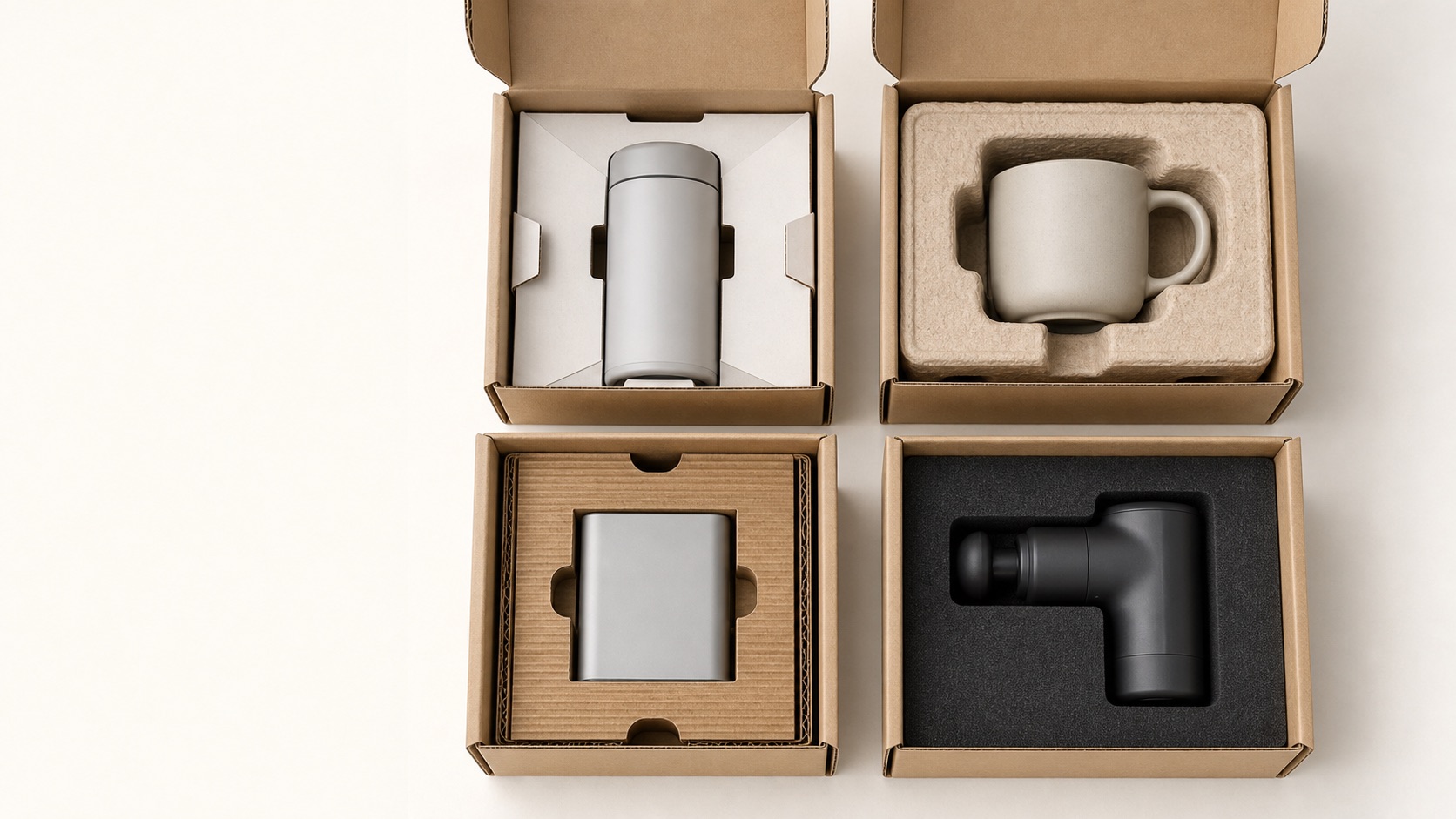
| Material | Main strengths | Main trade-offs | Typical uses |
|---|---|---|---|
| Folded paperboard | Printable, flat-shipping, precise tabs, predominantly fiber-based | Limited cushioning; complex folds can slow packing | Cosmetics, bottles, light electronics, accessories |
| Corrugated board | Stiff, protective, economical, good for partitions | Thicker edges and a less refined appearance | Mailer kits, heavier products, dividers |
| Molded pulp | Shaped support, fiber texture, good nesting potential | Tooling, draft angles, surface variation, longer development | Jars, devices, homeware, protective trays |
| Foam/EVA | Precise cavity, cushioning, premium presentation | Mixed-material pack, higher cost, end-of-life concerns | Fragile instruments, electronics, luxury sets |
Folded paperboard inserts
A paperboard insert is die-cut and scored from a flat sheet. Tabs, bridges, platforms and folded walls hold the product. It can use the same visual language as the carton, accept printing and ship flat. For a bottle, a top and bottom aperture can control the neck and base. For a kit, linked wells can organize several items without loose dividers.
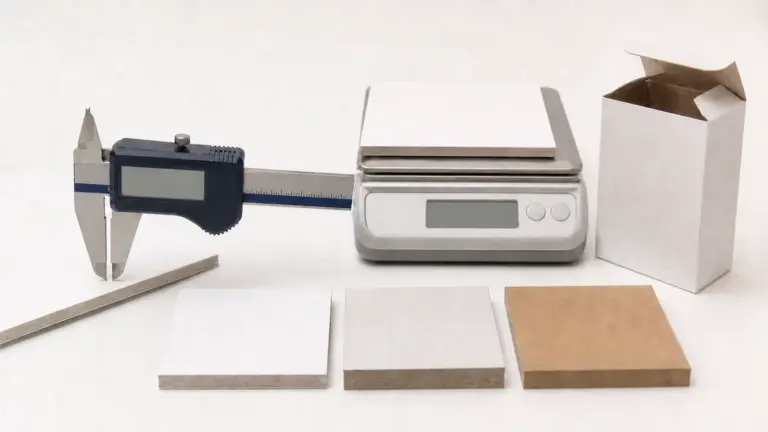
Designers must account for board grain, caliper, fold allowance and the direction of product loading. Narrow bridges tear; sharp internal corners concentrate stress; small locking tabs can be difficult for packers. A white structural sample reveals these issues quickly. Paperboard provides positioning more than soft cushioning, so fragile glass may need distance from outer walls or a stronger shipping system.
Corrugated inserts and partitions
Corrugated inserts use fluted board to add stiffness and separation. They can be simple pads, rolled supports, die-cut cradles or interlocking partitions. They suit ecommerce mailers, heavier objects and multi-unit packs where visual refinement is secondary to protection. Exposed flute edges can also communicate an intentionally technical or material-led aesthetic.
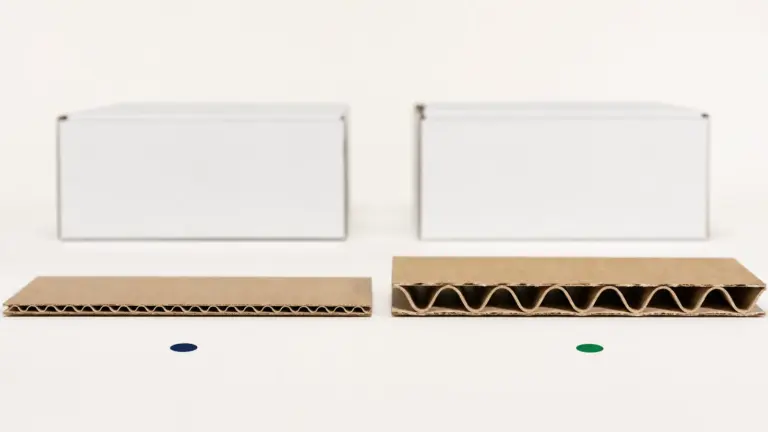
Specify flute direction because it changes compression behavior. Check whether the insert loads from the top, wraps around the product or locks into the outer box. Interlocking partitions should not collapse during packing. If surfaces may rub delicate finishes, add suitable clearance or a protective wrap rather than assuming paper is non-abrasive.
Molded pulp inserts
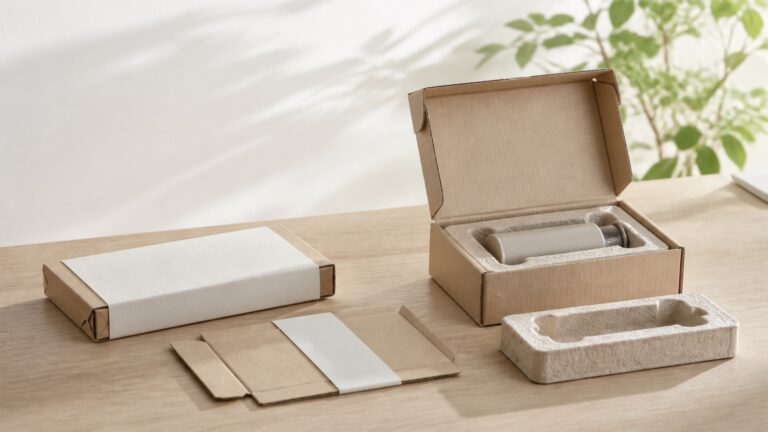
Molded pulp, also called molded fiber, forms a three-dimensional tray from fiber slurry. It can cradle complex shapes, stack efficiently before use and replace some plastic or foam forms. The material’s natural texture can support a fiber-based presentation. It is especially useful when the geometry benefits from rounded supports, ribs and distributed contact.
It is not a drop-in copy of a plastic tray. Draft angles are needed for molding and release. Wall thickness, drying and fiber distribution create natural variation. Fine cosmetic surfaces may need protection from abrasion. Tooling and development time are typically greater than for a simple die-cut paper insert. Test humidity response, nesting, denesting on the packing line and the actual product cavity.
Foam and EVA inserts
Foam can be cut, laminated or molded into highly controlled cavities. EVA is common in premium sets because it can hold a clean edge and a consistent color. Softer foams provide cushioning; denser materials support weight and presentation. Layered construction can create finger notches and different depths.
Specify foam type, density, hardness, thickness, color, odor limits and any anti-static requirement. Confirm whether adhesive laminations are used. Because foam changes the material composition of the finished pack, do not make broad recyclability or “plastic-free” claims unless the complete configuration supports them in the intended market. If protection requires foam, communicate that choice accurately rather than substituting an underperforming fiber insert for marketing reasons.
How to engineer the cavity
- Measure the largest and smallest acceptable product units.
- Identify safe load-bearing surfaces and vulnerable features.
- Choose the product orientation and removal direction.
- Add realistic manufacturing and packing clearance.
- Provide finger notches or ribbon lifts where needed.
- Keep fragile areas away from outer impact zones.
- Prototype, cycle-pack and test the complete shipping unit.
A CAD-perfect cavity can still fail if the product label catches, a cap varies, or a packer loads it at an angle. Test multiple production products. The insert should retain the item under expected handling but allow the customer to remove it without excessive force. Document the final orientation with photos or a packing instruction.
Compare environmental claims carefully
A predominantly paper-based insert may be easier to explain, but disposal outcomes depend on coatings, adhesives, local programs and contamination. The U.S. EPA reports material-specific recycling data and distinguishes corrugated boxes from other paper containers; its most recent page still relies on 2018 national data, so cite the year rather than presenting the figure as current behavior. See the EPA paper and paperboard data.
The FTC advises marketers not to use broad, unqualified environmental-benefit claims and to qualify recyclable claims when suitable facilities are not available to a substantial majority of consumers or communities. Review the Green Guides summary before writing on-pack claims. “Molded pulp insert made with X% recycled fiber” is more specific and verifiable than “100% eco-friendly packaging.”
Sample and test the complete pack
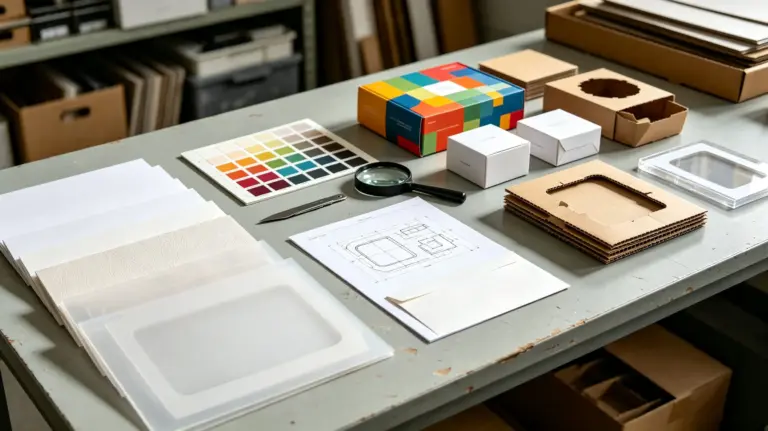
Begin with a structural sample to check fit, product removal and box closure. Then test the insert after repeated packing, temperature or humidity exposure if relevant, and the expected distribution hazards. ASTM D4169 describes sequential laboratory evaluation of shipping units against representative distribution elements; parcel projects may use other standards or carrier protocols. Agree on the test plan before production, not after damage appears.
Inspect samples for cavity dimensions, cuts, delamination, dust, odor, color, surface marks and correct orientation. For molded pulp, define acceptable cosmetic variation. For foam, inspect bonding and edge quality. For paperboard and corrugated, check scores, tears and locking tabs.
Insert RFQ checklist
- Physical product samples or verified 3D dimensions and tolerance.
- Product weight, fragility and protected surfaces.
- Outer box internal dimensions and material.
- Preferred insert material and reason for the preference.
- Number of cavities, orientation and removal method.
- Printing, color, surface or odor requirements.
- Quantity per SKU and shared-tool opportunities.
- Pack-line method and target assembly time.
- Distribution route and required tests.
- Material declarations or environmental claim evidence needed.
Frequently asked questions
Which insert is most protective?
No material wins universally. Foam provides strong cushioning and precise retention in many applications, while engineered corrugated and molded pulp can protect effectively when the geometry and test plan suit the product.
Are paperboard inserts cheaper than molded pulp?
They often have lower tooling and suit flat production, but complexity, quantity, print and assembly change the result. Compare total packed cost, not material alone.
Can an insert eliminate void fill?
A fitted insert often reduces or removes loose fill, provided the complete pack controls movement and passes the route-specific test.
Should I send a physical product to the packaging factory?
Yes when fit or fragility is important. A physical sample exposes tolerances, surfaces and packing behavior that dimensions alone may miss.
Get the insert engineered with the box
Packaging For designs paperboard, corrugated, molded pulp and foam insert solutions as part of complete custom box projects. Send your product sample details, outer-box target, quantity, destination and protection priorities through the custom packaging quote form. We can recommend a material route and prototype the fit before mass production.