Chocolate Box Insert Design: Cavities, Cups and Assortment Changes
A new flavor can disrupt an otherwise successful chocolate-box layout. Document the piece, cup and lid clearances before ordering inserts for the next assortment.
Start chocolate box insert design with the finished chocolates in their intended cups. The insert needs to hold the assortment in position, leave room for loading and removal, and keep the lid clear of delicate toppings. A seasonal piece that is taller or wider can require a layout change even when the outer box stays the same.
For mixed bonbons, measure each piece together with its cup, then try the full assortment in a sample insert. Check how it packs and opens. A divider alone does not establish parcel-shipping protection or temperature control.
Measure the finished chocolate, not only the mold
A mold reference helps describe a product, but the packaging has to accommodate what comes out of production and goes into the box. Include coatings, toppings, piped decoration and any wrapper. Record the maximum relevant height and footprint observed in the sample set, together with features that should not contact the insert or lid.
Keep the sample description specific. “Round truffle” says little about whether the piece can roll, how it sits in the cup or whether a decorative top is fragile. A photograph from above and another from the side can help explain the geometry, but neither replaces dimensions or an actual product sample when fit is being developed.
If the chocolates are still in development, mark the dimensions as provisional. Use an early prototype to explore the layout, but confirm the finished pieces before approving cavity tooling.
Measure the chocolate and cup together
A fluted paper cup changes how a chocolate sits inside a compartment. Its outer shape, rim and behavior during loading matter as well as the dimensions of the chocolate. Place the finished piece in the intended cup before measuring the combined arrangement.
Check whether the cup stays in position when the piece is inserted and removed. A cavity that catches the cup can make packing awkward; an arrangement with unnecessary movement may disturb the display. Set the clearance from the sample review; one gap will not suit every shape and cup.
Agree on which component will hold each chocolate in position. The cup, a formed recess and a divider grid do not perform exactly the same function. A grid may separate pieces while allowing movement inside each compartment. A fitted cavity may restrict movement more closely, but still needs enough access to load and remove the piece.
Map each piece in a mixed assortment
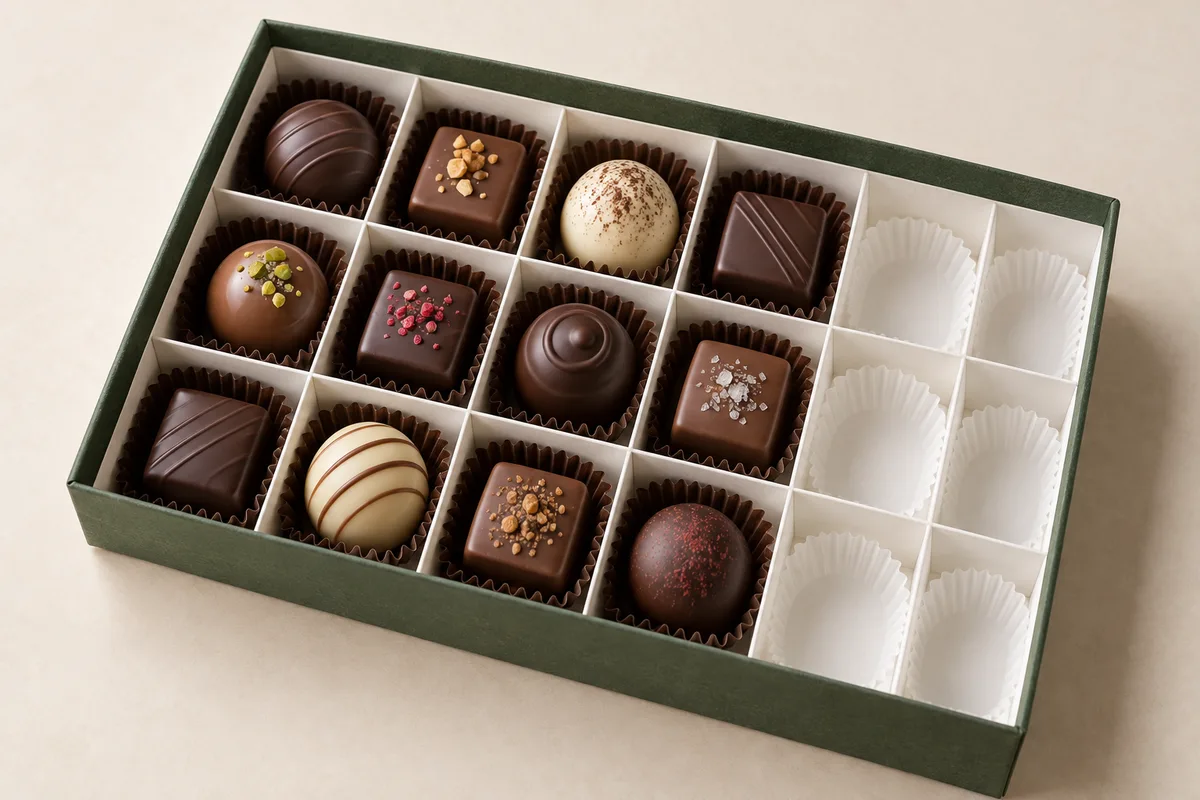
Arrange round, square and taller pieces deliberately. Do not design the tray around an average bonbon and leave the packing team to make the exceptions fit. Mark the location and orientation of each item, including any position that is reserved for a taller decoration or a larger cup.
A clear layout also helps keep flavor identification consistent. If the product uses a menu card, review whether the printed arrangement matches the packed assortment. Decide what happens when one flavor is replaced, especially where the substitute has a different shape.
| Layout field | What to record |
|---|---|
| Product reference | The actual finished item and revision |
| Occupied footprint | Product with its selected cup or wrapper |
| Height concern | Decoration, wrapper folds or other raised areas |
| Position | Location and orientation in the assortment |
| Contact restriction | Surfaces that should not touch the cavity or lid |
| Variant rule | Approved substitute, or a requirement to recheck fit |
Keep the layout alongside the material specification and food-contact documentation. Approving the fit does not approve the material for food contact.
Check lid clearance with the whole box assembled
Check the tray in the complete box, with its supports, pads and lid in place. Confirm how the insert is located inside the box and whether it can shift or lift during ordinary handling.
Close the sample slowly with the tallest intended pieces in place. Check for contact marks and interference, then reopen it to see whether the presentation has changed. Repeat the review with the actual pad or menu card if one is part of the pack. A loose sheet introduced after approval can change the available space.
Do not resolve every interference issue by increasing the outer box. First identify the cause: tray position, cavity depth, product height or an extra component. The appropriate change depends on the complete construction. Record the selected revision so the tray and outer box are not reordered from incompatible files.
Choose the insert construction around the task
Paperboard dividers, folded inserts and formed trays offer different ways to organize an assortment. The useful comparison includes the cavity shape, assembly work, product contact and how the empty components arrive at the packing site. A supplier should explain which features are feasible in the proposed material.
Holmen's Choco packaging project illustrates a formed fiber tray with cavities for individual chocolates. The project is an example of that construction, not a specification for your insert. Check performance and food-contact suitability for the material actually proposed.
For the broader material comparison, use the packaging insert materials guide. Then assess the cavity shape and assembly work with your own assortment.
Review food contact separately from fit
Identify every component that may contact the chocolate, including cups, liners, pads and any exposed insert surface. State the intended food, contact conditions and duration to the supplier. A declaration about the outer box does not necessarily describe every component placed inside it.
The FDA lists food types and conditions of use for assessing food-contact applications. A generic “food grade” statement does not identify those conditions. Request documents for the proposed material and use, and have them reviewed for the destination market.
A paper cup does not remove the need to check other possible contact surfaces. Review the package as supplied, including printed inserts. This guide is not a food-contact approval or legal advice.
Make seasonal changes manageable
If the brand changes assortments regularly, list the likely changes before selecting a structure. A seasonal decoration, a new cup or a replacement piece can affect an otherwise familiar box. Decide which changes require a new tray and which can be evaluated within the existing layout.
Ask whether the outer-box design can stay the same when the insert changes. Different cavity layouts may need separate tooling and packing instructions, even if the boxes look identical from outside. Give non-interchangeable parts separate references.
Give the packing team a current layout image and a list of approved substitutions. Matching flavor categories or nominal weights does not establish that two pieces fit the same cavity.
Test the packing and opening sequence
Have the person who will pack the chocolates load the sample. Observe where cups catch, where fingers need access and whether a piece must be pressed into place. Then have someone remove the products without being coached. Check whether the remaining pieces and cups stay in place as chocolates are removed.
If the assortment will be shipped, evaluate it in its actual outer distribution package. A retail presentation tray is not a thermal protection system. Temperature management and transport protection require separate decisions based on the product and route; cavity design cannot replace them.
What to include in a chocolate packaging inquiry
For custom chocolate packaging boxes, provide finished-piece dimensions, the intended cups, a layout, the tallest decoration and the selling or distribution conditions. Include the quantity by assortment and the changes expected between versions.
Use those details when requesting a packaging quotation. Ask the supplier to identify the insert construction, what the sample will demonstrate and which food-contact documents are available. The sample can then be assessed against the actual assortment.
Image note: the featured chocolate assortment is an AI-generated illustration. It is not a customer project or evidence of approved food-contact materials.