Paper Bag Weight Capacity: What to Test Before Ordering Custom Bags
Define the merchandise and carrying conditions before comparing custom shopping bags. Review the finished construction and agree how the sample will be assessed.
Paper bag weight capacity belongs to the finished bag and the way it will be used. Confirm it with the intended product load, handle attachment and base construction. A paper GSM figure alone is not a carrying-capacity approval.
This guide is for brands ordering custom retail shopping bags for boxed cosmetics, clothing, gifts and similar merchandise. Start with the heaviest normal purchase and how customers will carry it, then agree a sample review and, where required, a formal test with the supplier.
Define the merchandise before selecting the bag
List what the bag must carry in normal use. Include the full retail packs, gift wrapping and any extra items routinely added at the point of sale. A large light garment and a small dense gift set create different requirements even when both fit in the same bag.
Record the occupied dimensions as well as the load. A rigid box with a sharp corner, an uneven stack or an object that presses against the side needs to be assessed in its actual position. Filling a bag with unrelated weights can miss those contact points.
For a family of sizes, identify the intended product combination for each size. Do not assume an accepted small bag establishes the carrying performance of a larger design with a longer unsupported base or a different handle spacing.
An initial brief can be short: product photographs, dimensions, total loaded weight, bag dimensions and preferred handle type. Mark the information that is provisional. The supplier can then identify what must be confirmed in the sample.
Review the complete construction
GSM describes paper mass per unit area. It does not identify every material property or the way a finished bag is assembled. The CEPI Eurokraft and EUROSAC industry guidelines treat paper, adhesive, converting and handle construction as contributors to carrier-bag performance.
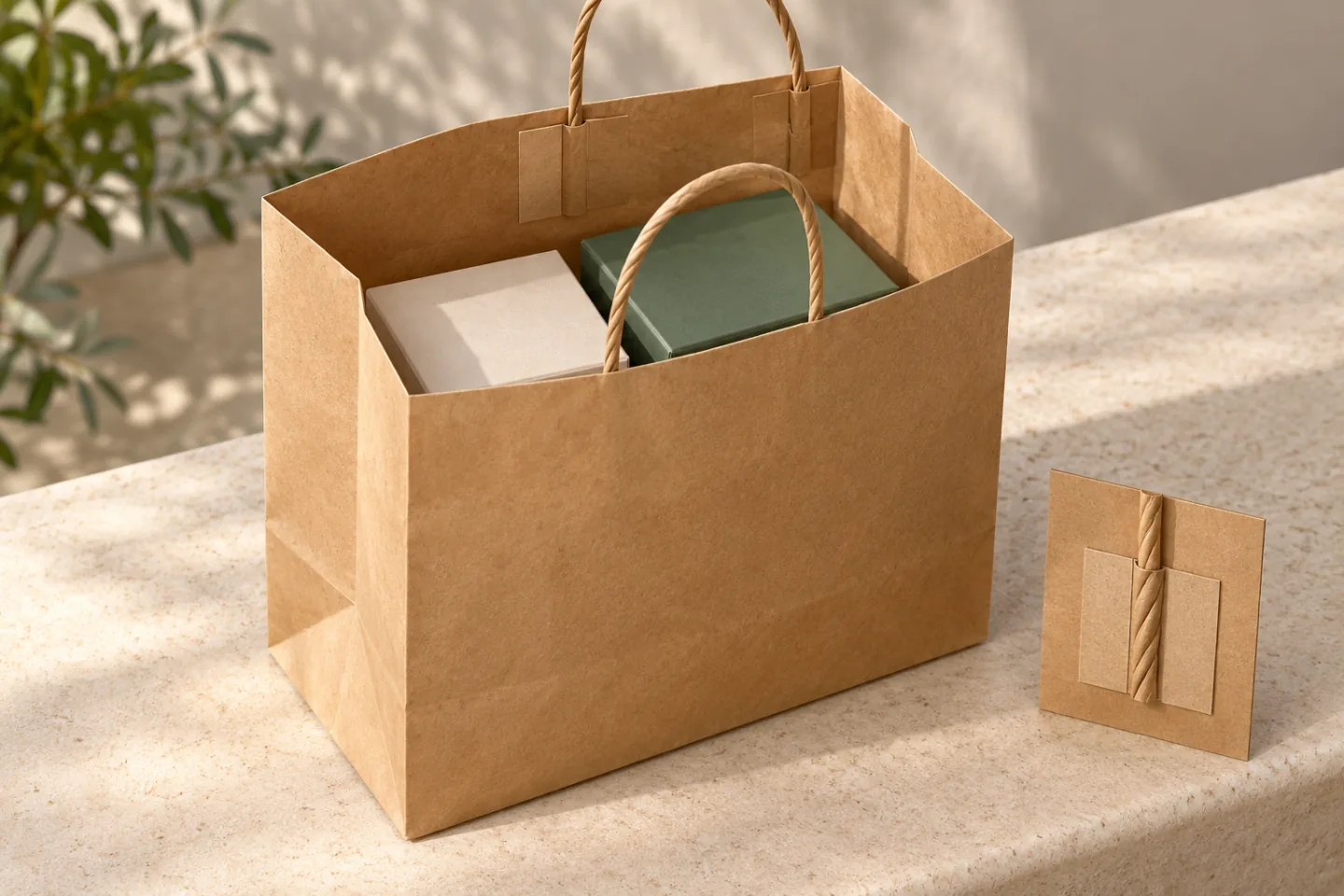
On the actual sample, inspect the handle attachment and the surrounding paper, the reinforced top where used, the side construction and the completed bottom. For a rope or ribbon handle, also confirm the attachment arrangement proposed for production. One handle style cannot be approved from a picture of another.
Ask the supplier to identify the construction in the quotation and sample record. If a reinforcement, adhesive arrangement or bottom board is part of the proposed bag, it should remain identifiable when cost alternatives are discussed.
The practical question is whether the approved design supports the intended use. Substituting a paper or removing reinforcement to reach a price requires another review of the affected construction.
Agree the sample check before using it as a capacity claim
Separate a buyer's practical handling review from a formal test report. The handling review can reveal a problem with the packed product or the carrying action. It does not automatically establish a certified load rating.
Before testing, agree with the supplier or laboratory:
- the exact bag specification and sample revision;
- the proposed load and its distribution inside the bag;
- the storage or conditioning before the review;
- the carrying or lifting actions and how they will be repeated;
- the number of samples and acceptance criteria;
- who records the outcome and approves any changes.
Use a method suited to the project rather than choosing a weight or repetition count from an unrelated online example. If a formal standard is required, obtain the relevant procedure and agree its use before claiming a result.
The Paper Bag initiative describes carrier-bag durability testing and a certification approach associated with EN 13590. That is European test-method context. It is not evidence that every bag sold in North America must carry that certification, or that a particular PackagingFor bag has been certified.
Observe what changes during carrying
Load the finished sample in the intended arrangement and check it using the agreed handling method. Keep the base and handle attachments visible enough to inspect between actions. Record the first change, not only whether the bag eventually breaks.
Useful observations include paper distortion around an attachment, movement in a reinforcement, bottom deformation, contact damage from a product corner, and discomfort caused by the chosen handle length or grip. If the handle remains intact but its attachment pulls at the bag wall, report that distinction.
Use consistent language. “The rear handle attachment begins to separate at its upper edge” identifies a location and condition. “The bag is weak” does not tell the converter which part to investigate.
Take photographs of the loaded arrangement and any change. Keep samples that show the problem. Avoid repairing a sample and then recording it as though it were the original production proposal.
Consider the environment in which the bag is used
Tell the supplier if the bags will be stored near an entrance, used outdoors, handled with wet products or kept for an extended period before use. These conditions may require a different review from a brief indoor carrying task.
ASTM's public D4332 description explains why temperature and humidity matter when making repeatable packaging measurements. For comparisons, record the sample condition and agree suitable preparation with the test provider. Do not compare bags stored under different conditions without noting that difference.
Ask for storage instructions for the finished bags. Keep received stock in the condition the supplier recommends, protect it during handling and identify damaged shipping cases at receipt. A retained sample should represent the goods accepted for use, not a bag that has been repeatedly folded and handled by the review team.
Use a load-review record
This worksheet can accompany a practical sample review. It does not replace a laboratory report or create a rated capacity by itself.
| Record | Information to keep |
|---|---|
| Bag identity | Size, material, handle, finish and revision |
| Construction | Attachment, reinforcement and bottom details |
| Contents | Product combination, arrangement and loaded weight |
| Sample condition | Storage or agreed conditioning before review |
| Method | Agreed handling actions and formal test reference, if used |
| Observation | First visible change, location and stage |
| Decision | Accepted use, required change or further testing |
| Evidence | Photographs, retained samples and report reference |
Keep the accepted use specific. A bag reviewed for a particular cosmetics gift set should not be described as suitable for any product up to an invented weight. Changing the merchandise, handle or construction may reopen the approval.
Confirm production details before placing the order
For custom paper bags, provide the product arrangement, dimensions, intended load, quantity and delivery destination. Include preferences for handles, print and finishes, and say which features are required for use rather than simply preferred for appearance.
Ask the supplier to quote the identified construction. If an alternative is proposed, request a clear description of what changes and which sample checks need to be repeated. Record an accepted change against the bag revision so the next order has a reliable reference.
When sending PackagingFor a quotation request, include the heaviest normal merchandise combination and any carrying concern you have already observed. Those details give the structural review a practical starting point before paper, handles and reinforcement are finalized.
Featured image: AI-generated editorial illustration, not a customer project, approved sample or production-test result.