GSM vs PT Paperboard: Why They Do Not Convert Directly
GSM vs PT paperboard compares mass per area with thickness. Learn how to read specifications, compare grades and control substitutions.
“Please quote 350 GSM, approximately 18 pt” looks precise, but it can give a converter two different instructions. GSM describes how much a square meter of paperboard weighs. PT describes sheet thickness in thousandths of an inch. Density and construction determine the relationship between them.
That is why a universal GSM-to-points chart is unreliable for packaging board. Two grades can have the same basis weight and different calipers; two sheets with similar caliper can have different mass, stiffness and converting behavior. The practical task is to identify the property the package needs, then approve an exact grade and its measured range.
GSM measures mass per unit area
GSM means grams per square meter. A 350 GSM board has a nominal mass of 350 grams for one square meter of material. The number does not say how much volume that fiber and coating occupy.
Basis weight is useful when comparing grades within the same mill family, estimating sheet weight or communicating material usage. It can also help identify whether a supplier has quoted the intended grade. It cannot, by itself, predict panel stiffness, tuck engagement, crease quality or finished carton feel.
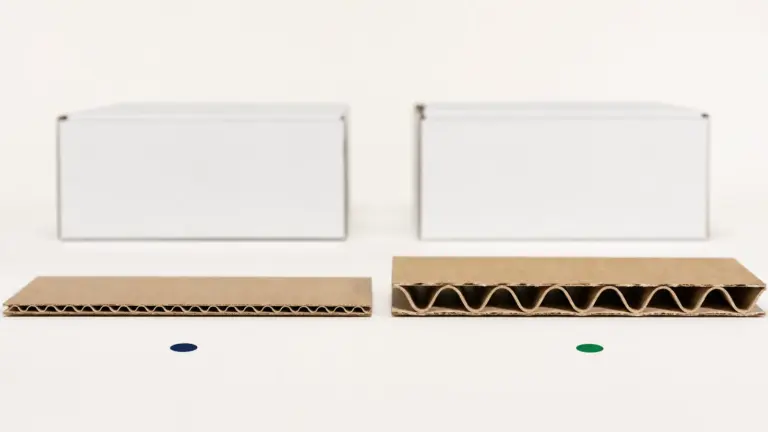
A dense, highly calendered sheet can carry more mass in a relatively thin profile. A bulkier grade can reach the same GSM with greater thickness. Coatings and multiple plies add further variation.
PT measures thickness
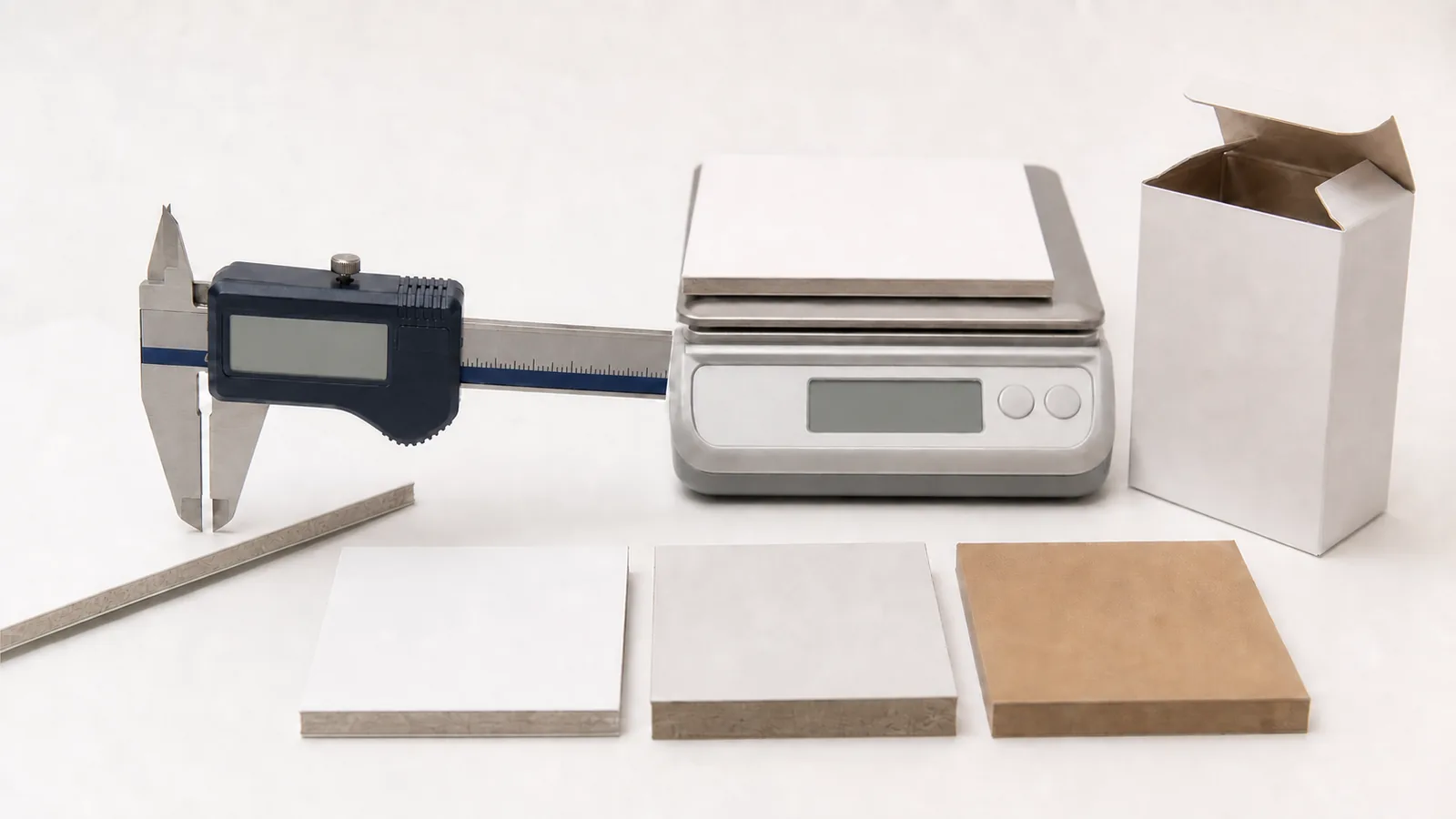
In North American paperboard specifications, one point is one-thousandth of an inch. A nominal 18 pt sheet is approximately 0.018 inch thick. Metric data sheets may report the same property in micrometers or millimeters.
Caliper affects physical clearances and converting settings. It matters when a dieline includes narrow slots, fitted inserts, tuck locks or closely controlled outside dimensions. Creasing tools also need to suit the sheet thickness.
PT still does not describe the complete material. Sheets with similar caliper can differ in density, bending behavior, surface and fiber composition. A request for “18 pt card” is therefore more specific than “heavy card,” but it is not yet a controlled board specification.
Why online conversion charts disagree
Most conversion tables assume a particular density. Paperboard does not have one universal density. Fiber furnish, ply construction, refining, coating and calendering all change the relationship between mass and thickness.
Suppose two boards are both sold at 350 GSM. One may be a denser coated grade and the other a higher-bulk board. If the second sheet is thicker, a generic chart will misstate one or both. The error can show up later as a loose insert, a tuck that will not close or a crease that cracks.
Use a supplier’s technical data for the named grade. When fit or converting is critical, confirm caliper on the production material rather than deriving it from GSM.
Bulk explains the missing relationship
Paper engineers often describe the volume a given mass occupies as bulk. Higher-bulk board provides more thickness for the same basis weight; lower-bulk board packs the material more densely. The exact terminology and units can vary across data sheets, so compare the supplier’s definitions as well as the displayed number.
Bulk helps explain why a grade can feel substantial without having the highest GSM, but it is not a substitute for performance evidence. Compression, humidity, coating and conversion can change how the finished carton behaves. The package still has to be checked in its erected and loaded condition.
Stiffness is a third property
Buyers often ask for a thicker board because the current carton bends or bulges. Thickness can contribute to stiffness, but it is not the only variable. Fiber orientation, board construction, grain direction and panel geometry also matter. Stiffness can differ between the machine and cross directions.
Before increasing GSM or PT, identify the actual failure:
- a wide panel bows after loading;
- a bottom closure opens under a concentrated load;
- a tuck tab disengages;
- a window weakens the front panel;
- the carton loses shape during case packing;
- the board cracks at the score;
- the pack simply feels lighter than the brand expects.
Those are different problems. A structure change, grain-direction correction or insert may solve one of them more effectively than a heavier sheet.
Compare named grades, not isolated numbers
A useful material comparison keeps the grade identity beside the measurements. Request:
| Field | Why it matters |
|---|---|
| Manufacturer or supplier grade | Prevents a generic weight from standing in for the material |
| Nominal GSM and tolerance | Records mass per area |
| Nominal caliper and tolerance | Records thickness and fit range |
| Grain direction | Affects bending and crease behavior |
| Surface and coating | Affects print, rub and glue |
| Stiffness data, when relevant | Adds performance context beyond thickness |
| Fiber/content claims and documents | Supports only the exact claim being made |
If the buyer permits an “equivalent” grade, define the approval process. Same GSM is not automatic equivalence. Same PT is not automatic equivalence either.
Substitution is where mistakes become expensive
A board change can occur because of availability, mill allocation, price or production scheduling. If the purchasing document lists only GSM, a supplier may reasonably choose a sheet that meets that number but changes the carton’s caliper and feel.
Require disclosure before substitution. Compare the proposed board’s grade, GSM, caliper, surface, grain, stiffness data and applicable documentation. Cut a new blank when fit, locks or insert clearances are close. Produce a print sample when whiteness, coating or color appearance changes.
Version control matters: the approved dieline, artwork, board and sample should identify the same revision. A late material change should not be treated as an administrative note if it affects the physical pack.
Check the board through converting
A paperboard data sheet describes the incoming material, not the finished carton. Printing, coating, die cutting, creasing, folding and gluing can expose differences that flat-sheet measurements do not show.
Review dark print across folds for cracking. Check whether score geometry suits the actual caliper. Erect the carton and load the production product. Confirm tuck friction, bottom behavior, glue adhesion and fit inside the master case. Condition the sample for the expected environment when humidity or temperature may affect the board.
If a prototype uses substitute stock, label it clearly. A white dummy may approve dimensions but not final surface, stiffness or crease appearance.
How to write the board line in an RFQ
Avoid “350 GSM card” or “18 pt equivalent” as the complete specification. A stronger board line reads more like this:
Named paperboard grade, nominal 350 GSM, nominal caliper and tolerance per supplier data, specified surface/coating and grain direction, with substitutions subject to buyer approval and production-equivalent sample review.
The correct values depend on the selected grade and project; the sentence is a format, not a universal material recommendation. PackagingFor’s folding carton specification guide covers the remaining structural, print and commercial fields.
Questions buyers ask about GSM and points
Is 350 GSM always 18 pt?
No. GSM measures mass per area, while PT measures thickness. The relationship depends on the board’s density and construction.
Can I convert GSM to PT for a quotation?
Only as a rough orientation when the exact grade is unknown. For production, request both figures from the material supplier and approve the named grade.
Which number determines carton strength?
Neither number alone. Material stiffness, grain, geometry, converting and the loaded product all affect performance.
Can a supplier replace a board with the same GSM?
Not without review when fit, stiffness, surface or claims matter. The replacement may have a different caliper and converting behavior.
Control the grade instead of guessing the conversion
PackagingFor manufactures custom folding cartons from project-specific paperboard grades. Providing the intended grade, GSM, caliper range, product weight and approved sample gives the converter a clear basis for material control without pretending that GSM and PT are interchangeable.