Folding Cartons vs Rigid Boxes: Complete Comparison
Compare folding cartons and rigid boxes by structure, cost, protection, presentation, shipping and suitability for different products.
Imagine walking into two different stores.
One product comes in a lightweight printed paper box.
Another arrives inside a luxurious magnetic gift box with a soft-touch finish and gold foil logo.
Both products may be excellent—but before customers even touch them, they’ve already formed an opinion based on the packaging.
Packaging isn’t just about protecting a product. It influences perceived value, customer expectations, shipping costs, and even whether someone decides to purchase your product in the first place.
Among all packaging options, folding cartons and rigid boxes are two of the most popular choices. While they may look similar at first glance, they serve very different purposes.
This guide explains the key differences between folding cartons and rigid boxes, helping you choose the right packaging solution for your brand.
What Is a Folding Carton?
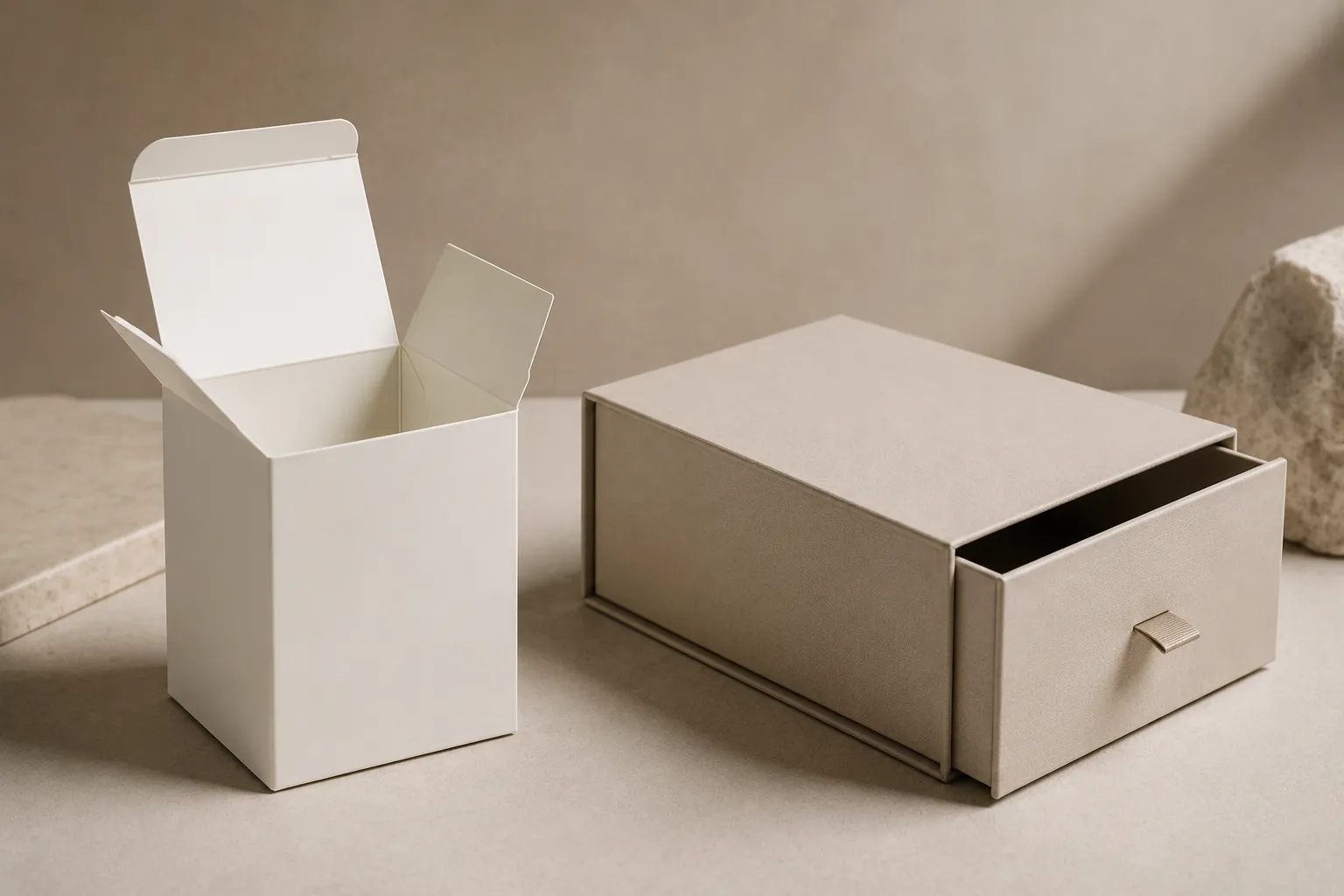
A folding carton is made from paperboard that is printed, die-cut, creased, and shipped flat before being folded into shape.
Because they are delivered flat, folding cartons require very little storage space and are inexpensive to transport.
They’re commonly used for:
- Cosmetics
- Skincare
- Food
- Supplements
- Electronics
- Toys
- Retail products
Most products you see on supermarket or retail shelves are packaged in folding cartons.
What Is a Rigid Box?
A rigid box is manufactured using thick greyboard, usually between 1 mm and 3 mm thick, wrapped with printed paper or specialty paper.
Unlike folding cartons, rigid boxes are permanently assembled and cannot be folded flat.
Rigid boxes are widely used for:
- Luxury cosmetics
- Jewelry
- Watches
- Gift packaging
- Premium electronics
- Wine packaging
- Fashion accessories
Rigid boxes are designed to create a premium unboxing experience and communicate luxury.
The Biggest Difference: Structure
The most significant difference between these two packaging types lies in their construction.
A folding carton is lightweight, flexible, and shipped flat, making it ideal for efficient storage and large-scale production.
A rigid box is pre-assembled, strong, and maintains its shape at all times, offering a more premium appearance and greater protection.
Think of it this way:
- A folding carton is like a high-quality book cover—lightweight and practical.
- A rigid box is like a premium gift box—solid, elegant, and built to impress.
Appearance and Brand Perception
Packaging often shapes a customer’s first impression before they even see the product inside.
Folding cartons are clean, modern, and highly customizable. They work well for everyday retail products where practicality and branding are equally important.
Rigid boxes, however, immediately signal luxury. Their substantial weight, sturdy construction, and premium finishes create a sense of exclusivity, making customers feel they are receiving something valuable.
If your goal is to enhance the unboxing experience and elevate your brand image, rigid boxes are difficult to beat.
Protection
Rigid boxes provide significantly better protection thanks to their thick greyboard construction.
They are ideal for delicate, fragile, or high-value products that require extra support during transportation.
Folding cartons, while durable enough for many retail items, generally rely on the product itself or additional inserts for structural support.
Shipping Costs
One of the most overlooked factors when choosing packaging is shipping.
Because folding cartons are shipped flat, thousands of boxes can fit on a single pallet or inside one shipping container. This dramatically reduces freight costs and warehouse storage requirements.
Rigid boxes, by contrast, occupy their full volume even before products are packed inside them. As a result, they require more storage space and increase transportation costs.
For brands shipping large quantities internationally, this difference can have a significant impact on overall logistics expenses.
Production Cost
Cost is another major consideration.
Folding cartons are generally more affordable because they use less material, are quicker to produce, and ship more efficiently.
Rigid boxes require thicker greyboard, manual assembly, wrapping, and additional finishing processes, making them more expensive to manufacture.
However, the higher cost is often justified for premium products where packaging plays a key role in perceived value.
Which Industries Use Folding Cartons?
Folding cartons are widely used across industries that require efficient, cost-effective packaging.
They are particularly suitable for:
- Beauty and skincare products
- Food and beverage items
- Health supplements
- Household goods
- Toys
- Consumer electronics
- Pharmaceutical products
These industries benefit from the lightweight structure, lower shipping costs, and flexibility of folding cartons.
Which Industries Prefer Rigid Boxes?
Rigid boxes are commonly chosen by brands that want to create a premium customer experience.
They are ideal for:
- Luxury cosmetics
- Jewelry
- Watches
- Perfume
- High-end electronics
- Corporate gifts
- Wine and spirits
- Premium fashion accessories
For these products, packaging becomes part of the product itself, reinforcing quality and brand prestige.
Which One Is Better for Startups?
Many startups assume that premium packaging always means rigid boxes. In reality, folding cartons are often the smarter choice during the early stages of a business.
They require a lower investment, reduce shipping costs, and provide excellent print quality for branding.
As sales grow and the brand becomes more established, companies can introduce rigid boxes for limited editions, gift sets, or flagship products.
This approach allows businesses to balance cost with brand positioning.
Can You Make Folding Cartons Look Premium?
Absolutely.
Modern finishing techniques can significantly enhance the appearance of folding cartons.
Popular options include:
- Soft-touch lamination
- Matte lamination
- Spot UV
- Gold foil stamping
- Silver foil stamping
- Embossing
- Debossing
- Textured specialty papers
With the right combination of materials and finishes, a folding carton can deliver a premium look while remaining far more cost-effective than a rigid box.
Our Recommendation
At Shenzhen Ron & An Technology Co., Ltd., we help brands choose packaging based on their product, budget, and positioning—not simply the most expensive option.
Choose Folding Cartons if you want:
- Lower packaging costs
- Lower shipping costs
- High-volume production
- Retail-ready packaging
- Excellent print quality
Choose Rigid Boxes if you want:
- A luxury presentation
- Stronger product protection
- A premium unboxing experience
- Higher perceived product value
- Gift-ready packaging
Frequently Asked Questions
Are rigid boxes always better than folding cartons?
Not necessarily. Rigid boxes offer a more premium appearance and greater durability, but folding cartons are often more practical and cost-effective for retail products.
Can folding cartons be used for luxury packaging?
Yes. By incorporating premium materials and finishes such as foil stamping, embossing, and soft-touch lamination, folding cartons can achieve a sophisticated, high-end look.
Which packaging option is more environmentally friendly?
Folding cartons generally have a lower environmental impact because they use less material and are more efficient to transport. However, both packaging types can be produced using recyclable paper-based materials.
Which option is better for e-commerce?
For most e-commerce products, folding cartons provide an excellent balance of protection, branding, and shipping efficiency. Rigid boxes are better suited for premium products where the unboxing experience is a key part of the brand.
Related Packaging Guides
- Packaging Paper Guide: 7 Materials for Custom Boxes
- Custom Cosmetic Packaging Guide for Beauty Brands
- Custom Packaging Cost Guide: 9 Factors That Affect Price
Final Thoughts
Choosing between folding cartons and rigid boxes isn’t about selecting the “better” packaging—it’s about selecting the packaging that best aligns with your product, brand, and business goals.
If your priority is cost efficiency, scalability, and retail distribution, folding cartons are an excellent solution.
If your focus is creating a memorable first impression and elevating your brand through a premium unboxing experience, rigid boxes are the clear choice.
The right packaging doesn’t just protect your product—it tells your brand story before your customer even opens the box.
Quick Answer
Folding cartons are lightweight, ship flat and are usually more economical, making them suitable for many retail products. Rigid boxes use thick board, provide a more substantial presentation and are often selected for luxury or gift packaging, but they cost more and occupy more shipping space.