
Custom Cosmetic Packaging Guide for Beauty Brands
Compare cosmetic box styles, paper materials, printing and premium finishes for skincare, makeup and beauty products.
Start with the filled primary container. Its dimensions, cap or pump, weight, leakage risk, label area and packed orientation determine what the secondary carton or presentation box must do. Artwork and finishes come later.
For current production formats, see custom cosmetic boxes. This guide owns the buyer decision sequence rather than the commercial quotation.
Define the packaging boundary
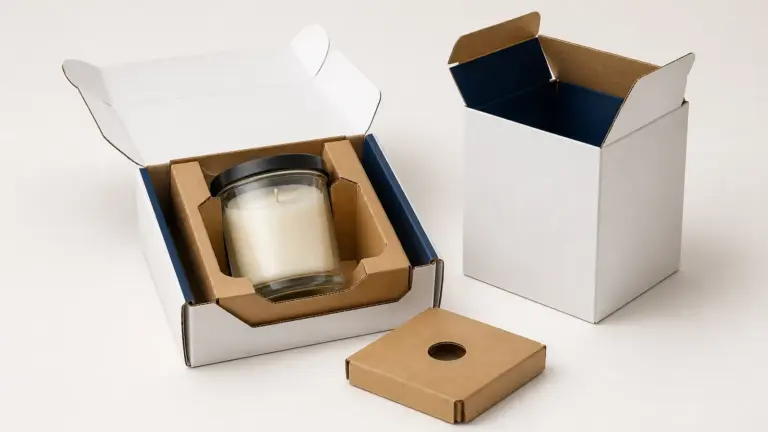
Cosmetic packaging can include the bottle, jar, tube or compact that contains the product; a secondary folding carton or rigid box; an insert; and shipping protection. These layers have different functions. A printed paper box does not replace the performance or product-contact responsibilities of the primary container.
Record which component is being quoted and which party supplies the filled container, label, insert, accessory and outer shipping carton.
Measure the filled container and accessories
Use the production container when possible. Measure the maximum body, cap, pump and label dimensions; record weight, orientation and any variation that affects fit. Include applicators, leaflets, refills or multiple products in a set.
An insert cavity designed from nominal dimensions may bind the label, press a pump, leave the cap unsupported or make removal difficult. Approve fit with a representative product and the intended packing sequence.
Select the structure from use
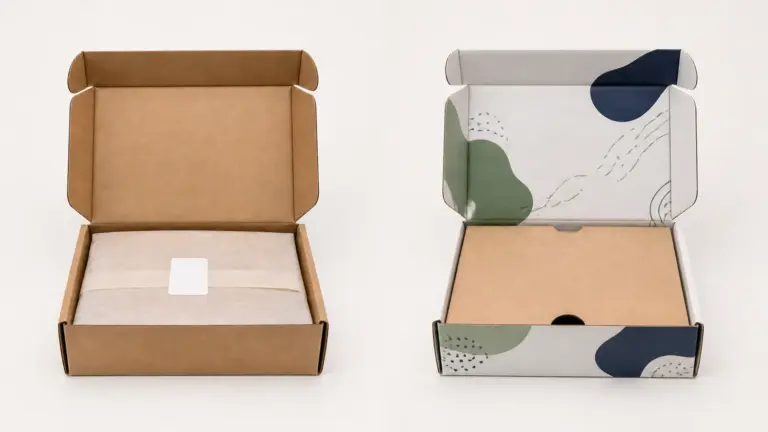
Folding carton: efficient for flat delivery, retail information and compact secondary packaging. Board caliper, closure and internal fit must match the filled container.
Rigid box: appropriate when a set-up presentation structure and controlled opening justify added assembly and shipping volume.
Drawer or magnetic format: useful for specific opening experiences, but sleeve clearance, magnet position, hinge behavior and insert retention require sampling.
Use the folding carton versus rigid box comparison for the structural tradeoff.
Choose board after structure and weight
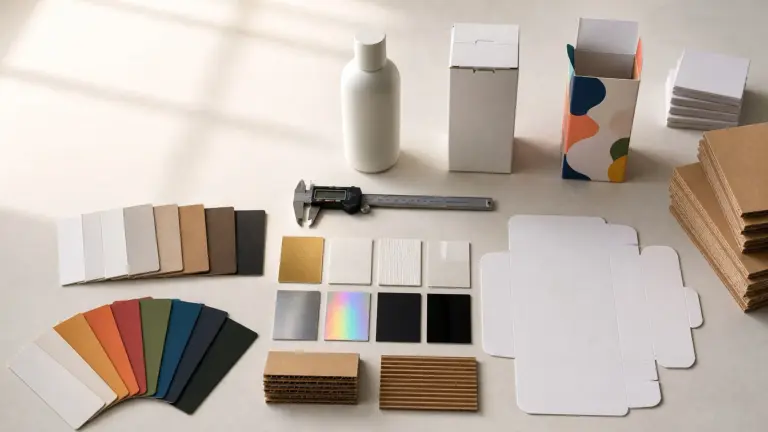
SBS and other white paperboards can provide a smooth print surface for folding cartons. Kraft or recycled-content boards have different shade, surface and print behavior. Wrapped greyboard is used in many rigid structures. Names alone do not establish stiffness, caliper, recycled content or finished performance.
Specify the board grade, caliper or agreed performance basis and approve the actual appearance. The packaging paper guide explains common terminology.
Treat print and finish as production requirements
Define artwork revision, print coverage, colors, coating and any physical color reference. Then locate foil, embossing, spot effects, windows or textured papers on the dieline.
Finishes can affect fold cracking, scuffing, glue areas, registration and visual consistency. A soft-touch surface or dark solid print may show handling marks. A foil or embossed feature close to a crease may require a different layout. Request a sample that represents the board, process and finish closely enough for the approval decision.
Plan SKU variation before quoting
Multiple shades, fragrances or product sizes can share a brand system while requiring separate artwork, text, barcodes, inserts or structures. List every SKU and identify what remains common. Confirm whether the quantity and MOQ apply to the total project or each version.
Do not approve one artwork and assume the remaining files are automatically correct. Use a controlled SKU matrix and revision record.
Check packing and delivery conditions
State whether cartons arrive flat or assembled, how products are loaded, units per inner or master carton, surface protection, carton markings and destination. Presentation packaging that looks correct on a table may still scuff, shift or consume excessive volume during packing and transport.
Cosmetic packaging brief
Provide:
- filled-container dimensions, weight and orientation;
- product and accessory count;
- required secondary structure;
- internal dimensions or fit objective;
- board and appearance requirement;
- artwork versions, colors and required information;
- finish locations and tolerances where relevant;
- insert material and removal method;
- quantity by SKU;
- sampling and approval requirement; and
- packing state and destination.
This is not an FDA or cosmetic-regulatory guide. Product-contact, labeling and market requirements should be reviewed by the responsible company for the actual product and jurisdiction.
The practical next step is to approve the fit and revision before judging decoration. A strong cosmetic package starts with the container, structure and information architecture; the finish supports those decisions rather than replacing them. Use the 2026 packaging design watchlist only after those production requirements are fixed.