
Custom Foldable Boxes for Retail, Shipping and Premium Packaging
Compare paperboard folding cartons, corrugated mailer boxes and fold-flat rigid boxes—then choose the right structure for your product, packing method and delivery route.
Quick answer: Foldable cardboard boxes are paper-based packages supplied flat or designed to collapse when empty. In packaging procurement, the phrase can describe a lightweight paperboard folding carton, a fluted corrugated mailer, or a fold-flat rigid gift box. The correct choice depends on product weight, retail presentation, parcel protection, assembly and budget.
Packaging terminology is not always consistent. A buyer asking for a “folding cardboard box” may mean a cosmetics carton, while another buyer using the same phrase may need an ecommerce shipper. Packaging For is a comprehensive custom packaging manufacturer, with folding cartons as a core strength and capabilities across other paper box formats. We use the product and distribution requirements to identify the structure before preparing a dieline or quotation.
This distinction is supported by industry terminology. The Paperboard Packaging Council describes folding cartons as paperboard packaging that folds flat, while the FEFCO code provides a separate international system for corrugated packaging designs. “Cardboard” is a useful everyday term, but the technical material and construction should be stated in an RFQ.
For category-level sourcing context, see our paper packaging trade and manufacturing data.
Three types of custom foldable boxes
Start with the job the box must perform. Each construction folds, but its material, protection and presentation are different.
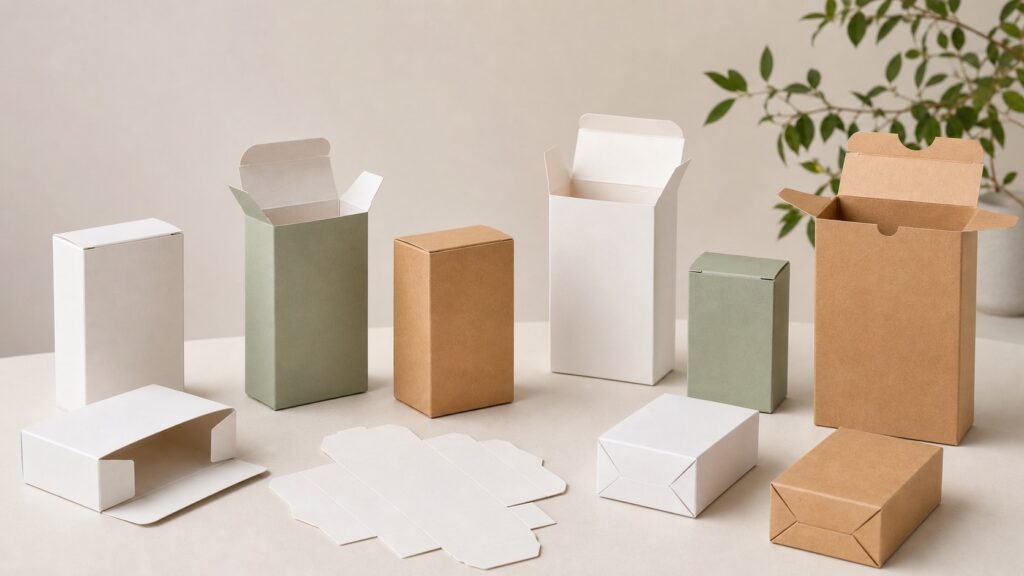
Paperboard folding cartons
Best for: cosmetics, skincare, supplements, food, electronics and other lightweight retail products.
These cardboard folding boxes are printed and die-cut from paperboard, then supplied flat. They provide strong shelf graphics with low storage volume. Straight tuck, reverse tuck, auto-bottom, sleeve and window structures are common.
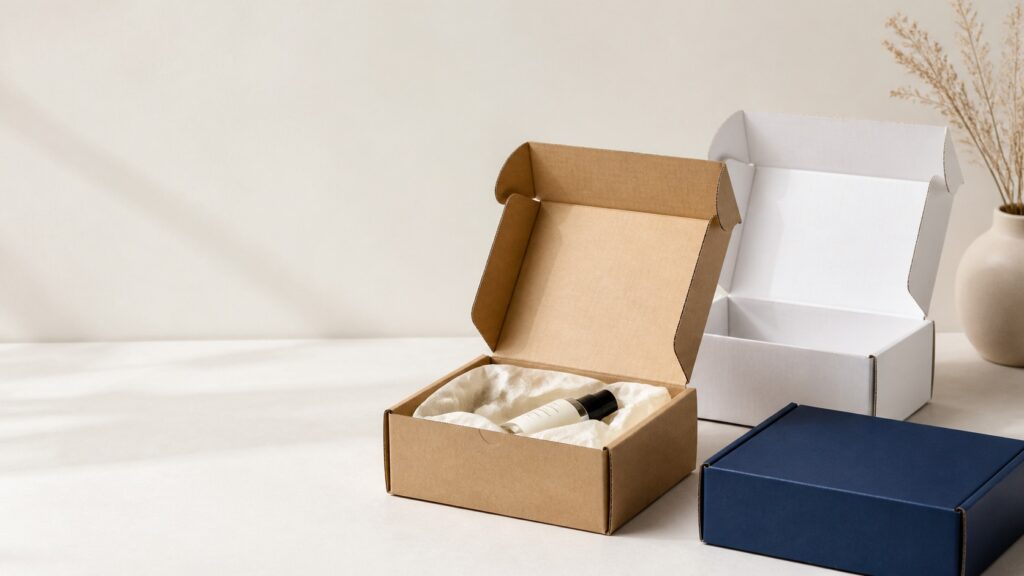
Corrugated mailer boxes
Best for: ecommerce orders, subscription boxes, kits and products requiring more transit protection.
Fluted board gives folding shipping boxes more cushioning and edge strength than ordinary paperboard cartons. Mailers can ship flat and assemble without a separate lid. Product weight, void space, inserts and the delivery network influence the flute and structure.
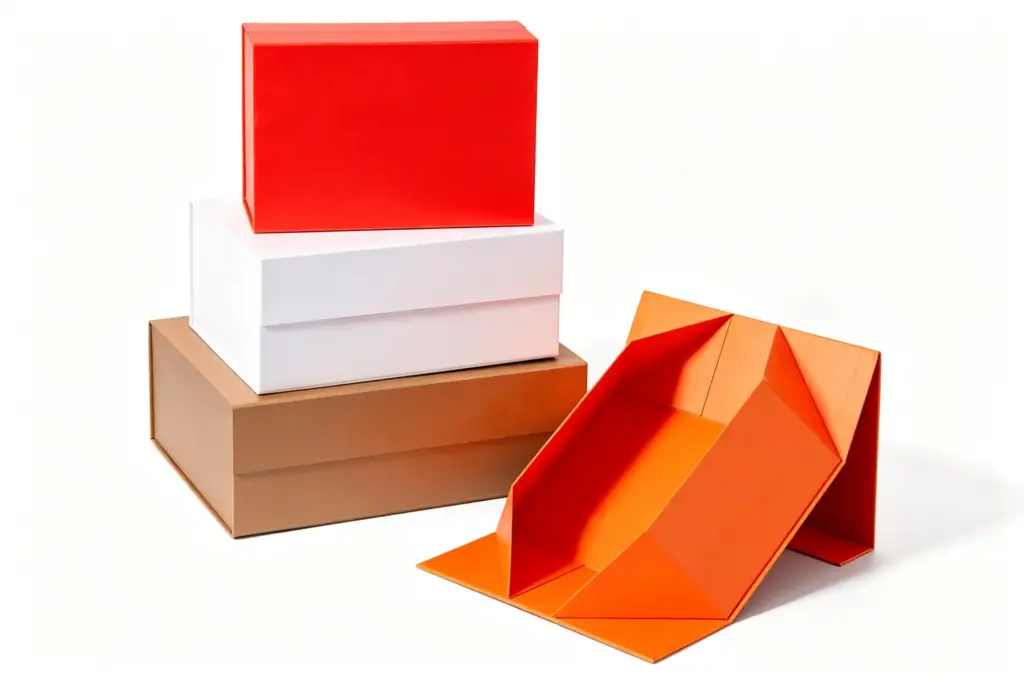
Fold-flat rigid gift boxes
Best for: gift sets, beauty, fashion, jewelry and premium products where presentation matters.
A collapsible rigid box uses thick board with wrapped paper and foldable side panels. It stores flatter than a traditional set-up box but remains heavier and more complex than a folding carton. Magnetic closures, ribbons and inserts can support a premium opening experience.
How to choose the right folding cardboard packaging
| Decision factor | Folding carton | Corrugated mailer | Fold-flat rigid box |
|---|---|---|---|
| Primary role | Retail display and product information | Shipping protection and ecommerce presentation | Premium presentation and gifting |
| Board construction | Solid paperboard | Fluted corrugated board | Thick rigid board with wrapped paper |
| Delivered flat | Usually | Usually | Designed to collapse, depending on structure |
| Relative protection | Light-duty secondary packaging | Better suited to parcel handling | Strong presentation box; may still need a shipper |
| Print and finish | Detailed print and broad finish options | Direct print or printed liner options | Wrapped paper with premium finishes |
| Typical cost position | Generally the most material-efficient | Driven by flute, print and protection needs | Generally the highest due to materials and assembly |
Choose a folding carton when the product is lightweight, shelf graphics are important and the carton will travel inside a protective master case. Choose a corrugated mailer when the box must help withstand fulfillment and parcel handling. Choose a fold-flat rigid box when the presentation value justifies greater material and assembly complexity.
Do not specify a box by name alone. A “fold box,” “fold boxes,” “fold up boxes” or “cardboard foldable boxes” request can produce three very different quotations. Include the board construction, intended use and reference images so suppliers compare the same format.
Materials, printing and finishes
Material selection should follow performance, not a vague preference for “thicker cardboard.” Paperboard cartons may use white, kraft or recycled-content grades. Corrugated boxes combine liners with a fluted medium. Fold-flat rigid boxes use thicker board wrapped in printed or specialty paper. Caliper, stiffness, grain direction, flute profile and finished dimensions all affect the result.
Printing can include CMYK graphics or specified spot colors, depending on the process and substrate. Foil, embossing, debossing, spot UV, coating and lamination can add emphasis, but every finish changes cost, appearance and sometimes fold performance. Approve color and finishing on a representative material when they carry brand risk.
For material decisions, use our packaging paper guide. For fit, record internal length, width and height in a consistent order and review the custom box dimensions guide.
Suitable when you need
- Boxes stored or transported in a flat format
- Custom dimensions around a specific product
- Printed branding and product information
- A choice between retail, shipping and premium structures
- Optional inserts, windows or decorative finishes
Clarify first when you need
- Heavy-duty industrial or returnable containers
- Direct food-contact or regulated packaging
- Cold-chain, moisture-barrier or hazardous-goods performance
- A box that must pass a specific distribution test
These requirements may still be possible, but they need product data, destination-market rules and testing criteria before a construction is recommended.
From product brief to finished box
- Define the job. Share the product, packed weight, internal dimensions, retail or shipping route and desired opening experience.
- Select the box family. Compare paperboard carton, corrugated mailer and fold-flat rigid construction before choosing details.
- Engineer the structure. Confirm the dieline, closure, glue areas, insert, window and assembly method.
- Choose material and print. Match stiffness, surface, color, finishes and budget to the approved structure.
- Approve the sample. Test fit, folding, closure and packing with the real product; add appropriate print or transit checks where required.
- Confirm production and delivery. Record quantity by artwork, packing method, destination, quality references and schedule in the order specification.
Packaging For supports structural review, dielines, material and printing selection, sampling, production and international delivery. Browse the custom packaging gallery for structure references, then send the closest example with your product information.
What to include in your RFQ
- Product name, dimensions, packed weight and photos
- Internal box dimensions, if already defined
- Intended use: retail shelf, ecommerce shipping or premium gifting
- Quantity for each size and artwork version
- Reference structure or preferred material
- Print colors, coating and special finishes
- Insert, window, closure and assembly requirements
- Destination country and required delivery date
If you are unsure whether you need paperboard, corrugated or rigid construction, do not guess. Send the product information and usage scenario; the quotation can then state which construction it assumes.
Frequently asked questions
What are foldable cardboard boxes made from?
They may use solid paperboard, fluted corrugated board or thick rigid board with a paper wrap. The phrase does not identify one material, so the construction must be confirmed before comparing prices.
Are folding cardboard boxes suitable for shipping?
Corrugated mailer and shipping-box structures are normally better suited to parcel handling than ordinary folding cartons. The complete pack should still be evaluated against product weight, void space, route and required test standard.
Can a foldable box include an insert or window?
Yes. Depending on the structure, inserts can use folded paperboard, corrugated board, molded fiber, foam or other materials, while a carton window can display the product. Fit, protection, assembly and end-of-life goals should guide the choice.
Are custom foldable boxes recyclable?
Many paper-based structures may be accepted where suitable collection and processing exist, but coatings, films, magnets, adhesives, food residue and mixed-material inserts can change local acceptance. The U.S. EPA recommends checking the local recycling program rather than relying on a universal claim.
What determines the price?
Size, structure, board, printing method, finishing, tooling, insert, quantity per artwork, packing and freight all influence cost. Quotations are comparable only when they use the same specification and delivery assumptions.
Find the right foldable box for your product
Share your product dimensions, weight, quantity, artwork status, destination and reference photos. Packaging For will review whether a folding carton, corrugated mailer or fold-flat rigid box best fits the brief.