
PRINTED PAPERBOARD CARTONS
Custom Tuck Boxes for Retail Products
Straight tuck, reverse tuck and auto-bottom cartons engineered around your product, packing line and retail presentation.
Common applications: cosmetics · supplements · soap · small electronics · specialty food
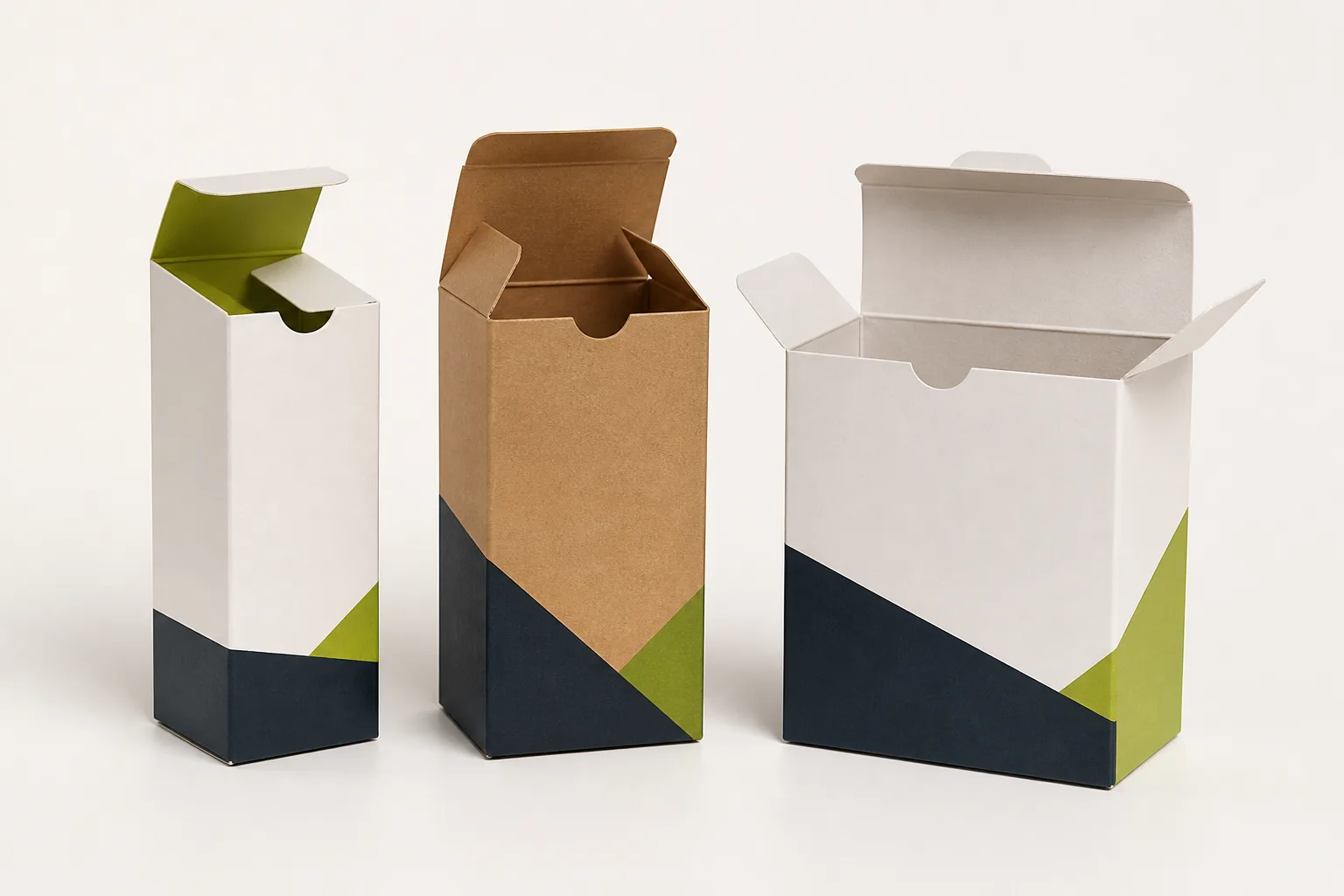
STRUCTURE
Straight, reverse or auto-bottom
BOARD
SBS, kraft or recycled grades
PRINT
CMYK, spot color and finishes
DELIVERY
Flat-packed for final assembly
QUICK ANSWER
A tuck box is a retail carton—not a shipping carton.
Custom tuck boxes are folding paperboard cartons whose top, bottom or both closures tuck into the box body. They arrive flat, provide printable panels for retail information and work best for lightweight to moderate products when the closure, board and internal fit are specified together.
Use a corrugated outer shipper for parcel delivery unless the complete packed product has been validated for its route. A tuck carton is usually the primary retail package, not the only transport protection.
CHOOSE THE CLOSURE BEFORE THE GRAPHICS
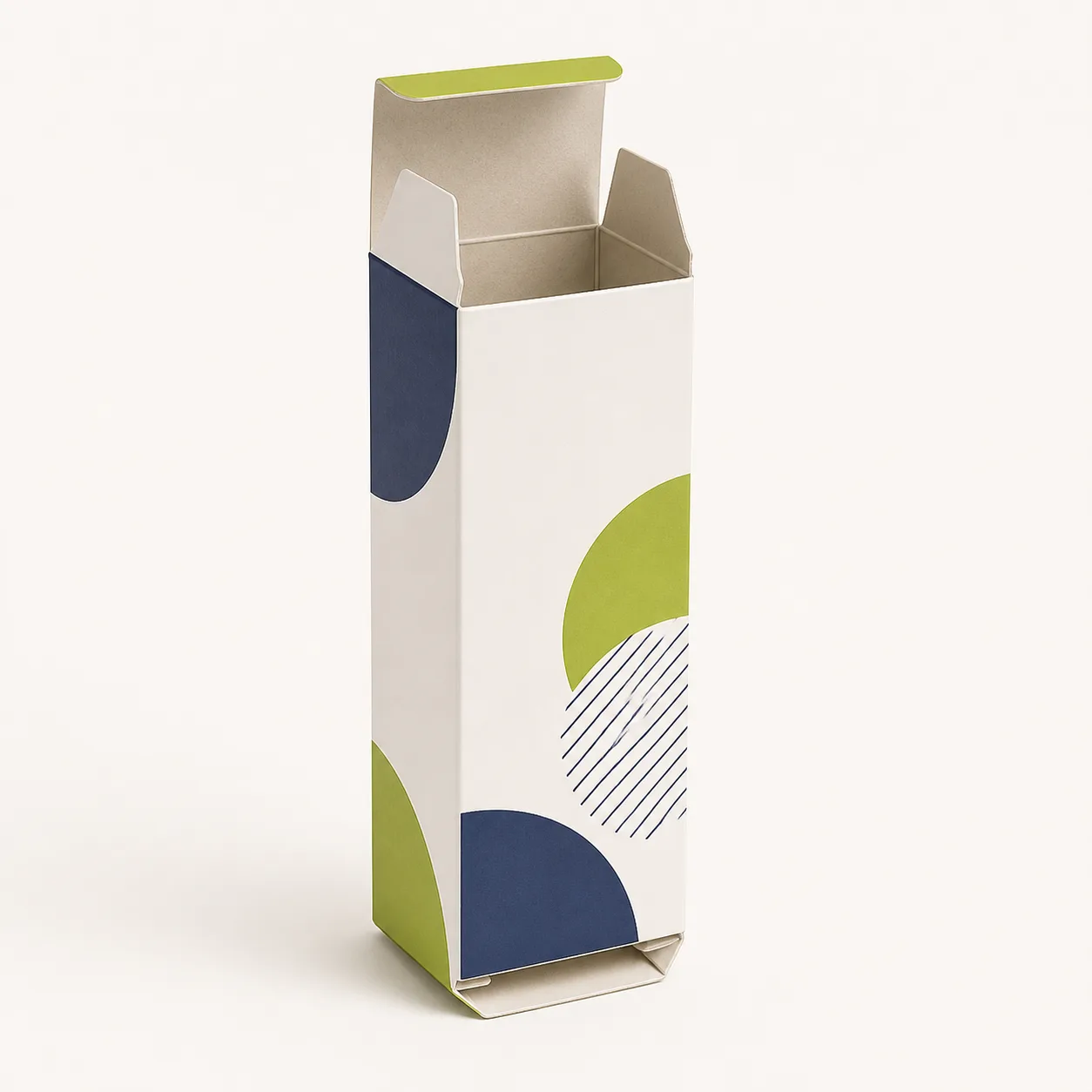
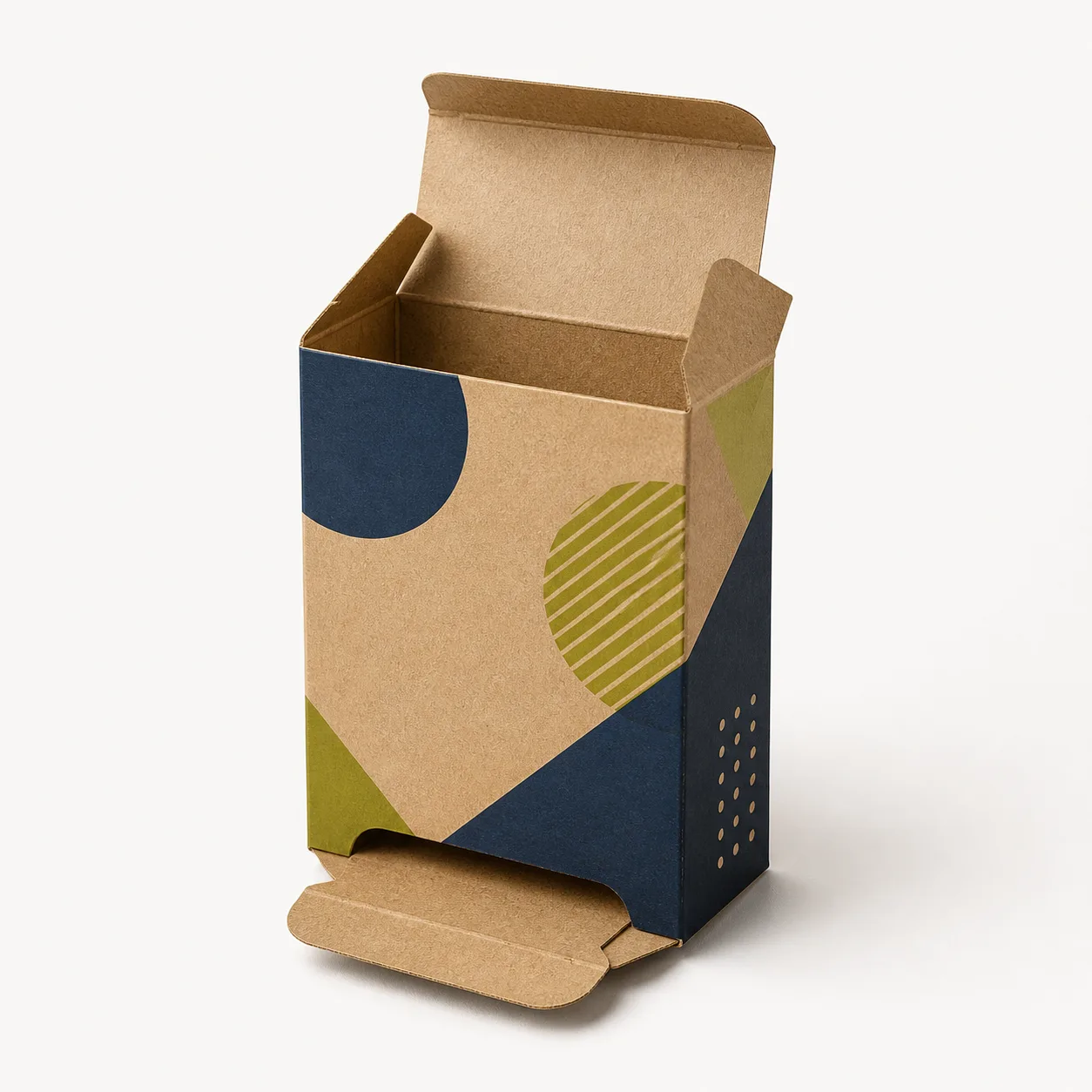
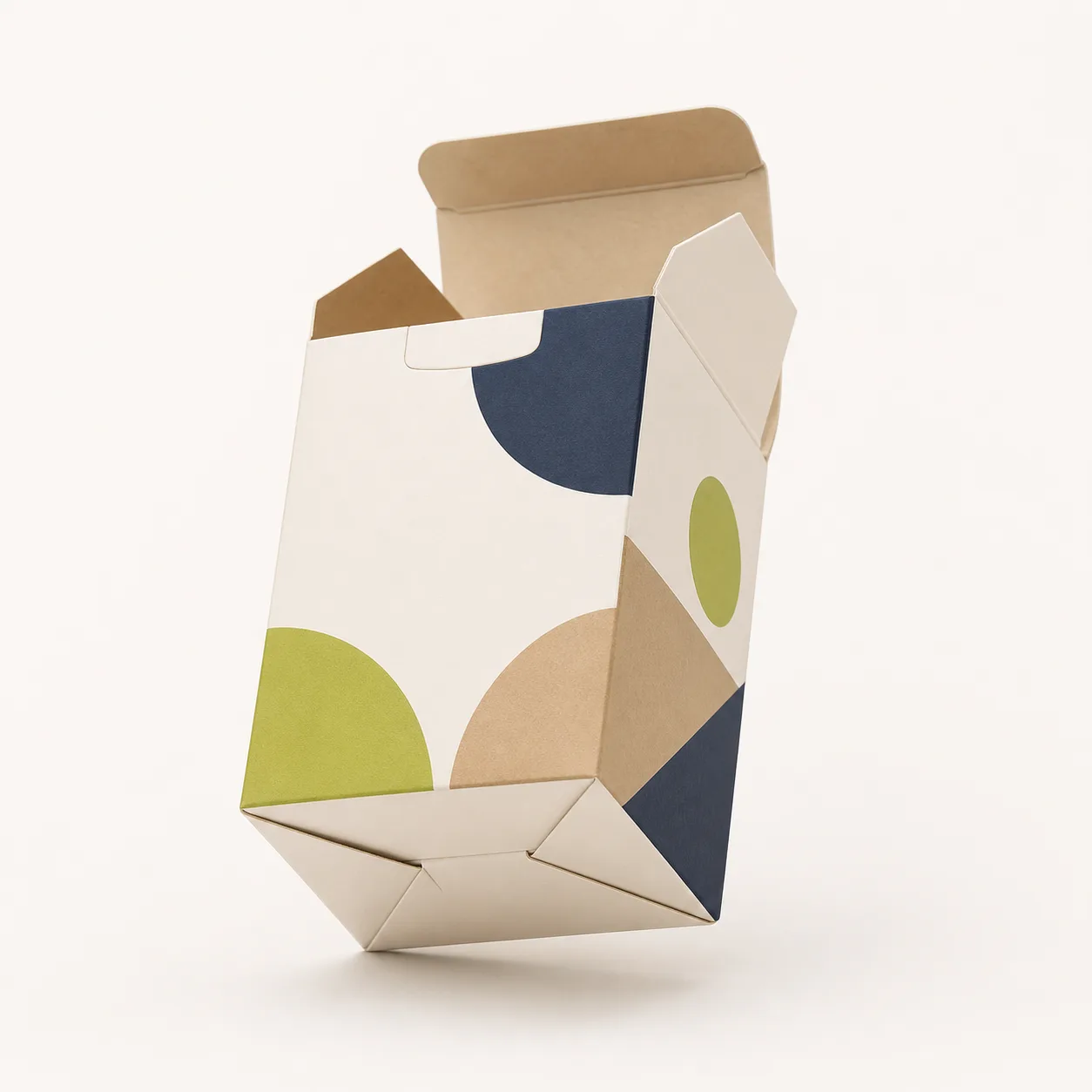
Three practical tuck box structures
The best structure depends on the visible panel, product weight, packing speed and how the carton will be loaded—not which name sounds more premium.
STRUCTURE DECISION
Straight tuck vs. reverse tuck: what changes?
| Buyer question | Straight tuck | Reverse tuck |
|---|---|---|
| Closure direction | Same panel | Opposite panels |
| Presentation | Clean principal panel | Confirm closure-edge placement |
| Blank efficiency | May require more board | Often nests efficiently |
| Typical starting point | Beauty and premium retail | Compact, cost-aware cartons |
The comparison is directional, not universal. Carton dimensions, paper grain, printing layout, packing equipment and tooling can change the best answer. Approve a structural sample before final artwork.
Specify board, print and finish as one system
A good-looking carton can still crack at the crease, scuff in packing or feel too flexible if material and finishing are chosen independently.
Paperboard
SBS supports bright printing and refined finishes; kraft provides a natural surface; recycled paperboard can suit suitable specifications. Caliper must follow product weight, dimensions and panel span.
Color
Use CMYK for process imagery and defined spot colors when brand matching requires them. Review color on the actual board and coating, not only on screen.
Finishing
Matte or gloss coatings, foil, embossing and spot effects can support hierarchy, but heavy films or mixed materials may affect cost, creasing and local recycling acceptance.
Functional details
Add windows, hang tabs, locking tabs or paperboard inserts only when they improve visibility, shelf display, security or product control.
Read the paperboard material guide → Compare printing methods →
APPLICATION FIT
Where tuck boxes work—and when to choose another structure
Tuck cartons are strongest when a compact retail product needs printable information, shelf presence and efficient flat storage. Product geometry and distribution still decide the final structure.
Beauty and fragrance
Lipstick, serum, soap and small perfume cartons benefit from clean print panels and optional inserts. Straight tuck is often considered when the principal display face must remain visually uninterrupted.
Supplements and wellness
Bottles, sachets and small wellness products can use reverse tuck or auto-bottom formats. Leave enough panel area for required copy and confirm barcode, lot-code and closure positions before artwork approval.
Food and confectionery
Dry, wrapped or otherwise protected products may suit paperboard cartons. Direct-food contact, grease resistance and market documentation must be stated in the brief rather than assumed from a generic board name.
When not to use a tuck carton
Heavy, highly fragile, liquid or parcel-ready products may need corrugated packaging, stronger inserts or a rigid presentation box. Compare the full delivery route on the custom foldable boxes page.
FROM PRODUCT TO PRODUCTION
Approve the tuck box in five stages
01
Product brief
Maximum product size, weight, orientation and route.
02
Dieline
Internal dimensions, closure direction and glue seam.
03
Plain sample
Fit, loading, closure and crease behavior.
04
Printed sample
Color, small text, finish and barcode position.
05
Production
Approved reference, packing standard and inspection.
Send a quote-ready tuck box brief
A comparable quote needs the same scope from every supplier.
- Product dimensions, packed weight and orientation
- Required internal box size or a physical product sample
- Straight tuck, reverse tuck or auto-bottom preference
- Quantity for each artwork version
- Board, print coverage, finish, window and insert
- Retail, labeling or direct-contact requirements
- Destination, packing method and target delivery date
MANUFACTURING CONTEXT
Built in Shenzhen for international programs
Packaging For manufactures custom paper packaging in Shenzhen, China for buyers in the United States, Canada and other international markets. Freight method, delivery term and destination must be included when comparing total landed cost.
Review packaging cost factors →FAQ
Custom tuck box questions from packaging buyers
What is the difference between a straight tuck and reverse tuck box?
A straight tuck box closes both ends toward the same panel; a reverse tuck box closes its ends toward opposite panels. Straight tuck can preserve a cleaner presentation panel, while reverse tuck often uses the printed sheet efficiently. The final dieline should be checked against artwork, grain direction and packing method.
When should I choose an auto-lock bottom?
Consider an auto-lock bottom when a product challenges a simple tuck base or when faster manual setup matters. Bottles, jars and candles are common candidates. Test the real packed weight and handling process; the word “auto-bottom” alone does not guarantee performance.
Can a tuck box ship directly to a customer?
Usually it should be treated as a retail carton inside a corrugated shipper. A complete pack may be validated for another route, but parcel networks can expose it to compression, abrasion and impact that a paperboard tuck carton was not designed to handle alone.
How do I measure a custom tuck box?
Specify usable internal length × width × depth and measure the product at its maximum size, including caps, labels or protective bags. Allow realistic clearance for loading without leaving avoidable movement. Follow the custom box dimensions guide.
Can custom tuck boxes include windows or inserts?
Yes. A die-cut window can show the product and a folded paperboard insert can position it, but both affect the dieline, assembly and material recovery. Define the functional reason before adding either feature.
What determines MOQ and price?
Dimensions, structure, board, print method, finishing, tooling, quantity per artwork, packing and freight all matter. Use the packaging MOQ guide and compare suppliers using the same specification.
READY TO SPECIFY YOUR TUCK BOX?
Start with the product, not a stock dieline.
Share the product dimensions, weight, quantity, destination and artwork status. We will review the closure, board, print and sampling route before quoting.