Custom Packaging Lead Time: A 2026 Planning Guide for U.S. Brands
A stage-by-stage planning guide for custom packaging development, production, international freight, customs and delivery to U.S. brands.
Quick answer: Custom packaging lead time includes specification and dieline work, structural sampling, artwork approval, production, quality inspection, export packing, freight, customs and final delivery. For offshore paper packaging, plan backward from the required warehouse date and protect approval time. The supplier’s written schedule for your exact box, quantity, finishes and route is the controlling timeline.
“How long does production take?” is the wrong first question. A factory may quote a production window that begins only after artwork, color, materials and deposit are approved. A brand may count from the first email. Between those points sit product measurements, revisions, samples and stakeholder decisions. A usable schedule makes every gate visible.
The eight-stage packaging timeline
| Stage | Output | Main delay risk |
|---|---|---|
| 1. RFQ and specification | Comparable quote and assumptions | Missing size, quantity, finish or destination |
| 2. Structure and dieline | Approved dimensions and CAD | Product changes or unconfirmed insert |
| 3. Structural sample | Fit and function approval | Slow sample shipping or revision loops |
| 4. Artwork and preflight | Print-ready files | Copy, barcode, bleed or color issues |
| 5. Printed/pre-production sample | Visual and finish approval | Color disputes or new stakeholder feedback |
| 6. Mass production | Completed boxes | Material procurement, complex finishing, SKU splits |
| 7. QC and export packing | Released shipment | Failed inspection or incomplete documents |
| 8. Freight, customs and delivery | Goods at warehouse | Sailing, capacity, weather, exams or appointment delays |
Use planning allowances, not a universal promise
As a practical first model, a straightforward repeat folding-carton order may move from final approval through production faster than a new rigid-box program with magnets, inserts and several finishes. A digitally cut structural sample may take days; a production-representative sample that needs tooling and press setup can take longer. Ocean freight is slower and less predictable than express or air, but air cost can be disproportionate for bulky assembled boxes.
Do not publish one number as if it covers every project. Ask the supplier to date each milestone. Build internal approval time into the schedule and add contingency before a fixed retail launch. The ranges discussed during quotation should be marked estimated until the structure, materials, artwork, quantity and route are confirmed.
Stage 1: RFQ and specification
A complete RFQ shortens the schedule because the factory can select the correct production route. Include internal size, box style, product weight, board, print colors, finishes, insert, quantity by SKU, destination and required delivery date. If you are uncertain, separate requirements from preferences: “must arrive by October 1” is a requirement; “soft-touch if budget permits” is a preference.
Ask for quote validity and material availability. Specialty paper, custom ribbon, magnets or molded pulp tooling may create procurement dependencies. If the order uses a stock material, request the exact reference and reserve it after approval.
Stage 2: dieline and structural sample
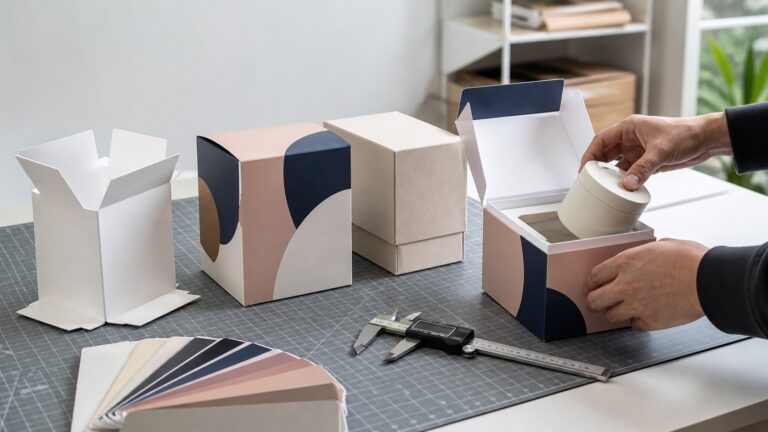
Freeze the sellable product dimensions before engineering the package. The dieline cannot be final while the bottle, closure or kit configuration is still changing. A plain sample should validate product fit, closure, insert, packing and outer dimensions. Return one consolidated revision list rather than comments from different teams over several days.
If a physical sample travels internationally, include courier time and customs handling. For speed, send verified 3D files and product measurements first, but use the physical product when tolerances or fragility matter.
Stage 3: artwork and printed approval
Artwork begins on the approved supplier dieline. Preflight should check panel orientation, bleed, safe zones, linked images, fonts, CMYK or spot colors, overprint, barcode placement and special-finish layers. Every file rejection restarts part of the clock. Our printing-method guide helps teams choose a suitable production path earlier.
Decide what proof controls color. A digital sample can approve content and approximate appearance; a production press sample may be needed for strict colors or finishes. Write the scope of approval so visual discussions do not expand after production starts.
Stage 4: mass production
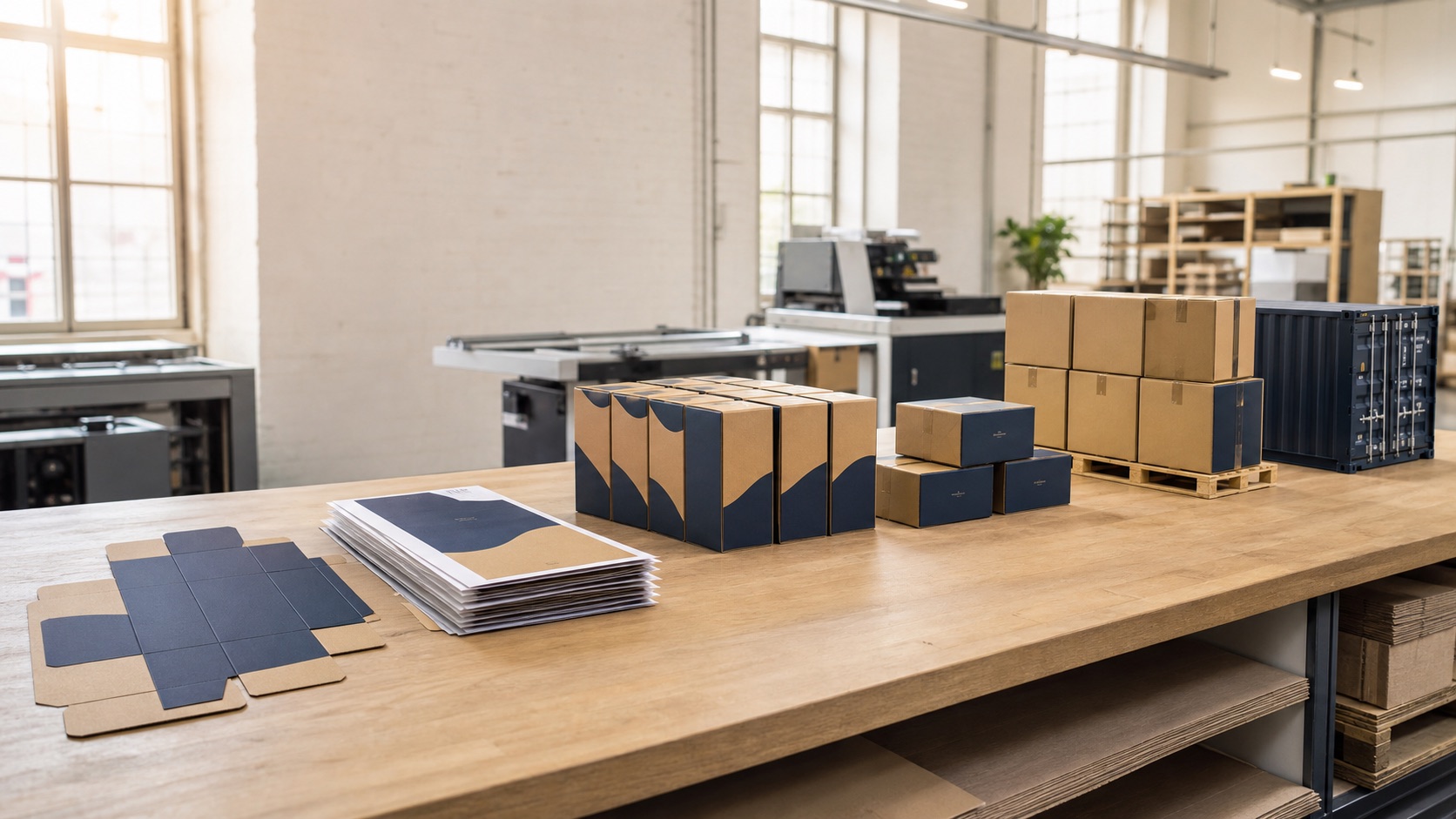
The production window begins after commercial and technical release—typically approved files and sample, confirmed materials, order terms and required payment. Printing is only one operation. A folding carton may require coating, lamination, foil, embossing, die-cutting, stripping, gluing, inspection and packing. A rigid box adds board cutting, wrapping, assembly, insert fitting and more hand inspection.
Complexity adds queues and drying or curing time. Splitting one order into many artworks can require repeated setups. Ask the factory for a critical-path schedule and the date by which late artwork or quantity changes will move shipment. Avoid changing approved construction during production; even a small alteration can affect tooling, material yield and packing.
Stage 5: inspection and export packing
Agree on inspection criteria before the run. The quality team needs the golden sample, drawings, color reference, tolerances, defect definitions and sampling plan. Allow time for corrective action if inspection finds a problem. An inspection scheduled the same day as vessel cutoff leaves no realistic recovery window.
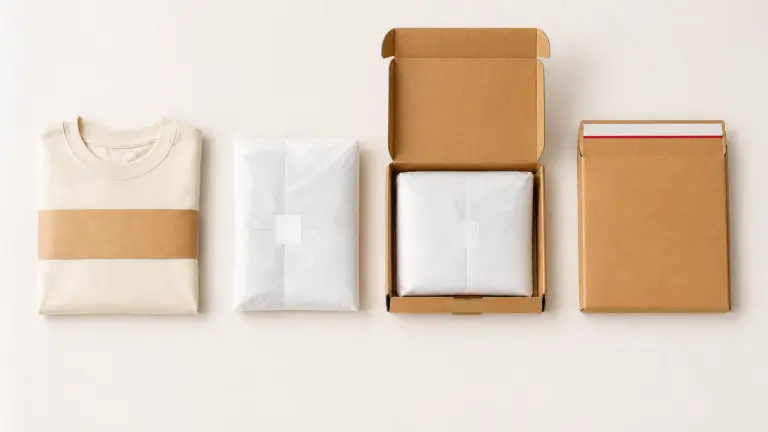
Confirm master-carton quantity, dimensions, gross weight, labels, palletization, moisture protection and loading plan. Flat folding cartons and mailers usually use space more efficiently than assembled rigid boxes. Freight quotations should use the final packed cube, not an early estimate.
Stage 6: freight, customs and delivery
Choose transport based on launch risk, volume and landed cost. Express is useful for samples and very small urgent quantities. Air freight can protect a launch but is expensive for bulky packaging. Ocean freight suits larger planned orders but requires booking, sailing, port, customs and inland-delivery allowances. See our air versus sea freight guide.
For U.S. imports, identify the importer of record and broker before departure. CBP states that the importer remains ultimately responsible for meeting import requirements even when a licensed customs broker is used; see the agency’s customs-broker guidance. Ensure the commercial invoice, packing list, classification inputs and shipping documents are accurate. A freight ETA is not the same as a guaranteed warehouse appointment.
How to compress the schedule responsibly
- Send a complete RFQ and physical product early.
- Use a standard structure or proven material where it meets the goal.
- Approve structure before developing final artwork.
- Nominate one decision owner and return consolidated comments.
- Book color and legal review before the proof arrives.
- Limit special finishes to the effects that matter.
- Reserve materials and freight capacity after technical approval.
- Split a launch quantity by air only when the margin and risk justify it.
- Keep a reorder file with the golden sample and final specifications.
Parallel work can save time only when dependencies are understood. Marketing can prepare copy while structure is sampled, but final panel layout should not be released on an unapproved dieline. Booking freight early can help, but the cargo-ready date must include realistic QC and corrective-action time.
Reorder lead time is shorter—but not automatic
A true repeat order can reuse dielines, tools and approved files. Still confirm material availability, tooling condition, quantity, destination and any regulatory copy change. Compare a retained sample to the new run and verify that the supplier has not substituted board or film. Forecast early enough to avoid an emergency air shipment that erases the unit-cost saving.
Maintain a packaging specification record with drawings, material names, colors, finish maps, packing details, carton labels and approval photos. This reduces ambiguity when employees or suppliers change.
Frequently asked questions
When does custom packaging lead time start?
Confirm the supplier’s definition. Production usually starts after technical and commercial release, not the first inquiry. Your project plan should also include development and approval before that date.
What causes the most avoidable delay?
Incomplete specifications, changing product dimensions, fragmented feedback and artwork that fails preflight create common revision loops.
Can production and shipping be guaranteed?
A supplier can commit to controlled milestones, but international freight and customs contain external variables. Use written estimates, responsibilities and contingency.
Should I use air freight for a launch?
Only after comparing the cost of air against the cost of missing the launch. A small air split plus a larger ocean balance can sometimes manage risk.
Build the schedule before the launch becomes urgent
Packaging For coordinates structure, artwork preparation, sampling, manufacturing, quality control and global shipping. Send the required warehouse date—not only the desired factory date—through our custom packaging quote form, together with size, style, quantity, finish and destination. We will map a project-specific timeline and identify the approvals on the critical path.