How to Package Clothes for Shipping Without Damage
Learn how to package clothes for shipping using a controlled fold, clean inner wrap, right-sized mailer, safe opening and return closure.
Clothing does not need glass-level cushioning, but it is easy to make a shipment feel damaged. A shirt that arrives damp, heavily creased, marked by dark tissue or cut during opening may be technically wearable and still become a return.
The reliable way to package clothes for shipping is to control the fold first, keep the garment clean, select the transport package from the finished stack and design the opening and return before artwork. The workflow below stays with those shipping decisions. Product-style options for retail and presentation remain on PackagingFor’s custom clothing packaging boxes page.
Set one repeatable production fold
Box dimensions are meaningless until the garment has a defined fold. The same sweater can produce very different footprints and stack heights depending on sleeve position, tissue, compression and size.
Create a packing standard for each product family. Record:
- finished fold length and width;
- minimum and maximum stack height;
- sleeve and collar position;
- tissue, paper band or inner-sleeve placement;
- hangtag and accessory position;
- allowable compression;
- normal units per order;
- largest size and thickest fabric in the range.
Photograph the approved fold from above and from the side. A simple fixture or folding board can improve consistency at volume. If packers improvise the fold, the same shipping mailer will be tight for one order and half empty for the next.
Decide what touches the garment
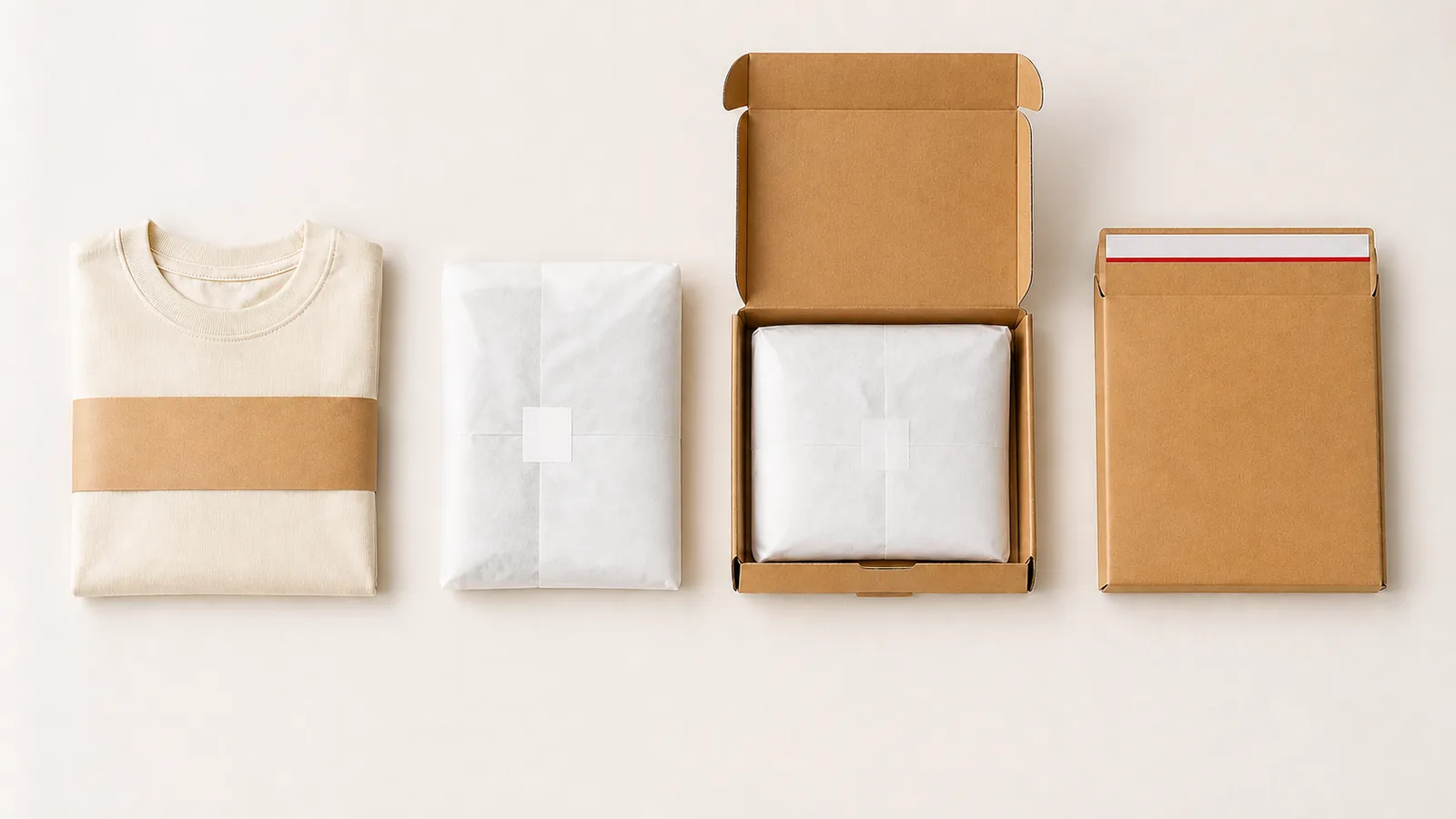
The product-contact layer keeps the fold together and separates the fabric from warehouse dust, corrugated cut edges, ink and external moisture. It might be tissue, a paper band, a paper or polymer sleeve, or another specified wrap.
The correct choice depends on the fabric, route and market requirements. Check whether:
- print or dyed tissue transfers under rub or humidity;
- an adhesive can touch or snag fabric;
- sequins, buckles or zippers can abrade another item;
- residual moisture could be trapped after production;
- the garment has odor or cleanliness requirements;
- the inner component needs a warning or disposal instruction.
Do not describe a paper sleeve as waterproof without evidence for its seams and closure. Do not assume that a plastic bag is required for every apparel shipment. Define the contamination and moisture risk, then choose the lightest system that meets it.
Use a flexible mailer for simple, low-risk orders
A flexible shipping mailer suits a folded T-shirt, soft knitwear or similar item when compression is acceptable and there are no hard accessories to damage the fabric. It uses little packing-station space and follows the garment closely, reducing empty volume.
Its limitations are also clear. The package offers little shape retention, can be punctured by sharp objects and gives the customer less protection from cutting too deeply. A thin garment may show every bend from the delivery route. A mixed order with a belt buckle, bottle or boxed accessory needs separation or a different outer package.
If returns are common, specify a second adhesive strip or another genuine resealing method. Test it after the first opening rather than accepting “reusable” from the dieline.
Use corrugated packaging when shape matters
A corrugated mailer or shipping carton adds edge definition and protects the folded stack from concentrated handling. It is useful when presentation matters, the garment should not be compressed heavily or an accessory must be kept away from the fabric.
Size the box around the approved stack. Too much depth lets the garment unfold and move; too little depth presses the product against scores and locking tabs. If one order profile dominates, build the primary size around it and review whether a second size is justified for larger bundles.
Do not add a rigid presentation box merely because the item is expensive. A presentation box is a separate commercial choice and may still require an outer shipper. The transport package should be selected first from handling, protection and return requirements.
Keep hard components away from fabric
Accessories often create the actual shipping risk. A metal buckle can mark a light shirt. A perfume sample can leak. A jewelry box can shift and crush a knit. Even a hangtag fastener can snag delicate fabric.
Use a partition, small inner carton, paperboard rail or controlled pocket when components need separation. The feature should remain in place when the shipment is turned on its side. Loose cards placed on top of the garment can migrate to the bottom and crease the stack.
Check the complete mixed order, not only each SKU packed alone. The heaviest and hardest item usually governs the restraint plan.
Build opening safety into the package
Customers often open apparel parcels with scissors or a knife. Keep the garment away from the opening seam and place tear strips where the user can see and grip them. Avoid a deep cutting path directly above the fabric.
Run an opening trial with someone who has not seen the design. Observe where the package is held, which side is opened first and whether the garment is exposed to the tool. An instruction printed in a place visible only after opening does not prevent damage.
For corrugated mailers, check that dust flaps and tabs do not catch the garment as it is removed. For flexible mailers, confirm that the tear line does not remove the return closure.
Treat returns as a second shipment
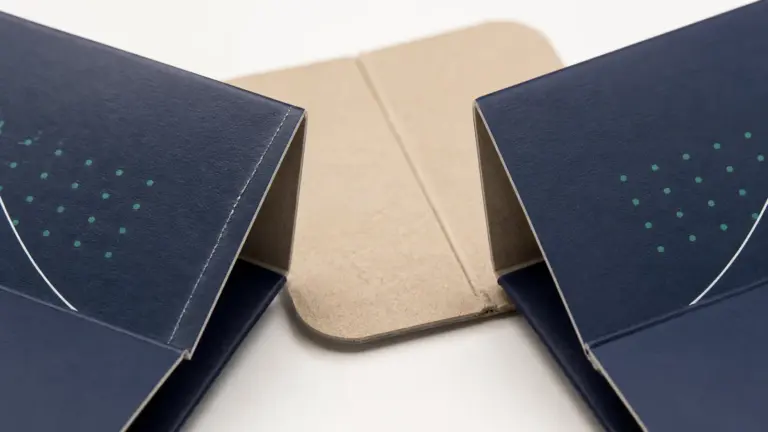
An apparel package may travel twice. The customer needs a way to refold the product, contain it and close the package without household tape or another bag.
A workable return design provides:
- an opening that does not destroy the transport structure;
- a second closure or supplied return component;
- space for the return label;
- instructions short enough to follow;
- enough package volume for a less-perfect customer fold.
That last point matters. Warehouse staff can produce a compact fold that a customer will not reproduce. Test the return with a reasonable hand fold, not only the factory standard.
Check the packing station before ordering
Time the complete process with normal staff. Include garment inspection, folding, inner wrap, documentation, closing, label application and placement into the outbound container. Note where tissue tears, adhesive liners create waste or one garment size slows the process.
Also review storage. Flexible mailers occupy little space; corrugated mailers usually arrive flat but still require racking and erection. Too many sizes can create selection errors. A clear size code on the packing side can prevent the wrong package from being used without adding customer-facing graphics.
Test the normal, fullest and return packs
At minimum, evaluate the normal single-item order, the fullest approved combination and the return condition. Inspect fold retention, movement, closure, label adhesion, abrasion, water exposure appropriate to the route and customer opening.
The International Safe Transit Association identifies procedures for different distribution systems in its official overview. Select testing according to the real route and risk. Define failure before the test: unacceptable creasing, staining, wetting, puncture, opened closure, accessory contact or damage to the customer-facing pack.
A generic carrier drop is not a substitute for a documented product-package evaluation. Retest when the garment mix, inner wrap, box size, closure or route changes materially.
Write the shipping brief from the folded stack
For comparable packaging quotations, provide folded dimensions by size, stack-height range, units and combinations per order, complete packed weight, inner-wrap requirement, hard accessories, opening and return features, quantity by package size and delivery location.
PackagingFor’s box-dimensions guide explains how to distinguish inside and outside measurements. Send a physical folded sample when the fabric compresses unpredictably.
Choose the shipper after the packing method is stable
Once the fold, inner protection, accessories, opening and return are controlled, choosing between a flexible mailer and corrugated box becomes straightforward. PackagingFor manufactures custom clothing packaging boxes for product-specific pack-outs, but the productive first input is not “a premium apparel box.” It is the actual folded stack and the journey it must complete.