Subscription Box Packaging Design: Build a System That Works Every Month
Subscription box packaging design should support changing products, repeat fulfillment, protection, inserts, artwork updates and testing.
The real test of a subscription box is not the launch photograph. It is month six, when the assortment has changed twice, the packing team is working at speed and several thousand unused inserts are still on the shelf.
A workable subscription pack is a repeatable fulfillment system. Product range, packed dimensions, protection and packing sequence come first; the mailer, insert and graphics follow. The opening still needs to feel deliberate, but it cannot be designed independently of picking speed, component control and next month’s product mix.
The subscription model sets the packaging rules
The phrase “subscription box” can describe very different operations. A fixed replenishment program ships the same items each cycle. A curated box changes its contents. A tiered program may have two or three product counts. A discovery box may contain small samples with very different shapes.
Before a structure is drawn, the team should agree on a few operating facts:
- Is the assortment fixed, variable or tiered?
- What are the minimum and maximum product envelopes?
- Which items are fragile, liquid, sharp, heavy or temperature sensitive?
- Does the branded box ship directly, or inside an outer shipper?
- How many orders must be packed in a shift?
- Will members keep, reuse or immediately recycle the package?
- How often will artwork change?
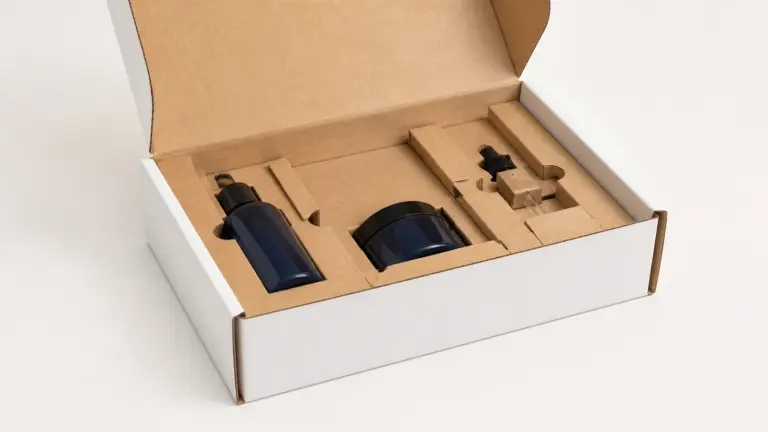
Where the contents change substantially, a precisely cut insert may create more waste than protection. Modular partitions, depth pads or a controlled paper-fill method often tolerate assortment changes better.
Choose an architecture, not just a box style
For many direct-to-consumer programs, a corrugated mailer is the starting point because it combines a shipping structure with a branded opening experience. It is not automatically suitable for every product. Heavy, fragile or high-value contents may need a stronger shipper, an inner presentation carton or a tested cushioning system.
Three common architectures are:
- Single mailer system: products and protective components sit directly inside a printed mailer. This minimizes components but makes the mailer responsible for both transit and presentation.
- Retail pack plus outer shipper: products arrive in their own folding cartons or rigid boxes, protected by a separate shipping box. This adds material but separates retail presentation from transport damage.
- Presentation tray inside a shipper: a printed tray or insert organizes the reveal while an outer corrugated box handles the distribution environment.
Choose the architecture with the actual delivery route in mind. The International Safe Transit Association distinguishes tests for parcel, retailer-fulfillment and other distribution systems; its test-selection guidance is a useful reminder that a package should be evaluated as a product-package system, not as an empty box.
Size against the range, not the average
Average dimensions are a poor basis for a recurring program. Build a packing matrix with each item’s finished size, orientation and separation requirement, then model the smallest, typical and largest planned assortments.
One box size is simple but may create excess space in lighter months. Too many sizes complicate inventory and the packing station. A practical design often uses one core footprint with two depths, or one mailer with interchangeable paperboard partitions.
Record inside dimensions and outside dimensions separately. The inside dimensions control product fit; the outside dimensions affect storage, master cartons and carrier rating. PackagingFor’s box dimensions guide explains the length-width-depth convention and why the finished sample must be measured.
An insert has to survive the product calendar
An insert can keep products in position, separate surfaces and control the reveal. It can also slow packing and become obsolete when one bottle or jar changes.
For a variable subscription, consider:
- removable partitions with more than one slot position;
- folded paperboard platforms with alternate locking tabs;
- corrugated pads that change the effective depth;
- molded pulp only when the product geometry and volume are stable;
- tissue or paper void fill for low-risk variations;
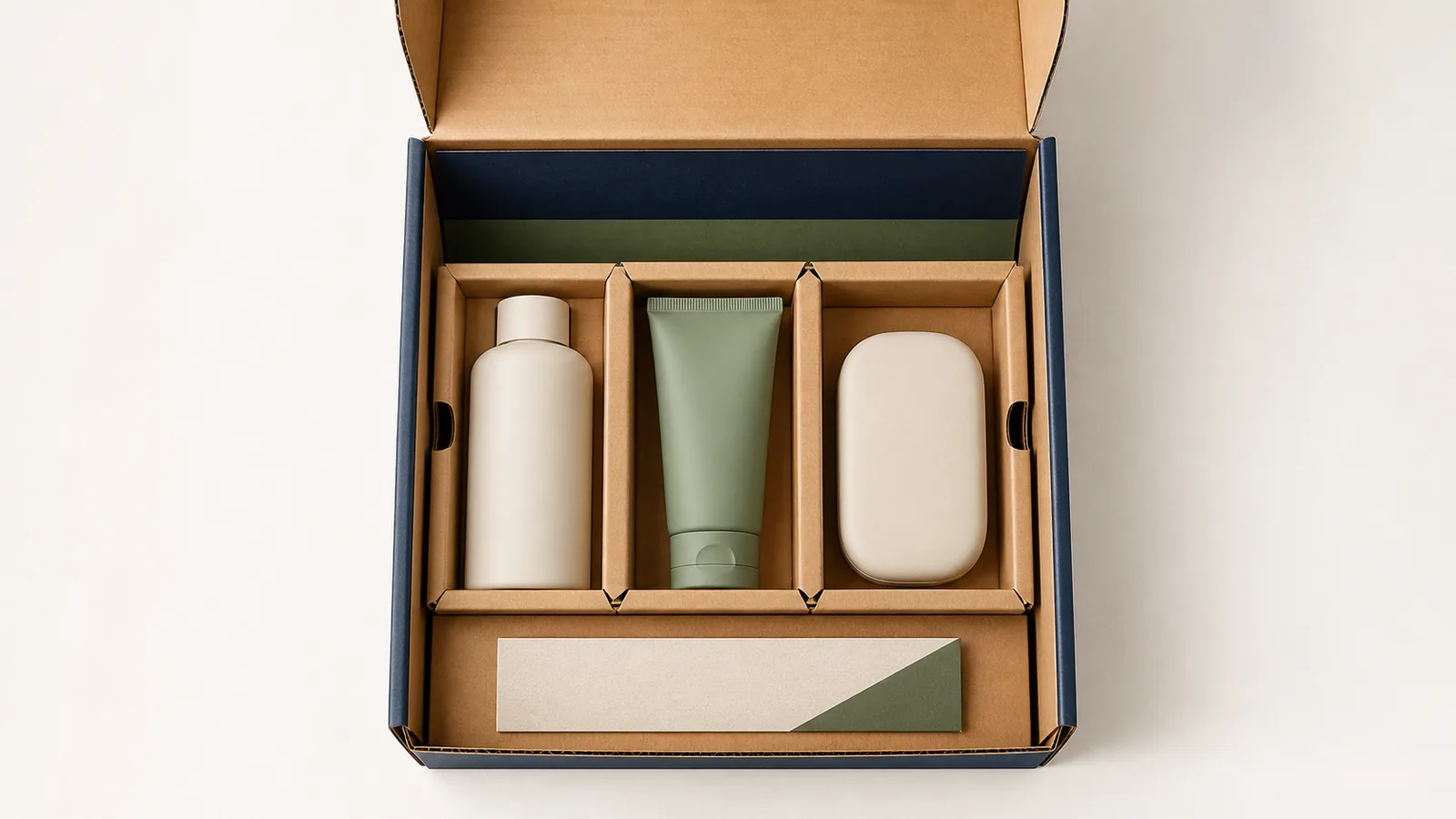
- a printed card that covers a flexible lower compartment.
Test the insert with the smallest and largest tolerance conditions. “Fits the sample” is not the same as “fits normal production variation.” The article on packaging insert materials compares paperboard, corrugated, molded pulp and foam; this subscription-box decision should begin with function and change frequency before material.
Choreograph the first thirty seconds
When the lid lifts, the customer should understand what is in the box, what to try first and which information is worth keeping. That is a more useful design test than asking whether every panel is printed.
A simple hierarchy is often enough:
- lid: one brand or campaign message;
- top card: instructions, product order or member note;
- first layer: products aligned by importance or use sequence;
- lower layer: refills, accessories or documentation;
- bottom or side panel: disposal or recycling instructions that match the actual construction and market.
Avoid placing critical instructions under products where they will be discovered last. Do not use broad environmental claims unless the finished package and claim scope are substantiated. PackagingFor’s sustainable packaging guide explains why material descriptions, recyclability and recycled content are separate claims.
Keep permanent and temporary artwork separate
Monthly artwork changes can create approval risk and small leftover inventories. Separate evergreen graphics from campaign-specific information.
Possible systems include:
- one evergreen printed mailer with a monthly insert card;
- one exterior design with variable interior stickers or sleeves;
- a limited set of seasonal boxes used across several cycles;
- digitally printed short runs for controlled special editions;
- one-color branded kraft mailers when fast replenishment matters more than photographic reproduction.
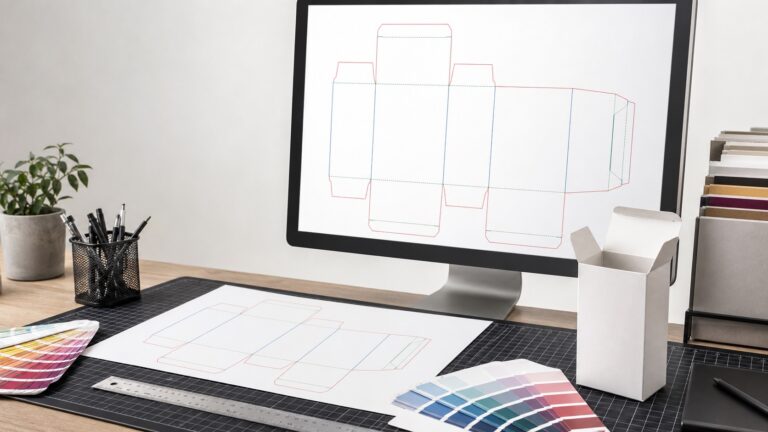
Keep the dieline version, color reference, barcode placement, print files and approval history under control. Every design change should state whether it affects only artwork or also the board, coating, glue, closure or insert.
Put the prototype on the packing bench
An unassembled sample says little about production. Put it in front of the people who will erect, fill and close it, then run enough repetitions for the awkward steps to become obvious.
Measure:
- seconds to erect the box;
- number of separate components;
- reach and motion required at the station;
- error points, such as reversed inserts or missing cards;
- closure reliability;
- finished packed dimensions and weight;
- cartons per master case and cases per pallet;
- damage to print during assembly.
If an insert requires force or a lid springs open before sealing, change the structure rather than writing a longer work instruction.
Prototype and test the product-package system
Use a blank structural sample to confirm fit and packing sequence. Use a printed sample to approve artwork, but document which production characteristics it represents. Then test the finished package with actual products and normal packed weight.
The suitable test depends on the route and risk. ISTA describes Procedure 3A for individual packaged products moving through parcel delivery systems and 3L for retailer e-commerce fulfillment; see the official test procedure overview. A standard name is not a guarantee that one test is sufficient for every product. Define acceptable product and package condition before testing, document results and monitor real shipments after launch.
What to include in a subscription-box RFQ
Send suppliers a controlled brief containing:
- program type and shipment frequency;
- product matrix and packed weights;
- desired box architecture and opening sequence;
- inside dimensions or product samples;
- insert function and allowed variation;
- quantity per cycle and annual estimate;
- print surfaces, colors and finish requirements;
- assembly state and pack-out location;
- testing or performance requirements;
- delivery schedule, destination and storage limits.
Ask for quotes at the same scope. A price for a printed mailer without inserts, assembly or delivery is not comparable with a delivered pack-out kit.
Practical questions from subscription teams
What is the best box for a subscription service?
There is no universal best box. A corrugated mailer is common, but the right architecture depends on product weight, fragility, variability, delivery route and whether the shipping box must also provide the presentation.
Should every month have a new printed box?
Not necessarily. An evergreen box with variable cards, sleeves or labels can reduce obsolete inventory and approval work while still making each cycle distinct.
Do subscription boxes need inserts?
Only when an insert performs a clear job: controlling movement, separating products, improving picking or creating a deliberate reveal. A fixed insert can be inefficient for frequently changing assortments.
How many box sizes should a subscription company use?
Use the smallest set that covers planned assortments without excessive void space. Test one core footprint with alternate depths or modular inserts before creating many independent sizes.
Quote the recurring system, not an empty mailer
PackagingFor produces custom mailer boxes and paper-based inserts for recurring programs. A useful enquiry includes the product matrix, units per cycle and the normal packing sequence; otherwise, the supplier is pricing an empty printed box rather than the system that has to run every month.