
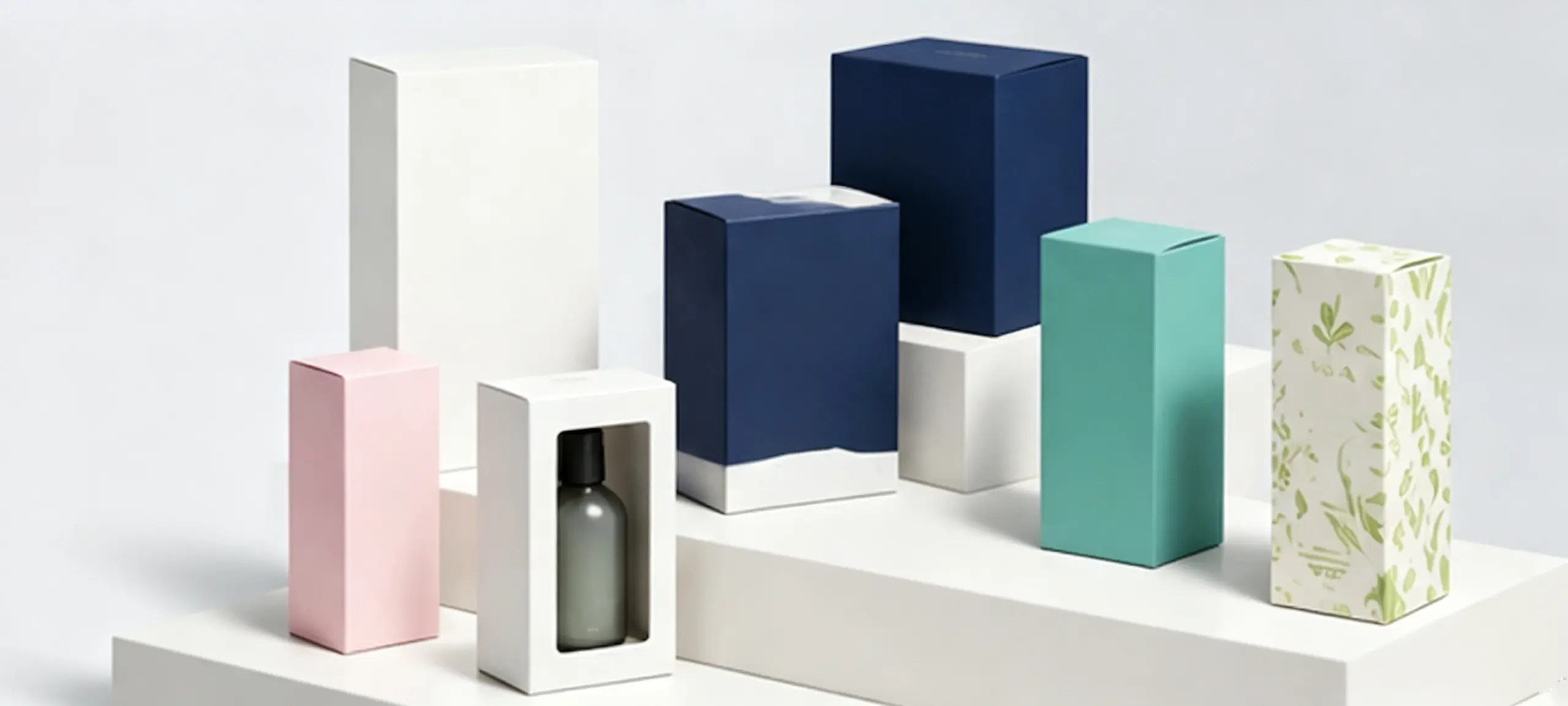
Custom Folding Cartons for Global Brands
Custom folding cartons and printed paperboard boxes manufactured for cosmetics, food, supplements, electronics and retail products. Compare structures, materials, printing, samples and RFQ requirements.
Quick answer: Custom folding cartons are printed paperboard boxes made to a product’s dimensions, artwork, protection needs and packing method. Buyers may also call them custom folding boxes, custom printed cartons or paperboard product boxes. They are delivered flat, then folded for filling, making them a practical choice for cosmetics, skincare, supplements, food, electronics and other retail products. Packaging For manufactures custom structures, print and finishes for brands sourcing folding cartons at production quantities.
As a custom packaging manufacturer, Packaging For produces folding cartons alongside rigid boxes, mailer boxes and other paper packaging. Folding cartons are one of our core strengths: they combine a strong printable surface with efficient material use, compact storage and a wide range of structural options. From Shenzhen, China, our team supports brands and packaging buyers in the United States, Canada and other international markets from dieline and sampling through mass production and delivery planning.
Custom folding carton manufacturing capabilities
A folding carton project begins with the product—not a generic box template. We review the packed product, dimensions, weight, retail environment, assembly method, artwork and delivery requirements before confirming the structure and material. This helps the carton fit correctly, fold cleanly and arrive ready for efficient packing.
- Custom structural design: box dimensions, closure, glue flap, window and insert engineered around the product.
- Production-ready dielines: cut, crease, bleed, safe area and finishing layers prepared for artwork placement.
- Paperboard selection: white, kraft and recycled-content options evaluated for stiffness, print surface and budget.
- Custom printing: CMYK process color and specified spot colors selected according to artwork, board and order volume.
- Decorative finishes: foil stamping, embossing, debossing, spot UV, coatings and lamination where the design requires them.
- Sampling and production: structural prototypes, printed samples and approval references available according to project needs.
Folding carton styles
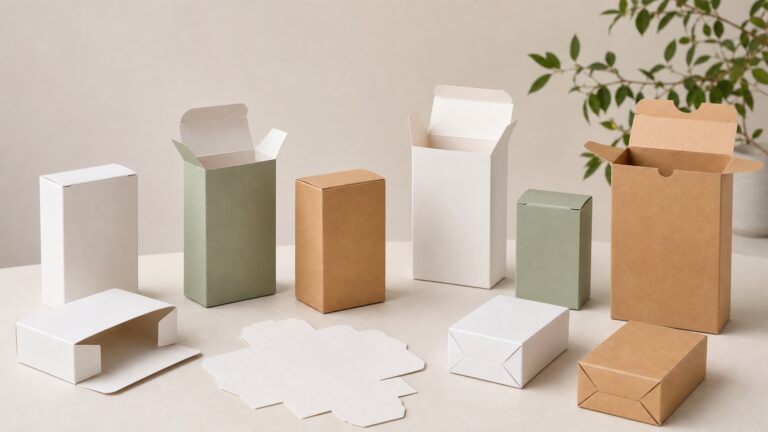
The best carton style depends on product weight, packing speed, opening experience and display requirements. Common custom folding boxes include:
| Carton style | Closure and loading | Best use | Product load | Key limitation |
|---|---|---|---|---|
| Straight tuck end | Top and bottom tuck from the same face; usually hand loaded | Cosmetics, skincare and compact retail products | Light | Not intended to replace a parcel shipper |
| Reverse tuck end | Opposing top and bottom tuck flaps; efficient sheet layout | Lightweight retail products | Light | Panel orientation must be checked before artwork |
| Auto-lock bottom | Pre-glued base opens during assembly | Bottles, jars and faster hand packing | Moderate, subject to testing | More converting and gluing than a basic tuck carton |
| Snap-lock bottom | Base flaps interlock during hand assembly | Retail products needing added base support | Light to moderate | Slower to assemble than an auto-bottom carton |
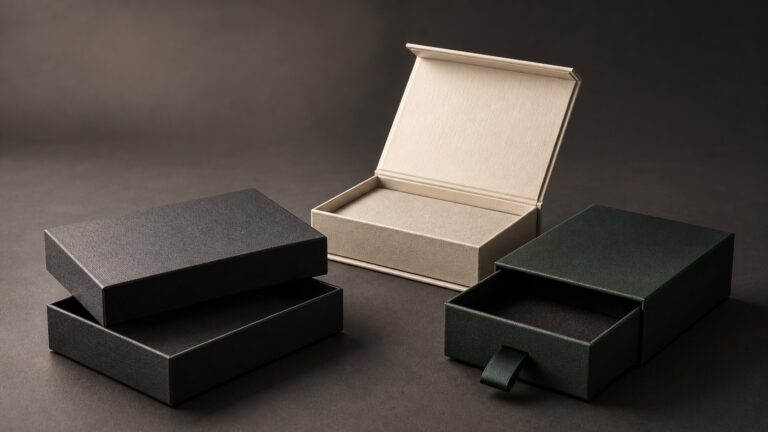
| Paperboard sleeve | Slides over a tray, carton or product group | Sets and branded product wraps | Depends on the inner pack | Usually does not provide complete containment alone |
| Window folding carton | Tuck or glued structure with a die-cut viewing area | Products where visibility supports the sale | Light | Window geometry can reduce panel strength |
For a detailed comparison of straight tuck, reverse tuck and auto-bottom closures, see our custom tuck boxes page.
For a visible-product format, explore our custom packaging boxes with windows. If the pack must withstand parcel delivery without an outer shipper, a corrugated mailer may be more appropriate than a paperboard folding carton.
Paperboard materials for folding cartons
Paperboard grade affects stiffness, fold performance, color reproduction, texture and unit cost. The specification should identify more than GSM: board grade, caliper, grain direction, coating and product weight all influence the finished box.
SBS and white paperboard
Solid bleached sulfate and comparable white paperboards provide a smooth, bright print surface for detailed graphics and premium retail presentation. They are frequently considered for beauty, healthcare, confectionery and consumer products.
Folding boxboard
Folding boxboard can provide a useful balance of stiffness, low weight and printability. Actual grade names and performance vary by supplier, so samples should be approved using the intended board rather than a generic substitute.
Kraft and recycled-content board
Kraft board offers a natural appearance, while recycled-content paperboard can support a project’s material objectives. Both require artwork planned for the actual surface. Brown fiber changes printed color, and recycled boards can differ in shade and smoothness.
Read the packaging paper guide for a broader comparison. Recyclability and sustainability claims should always be verified against the complete structure, coatings, films and rules in the market where the package will be sold.
Printing and finishing options
Custom printed folding cartons can carry product information, regulatory copy, barcodes and high-impact brand artwork on the same structure. The appropriate print process depends on order quantity, number of artwork versions, substrate, finish and color tolerance.
- Offset printing: commonly selected for detailed graphics and consistent production runs.
- Digital printing: useful for suitable short runs, prototypes or projects with multiple artwork versions.
- CMYK: reproduces photographic and multicolor artwork using process inks.
- Spot colors: specified when a critical brand color needs a defined reference.
- Surface treatments: matte, gloss, soft-touch and protective coatings alter appearance, feel and scuff behavior.
- Premium accents: foil, embossing, debossing and spot UV create controlled focal points.
Artwork should be evaluated on the production substrate. A color proof on white coated stock cannot reliably predict the same ink on uncoated kraft. See our custom packaging printing comparison for more preparation guidance.
Applications by industry
Folding carton packaging is widely used where products need shelf presentation and secondary protection without the weight of a rigid set-up box. Every project still needs industry-specific review.
- Beauty and personal care: compare cosmetic cartons, perfume packaging and soap boxes around the filled product.
- Food and confectionery: review food packaging boxes, chocolate packaging and pastry boxes with the product’s barrier and contact requirements defined separately.
- Home, gifts and accessories: use candle packaging or jewelry packaging when inserts, vessel fit or presentation change the specification.
- Toys and apparel: plan viewing, retention and labeling through the toy packaging and clothing packaging pages.
- Supplements, electronics and other retail products: provide the product, packed weight, information panels and any insert requirement before a structure is recommended.
Material declarations, food-contact requirements, labeling and testing depend on the product and destination market. Include those requirements in the RFQ so the proposed construction can be reviewed before sampling.
Folding cartons compared with other paper boxes
| Packaging type | Construction | Best suited to |
|---|---|---|
| Folding carton | Printed paperboard, die-cut and supplied flat | Lightweight retail products and efficient storage |
| Rigid box | Thick board with a wrapped outer surface | Premium presentation and a permanent structure |
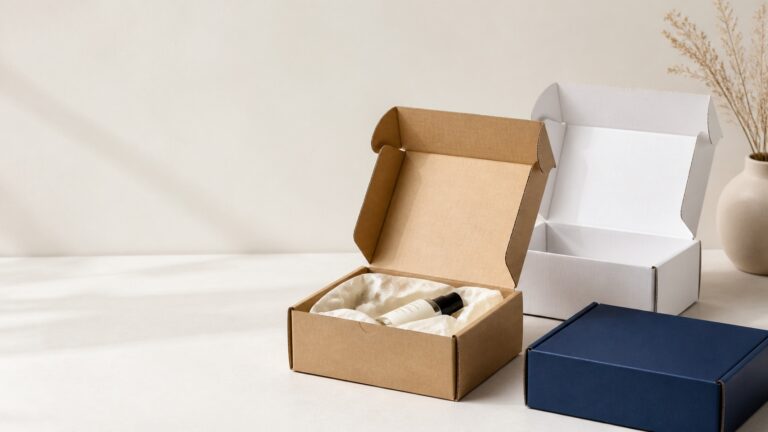
| Corrugated mailer | Fluted corrugated board | Ecommerce fulfillment and greater transit protection |
Packaging For is a comprehensive custom packaging manufacturer, so the recommendation does not have to begin and end with folding cartons. If protection, presentation or logistics point to another construction, compare folding cartons and rigid boxes or review our custom mailer box guide.
From specification to production
- Define the product: provide internal dimensions, packed weight, orientation and any insert or window requirement.
- Select the structure and board: align protection, shelf appearance, packing speed and budget.
- Confirm the dieline: test a structural sample using the actual product.
- Prepare artwork: place graphics on the approved dieline with bleed, safe areas, barcodes and separate finish layers.
- Approve the sample: check fit, color expectation, folding, closure and finishing position.
- Produce and inspect: manufacture against the approved specification and pack for the agreed delivery route.
Buyers who are preparing detailed requirements can use our folding carton specification guide. It covers dimensions, caliper, closures, artwork, tolerances, proofing and quote comparison without replacing this product page. Use the box dimensions guide before confirming the dieline, then approve the loaded structure through the packaging sample process.
What to include in a folding carton RFQ
A complete RFQ produces a more useful quotation and reduces assumptions. Send:
- Product dimensions and packed weight
- Required internal box dimensions or a physical product sample
- Preferred carton style, or photos of a reference structure
- Quantity for each size and artwork version
- Board preference and target appearance
- Printing colors, coatings and special finishes
- Insert, window, glue or seal requirements
- Packing method, destination country and required delivery date
If the board or structure is not yet known, send the product information first. The project team can recommend options for sampling. MOQ and unit cost vary with size, material, print, finishing, tooling and quantity; our packaging MOQ guide and custom packaging cost guide explain the main variables.
Frequently asked questions
What is a custom folding carton?
It is a paperboard box designed around a specific product and brand. The sheet is printed, die-cut, creased and usually glued before being shipped flat for final assembly and filling.
Are folding cartons the same as corrugated boxes?
No. Folding cartons normally use non-fluted paperboard and are commonly used as retail or inner packaging. Corrugated boxes contain a fluted layer and are typically selected when greater shipping protection is required. If you are using a broad term such as “foldable cardboard box,” compare the three common constructions in our custom foldable boxes guide.
Can the size, printing and finish be customized?
Yes. Dimensions, carton style, material, artwork, coating, decorative finish, window and insert can be specified according to production feasibility and the product’s requirements.
What is the minimum order quantity?
MOQ is project-dependent. Structure, board, printing method, finishing and equipment setup all affect the practical minimum. Provide the target quantity and number of artwork versions for an accurate assessment.
Which paperboard thickness should I specify?
There is no universal thickness for every folding carton. Select the board grade and caliper from the product’s packed weight, panel size, crease performance, print surface and distribution route, then approve it with the loaded product. GSM alone does not confirm stiffness.
Can a folding carton ship without an outer box?
Most folding cartons are retail or inner packaging and should travel inside a master case or parcel shipper. If the box itself must face courier handling, compare a corrugated mailer and test the complete packed system rather than relying on the empty carton.
Should I approve a sample before production?
Yes. At minimum, verify dimensions, fit, folding and closure with the real product. For color- or finish-critical packaging, agree on the appropriate printed sample or production reference before the full run.
Start a custom folding carton project
Send Packaging For your product dimensions, packed weight, quantity, artwork status, destination and launch schedule. We will review the brief and help define a suitable paperboard box, sample route and production quotation.
One Comment